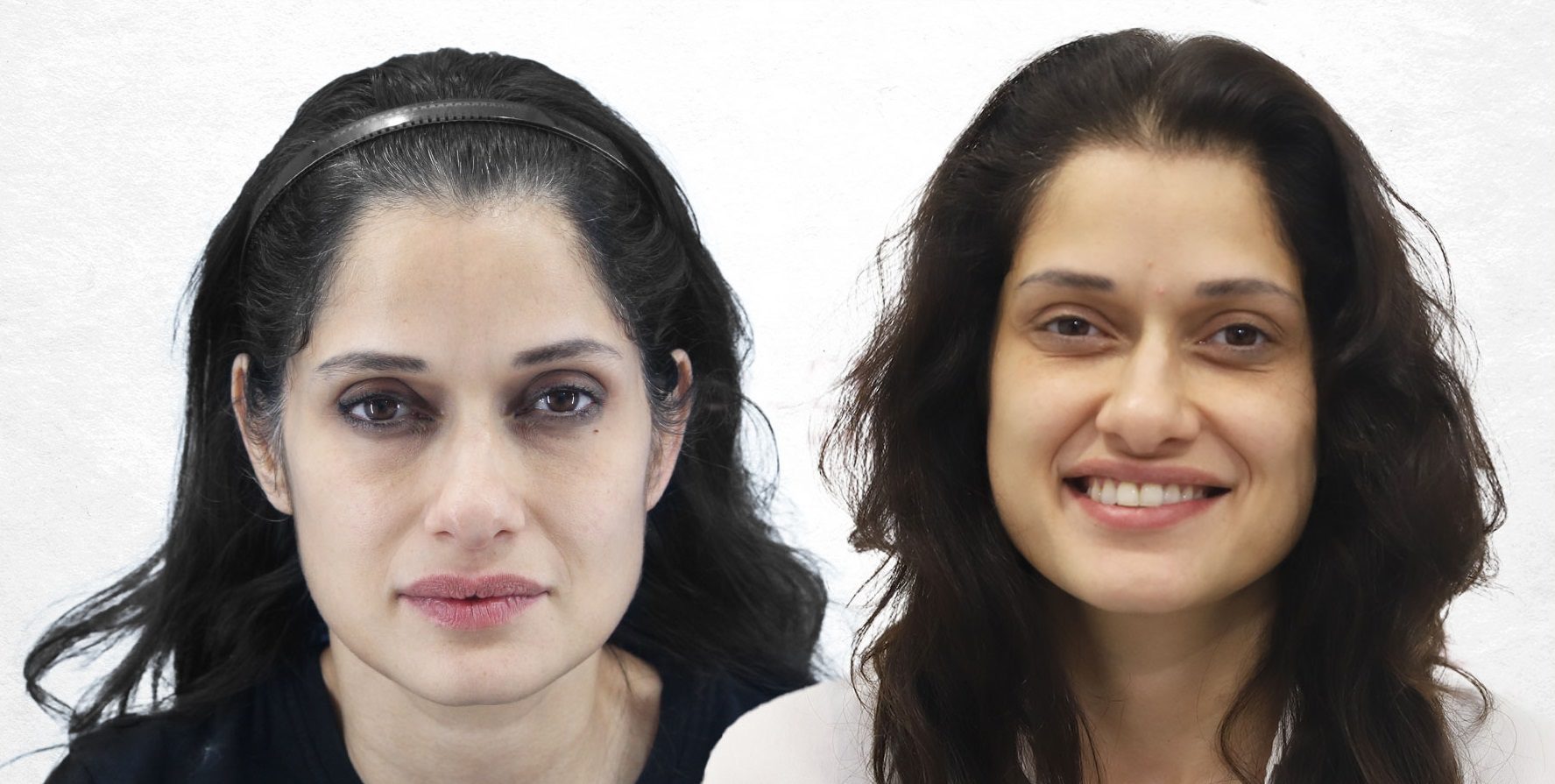
Hair Transplant for Women in Bengaluru (Bangalore)
Hair loss in women is investigated before it is treated. That is the single most important difference from male pattern loss, and it is why a consultation for a woman usually begins with questions and tests rather than with a discussion of grafts.
How female hair loss differs
Male pattern loss follows a predictable pattern with a stable donor area. Female hair loss frequently does not. It often presents as diffuse thinning across the top of the scalp with the hairline preserved, and the donor area may be affected as well, which changes what is possible surgically.
It also has a wider range of causes. Thyroid conditions, nutritional deficiencies, hormonal changes, medication, physical stress and traction from hairstyling can all contribute, and several of these are treatable without surgery.
Assessment and diagnosis
Because the causes vary, assessment comes first. This typically involves examination of the scalp and the pattern of thinning, a discussion of medical history, and investigation to identify or exclude underlying causes.
Assessment usually begins with examination of the scalp and the pattern of thinning, together with a discussion of your medical history, when the loss began and how it has progressed.
Blood tests are commonly part of that assessment, because several of the most frequent causes of hair loss in women are internal rather than genetic. Testing typically looks at thyroid function, iron stores and hormonal factors. Which tests apply to you is decided by your doctor.
If an underlying cause is found and treated, hair often improves without surgery. Proceeding straight to a transplant without that step risks operating on loss that would have responded to treatment.
When a transplant is appropriate
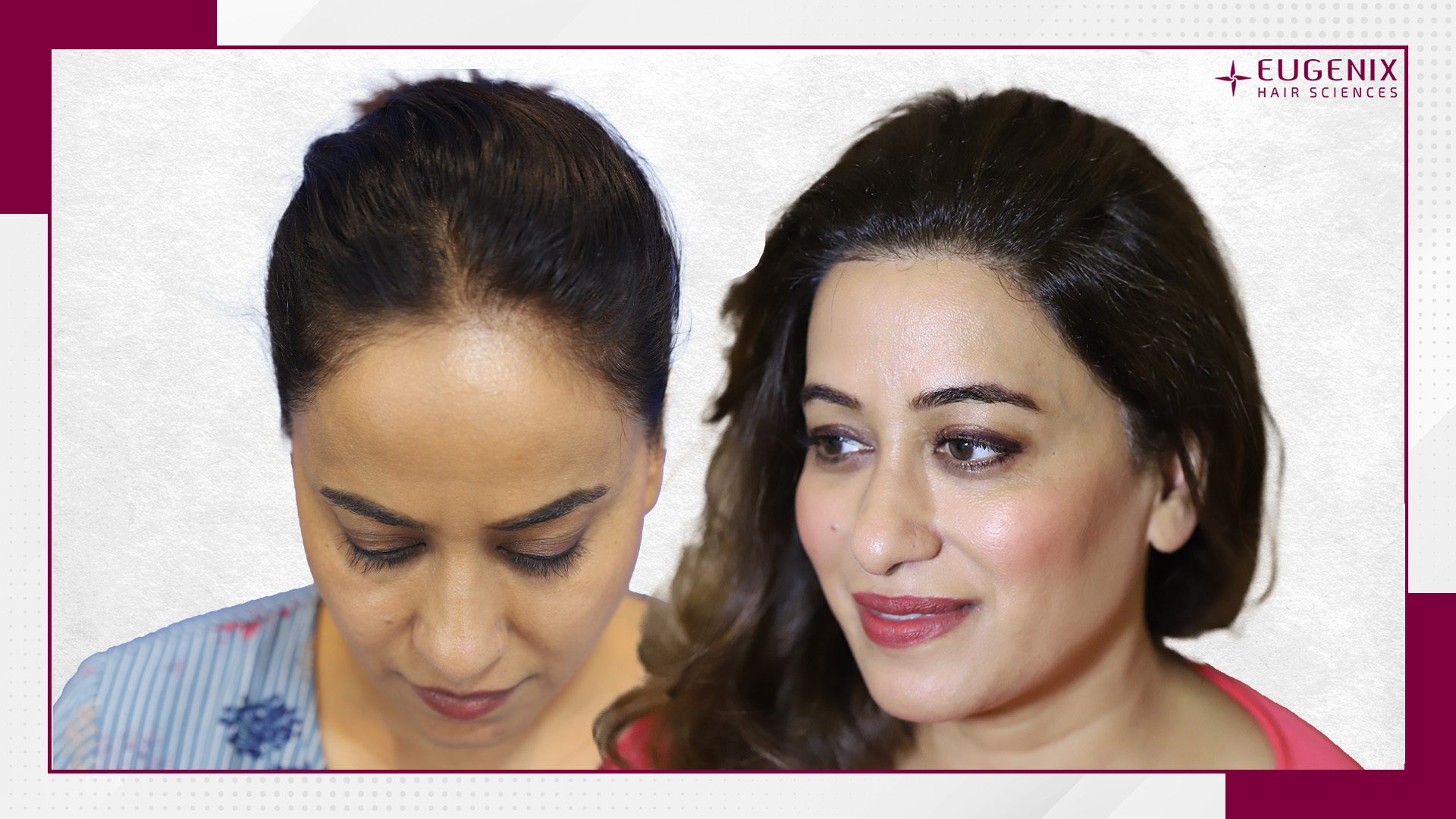
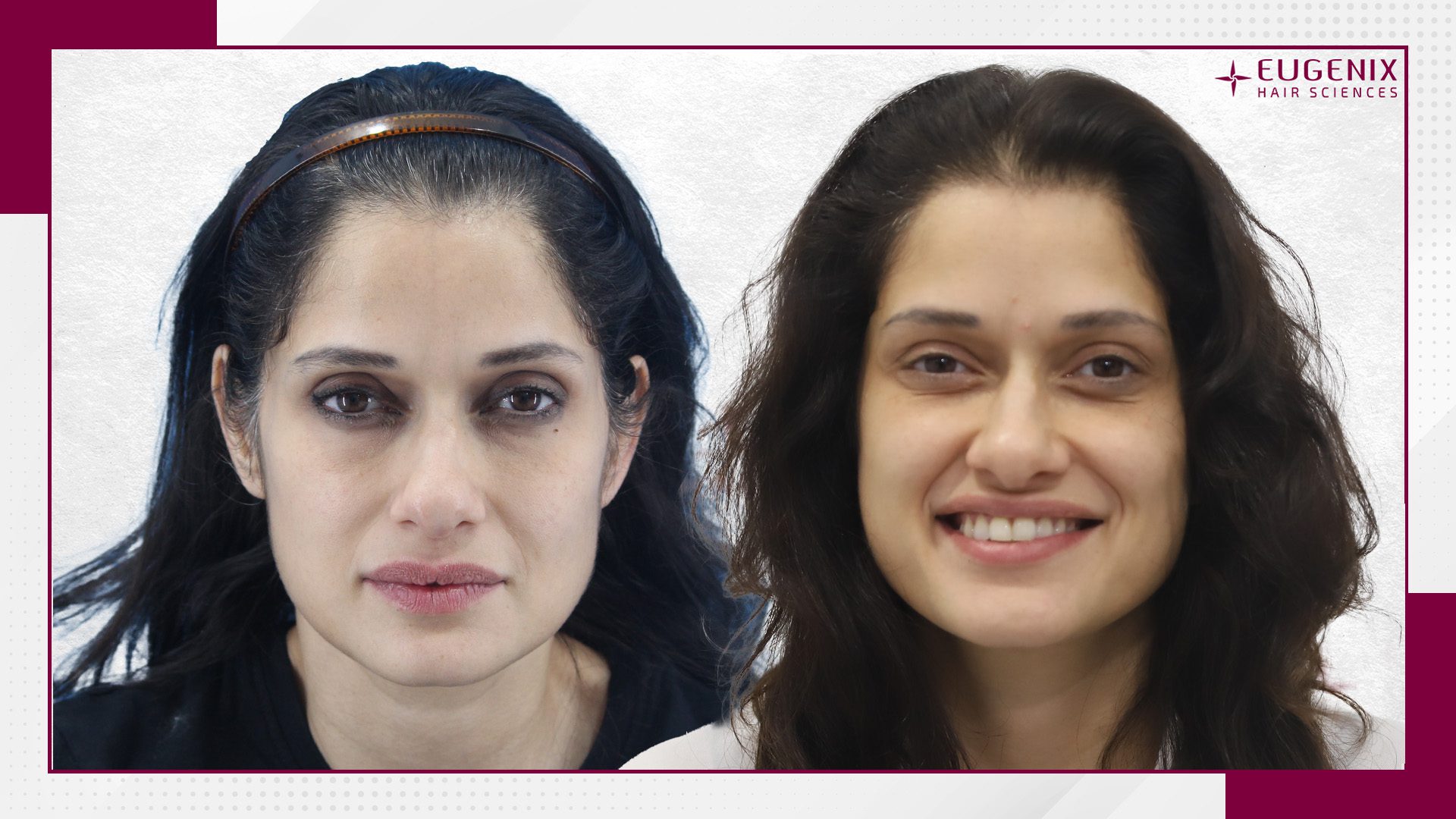
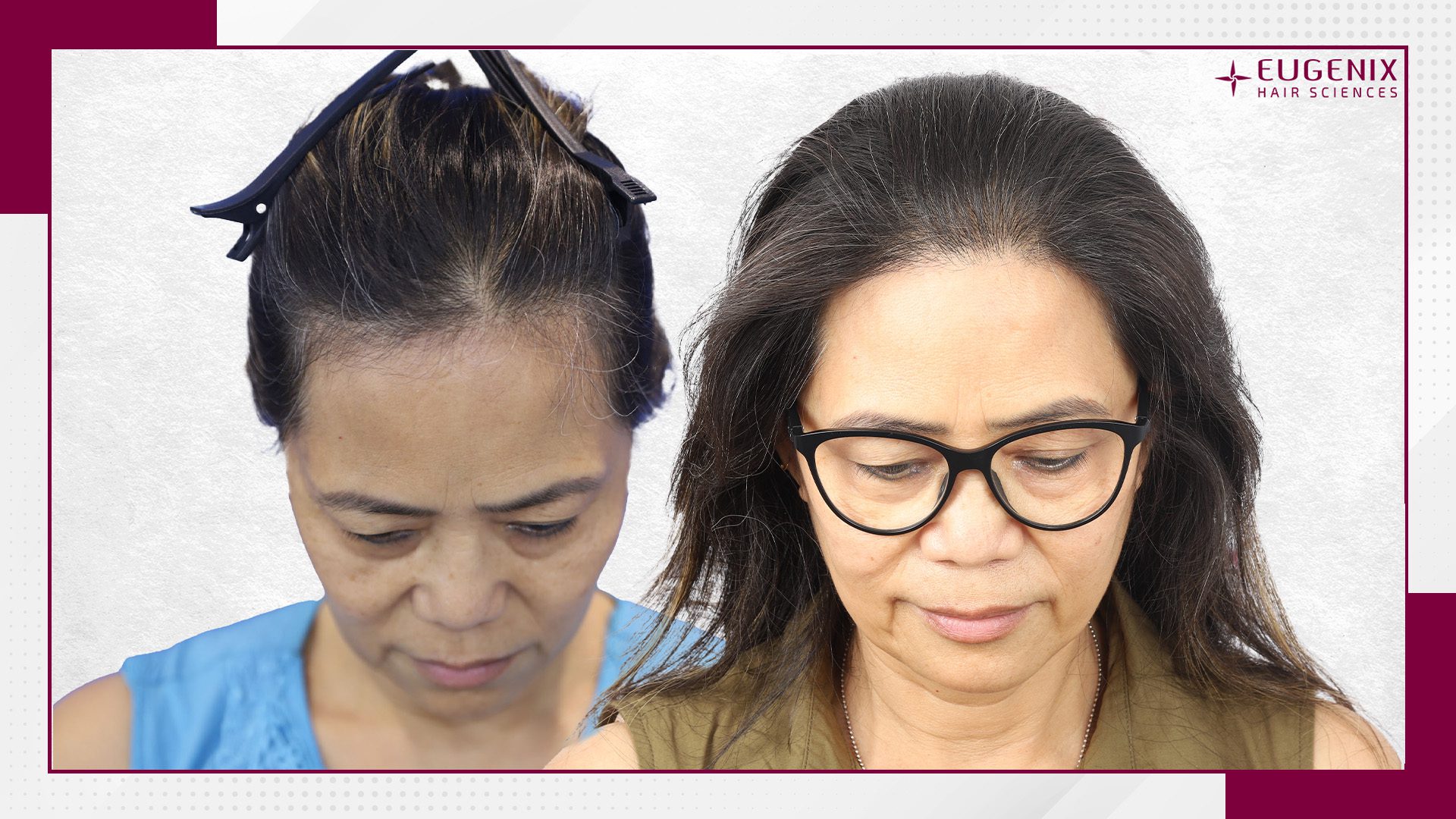
A transplant can be appropriate for women in specific situations, including stable female pattern loss with an adequate donor area, traction alopecia where the cause has been removed, scarring from injury or previous surgery, and hairline lowering or temple restoration.
It is less likely to be appropriate where thinning is diffuse and the donor area is also affected, because the hair being moved may not be stable.
Techniques used for women
Eugenix performs DHT, a modified form of FUE developed by our Co-Founders. The technique is the same, though planning for women differs, particularly in how density is distributed and how existing hair is worked around.
For many female cases the head is not shaved. Grafts are placed between existing long hairs so that the surrounding hair conceals the treated area while it heals. Whether this approach suits your case is assessed at consultation.
What recovery involves
Recovery follows the general pattern, with shedding between days 30 and 90 and new growth from month 4.
Recovery follows the same pattern as any transplant, with shedding between days 30 and 90 and new growth from month 4. Where the procedure has been done without shaving, the surrounding long hair conceals the treated area through the early weeks, which many patients find makes the return to work and social life easier.
Bangalore Location:
2nd and 3rd Floor, Featherlite Vantage 100 Feet Rd, HAL 2nd Stage, Domlur, Indiranagar, Bengaluru (Bangalore), Karnataka – 560038
Google Map:
https://maps.app.goo.gl/mBnfBGWrPDW2mg6y5