Before & After Images Book a Free Assessment Graft Calculator

Body Hair Transplant

Body hair transplant can be performed using hair from the beard, chest, underarms, pubic hair and other body sites. The best graft for transplantation on the scalp apart from the hair from the back of the scalp is the beard hair followed by chest hair.

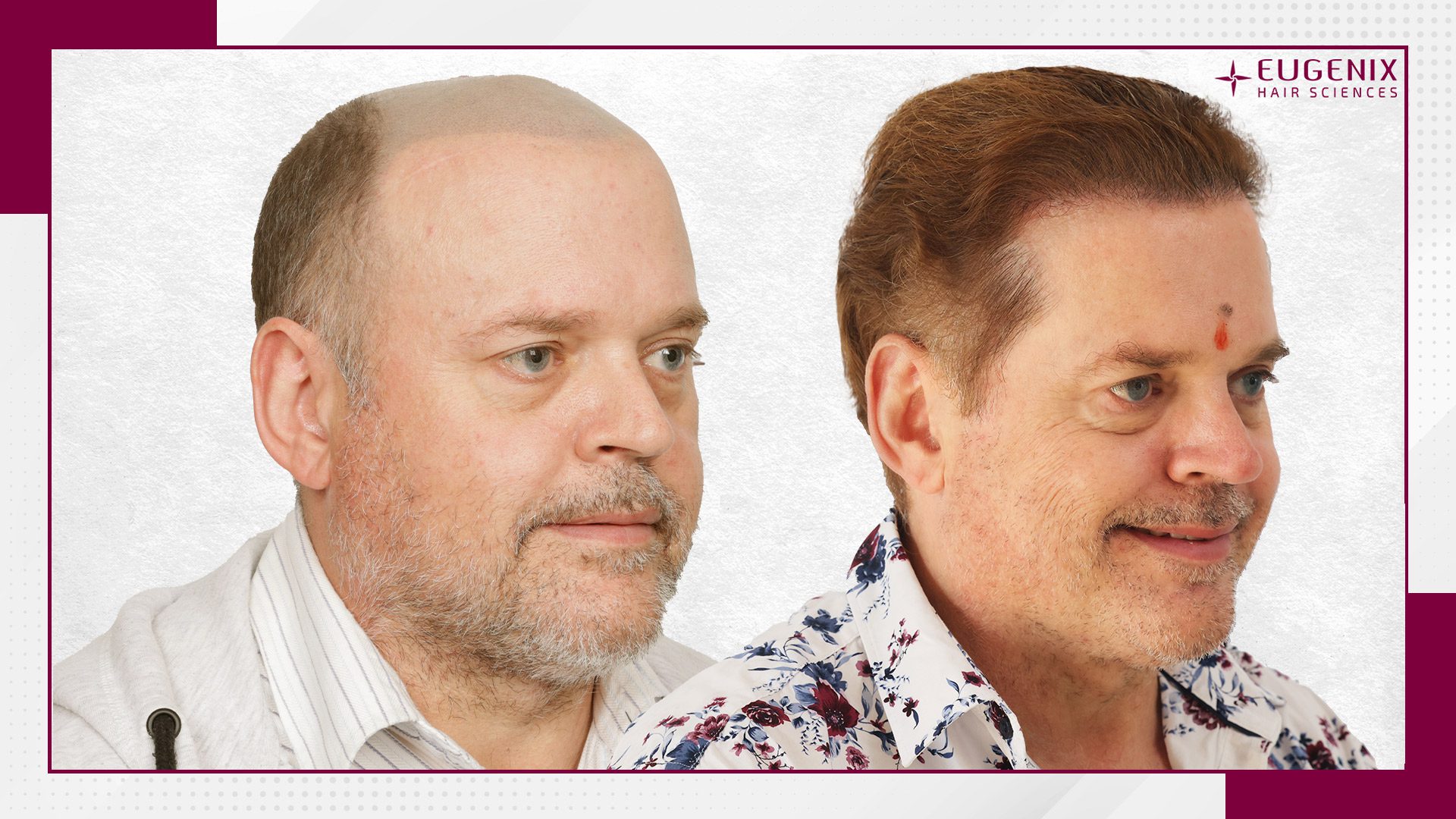
Adrian-Brown-1

FUE Body Hair Transplant and Results

Body hair transplant can be performed using hair from the beard, chest, underarms, pubic hair and other body sites. The best graft for transplantation on the scalp apart from the hair from the back of the scalp is the beard hair followed by chest hair. Body hair is needed in the case of Norwood Grade 6 or Norwood Grade 7 baldness for patients who want full scalp coverage in one sitting. Patients with retrograde thinning in donor scalp have to rely on body hair for adequate coverage. Sometimes, patients with failed hair transplants with a depleted scalp donor may have to rely on body hair for scalp coverage.

Which Type Of Body Hair Should Be Preferred For Transplantation On The Scalp?

The second best donor after the scalp is the beard. The reason for choosing a beard is its similarity in hair cycle to scalp hair. It has a long anagen phase, a thicker caliber of the hair, a large number of available grafts and a minimal scar formation. Beard can be a source of 3000 to 5000 grafts. Beard grafts are also preferred in cases of scarring alopecia like lichen Plano Pilaris as they are relatively resistant to the autoimmune process happening in the scalp.

Chest hair is the third best source of grafts after beard. It is less preferred because of its suboptimal success rate as compared to beard grafts. Chest hair is placed acutely and has a higher transaction rate. The growth phase (anagen) of chest hair is relatively short compared to a beard. They may remain in the shedding phase for a much longer time. Moreover, it may leave significant post-inflammatory hyper or hypo-pigmentation. The chest should be shaved 7 days before the surgery to pick only fast-growing and thick hairs.

Other sources like underarms and pubic hair may be used in case of non-availability of preferred donors like beard and chest. We have also used hairs from the legs and forearms in our patients. Due to their short anagen phase, they are generally not preferred.

Who Are The Ideal Candidates For Body Hair Transplants?

The Patients Who:-

What Is The Procedure For A Body Hair Transplant?

FUE/DHT can be performed from body hairs. The surgeon needs to use a sharp serrated punch for minimal scars. The chest needs to be shaved 7 days before the surgery to select only fast-growing grafts. The body hair needs to be mixed well so that they do not stand out as they have different caliber and texture. They cannot be placed in certain areas like hairline or temple.

Why Should You Choose Eugenix For A Body Hair Transplant?

Eugenix has been performing hair transplants using body hair in cases of depleted donor areas for more than 13 years. In these years, we have extracted body hairs from more than 2500 patients for transplantation on the scalp. Body hair can be used for transplantation on the scalp, but it has to be kept in the mind always that you cannot implant body hair in the hairline zone. Also, not every time body hair reacts in accordance with the scalp hair. Experts at Eugenix very well understand how to make the perfect amalgamation of body hair and scalp hair and obtain full coverage. Thus, in case your donor is depleted and body hair is required then choose Eugenix for the best possible result.
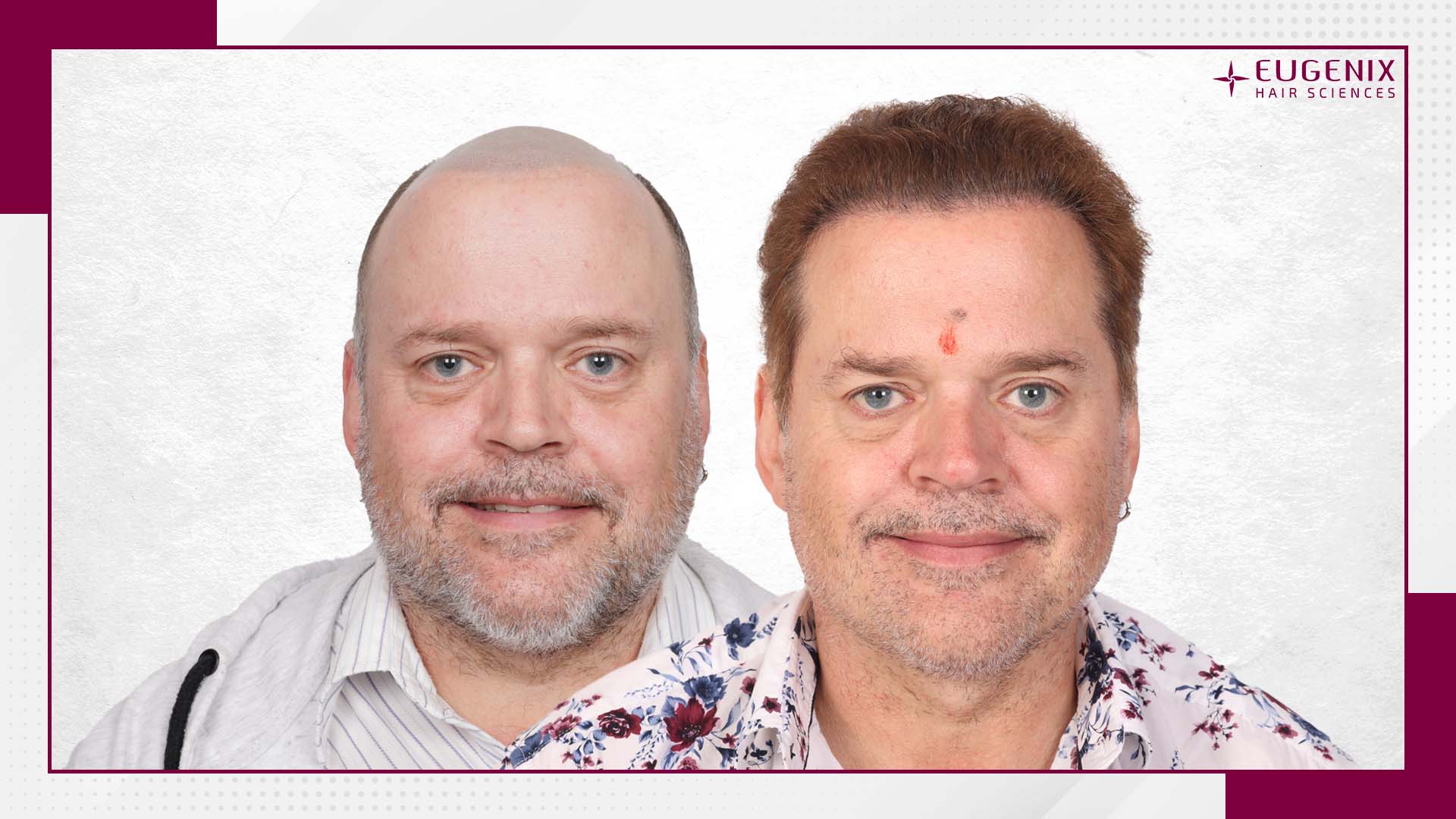
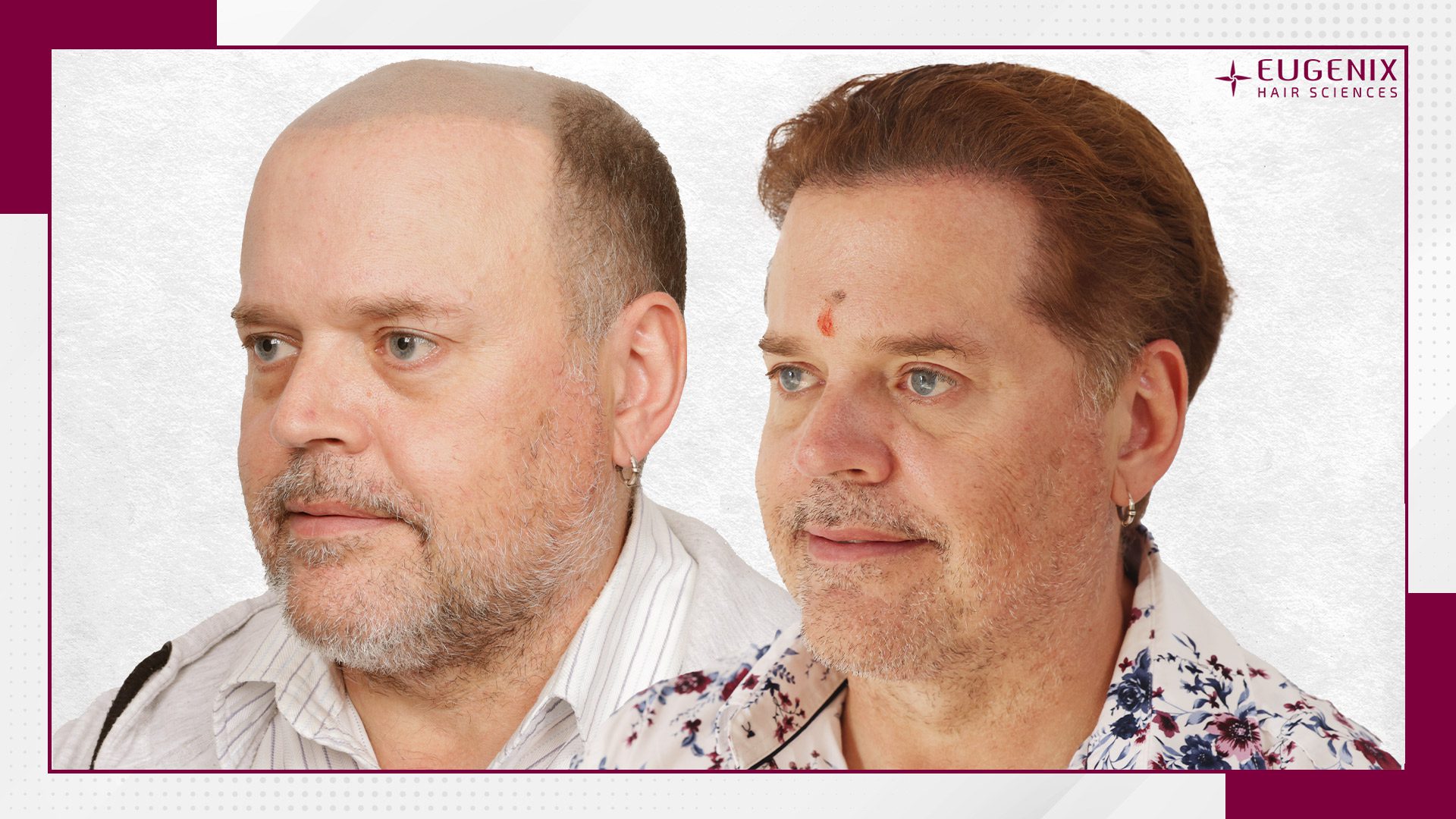
Life-Changing Results
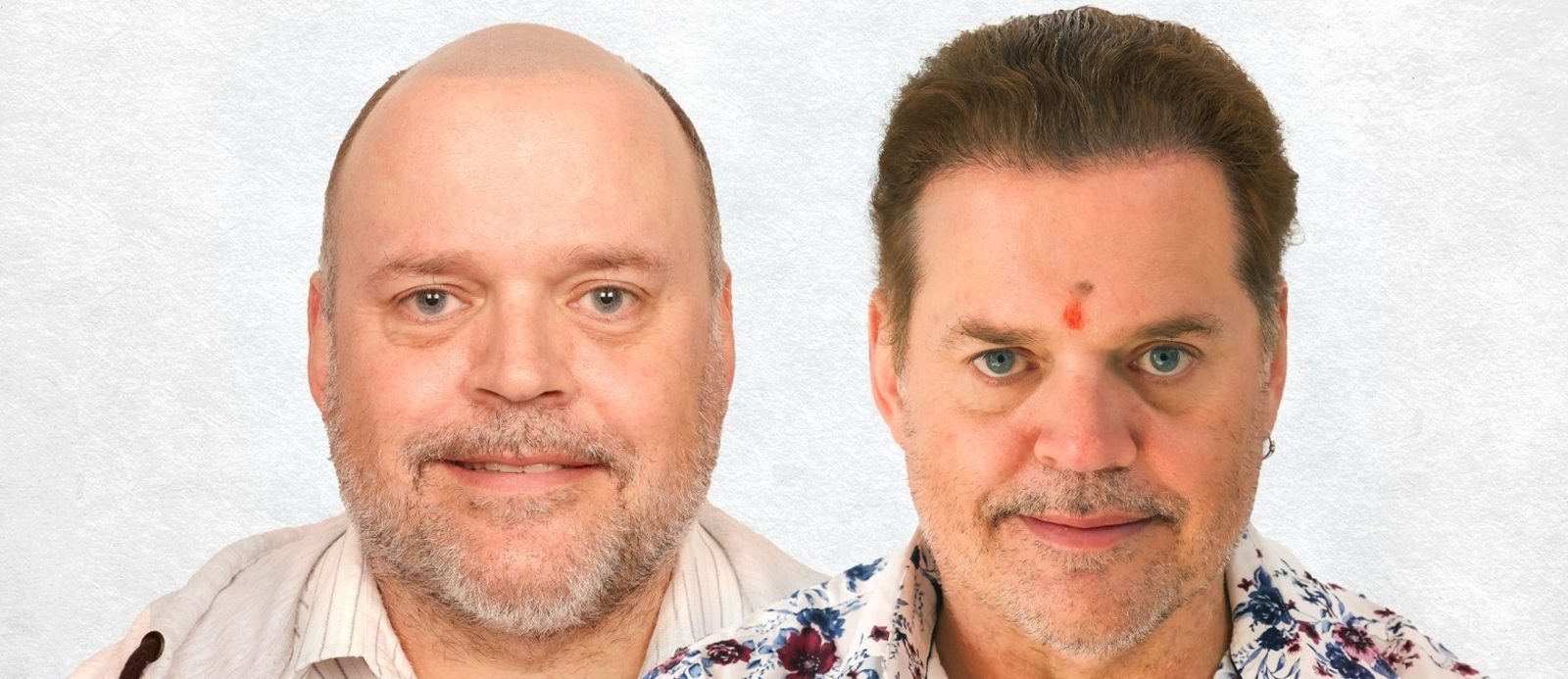
Adrian Brown Body Hair Transplant
BeforeAfter
Adrian-Brown-3
BeforeAfter
Adrian-Brown-2
BeforeAfter
Watch Videos
Reviews on Google

Frequently Asked Questions

What Is The Procedure For A Body Hair Transplant?

FUE/DHT can be performed from body hairs. The surgeon needs to use a sharp serrated punch for minimal scars. The chest needs to be shaved 7 days before the surgery to select only fast-growing grafts. The body hair needs to be mixed well so that they do not stand out as they have different caliber and texture. They cannot be placed in certain areas like hairline or temple.

What is a body hair transplant and can you transplant body hair?

A body hair transplant, also called a body hair to head transplant or BHT, uses hair follicles from body areas such as the beard and chest as a supplementary donor source for scalp restoration. Yes, body hair can be transplanted to the scalp, and body hair transplant has become an established part of hair transplantation for patients with insufficient scalp donor hair. A body hair transplant is not a replacement for scalp donor hair. It is used when scalp donor hair alone cannot supply enough grafts to cover the degree of hair loss. Body hair transplantation is performed using follicular unit extraction, which allows individual hair follicles to be extracted from body sites without leaving a linear scar. At Eugenix, body hair grafts are always combined with scalp grafts and never used as the sole donor source for a hair transplant.

When does a hair transplant surgeon recommend body hair transplantation?

A body hair to head transplant is typically recommended in four situations. First, in patients with Norwood Grade 6 or 7 baldness who require 7,000 to 9,000 grafts and whose scalp donor cannot supply that volume on its own. Second, in younger patients where the scalp donor must be conserved for future sittings, since hair loss continues to progress with age. Third, when a patient wants both adequate density now and a long-term donor reserve for future repair work. Fourth, in corrective cases where the scalp donor area has been depleted or damaged by a previous hair transplant procedure elsewhere. Body hair transplants can also help camouflage scars from previous hair transplant procedures.

Body hair transplant is not a first line treatment for hair loss. Medical management with Finasteride and Minoxidil is offered to suitable candidates first, and surgery is considered only after a thorough consultation in which donor area capacity, hair characteristics, and the projected progression of hair loss are reviewed.

Is body hair good for hair transplant?

Body hair is good for hair transplant when it is used appropriately, in the right zones, and in combination with scalp donor hair. Beard hair is the best body hair for transplant because it has the highest survival rate among body hair sources and a thicker calibre than scalp hair, which adds visual density. Chest hair is a useful supplementary source. Body hair is not suitable for reconstructing a front hairline because of its coarser texture. The honest answer is that body hair is excellent as a filler in mid-scalp and crown zones, but it cannot create a natural looking hairline on its own. The hairline must be built from scalp donor hair.

What body donor areas are used in body hair transplant?

The standard body donor areas referenced in hair restoration literature are the beard, chest, back, stomach hair, leg hair, armpit hair, and in some sources the pubic area. Survival rates and visual outcomes from each of these body sites vary considerably. At Eugenix, body hair transplantation focuses on the beard and chest, in a 70:30 ratio. Other body donor areas are not part of Eugenix’s clinical protocol because their survival rates and texture compatibility are inferior to beard and chest hair. Most body hair sources outside the beard and chest are rarely used because of poor adaptation and lower survival rates.

Why is beard hair the preferred body donor for hair transplant?

Beard hair is the preferred body donor because of three properties. First, beard hair has a survival rate of 80 to 88 percent in a healthy donor, the highest of any body donor source. Second, beard hair is wiry, curly, and thicker than scalp hair, which makes it effective at adding density when used as filler. Third, beard hair is resistant to the hormone DHT, which makes beard grafts safe for placement in zones where genetic hair loss tends to continue progressing, such as the crown. Beard hair is harvested from the submental area below the chin and the submandibular area below the jawline.

When is chest hair used as donor hair?

Chest hair is used as a supplementary donor source when beard donor alone is insufficient. Transplanted chest hair has a lower survival rate than beard hair because chest hair grows out of the skin at acute angles, which raises the risk of transection during extraction. Chest hair is never the primary donor source. It is reserved for advanced cases where every available graft matters and where beard donor capacity has been fully utilised.

Can leg hair, arm hair, or pubic hair be used for hair transplant?

Some body hair transplant literature mentions leg hair, arm hair, stomach hair, armpit hair, and pubic hair as potential body donor areas. In practice, these body sites have poor adaptation and lower survival rates compared to beard hair and chest hair. The texture difference is also more pronounced, which makes natural looking results difficult to achieve. Eugenix does not use the pubic area, leg hair, arm hair, stomach hair, or armpit hair in body hair transplant. The clinical protocol focuses on beard and chest hair as the established body donor areas with predictable outcomes.

How does the growth cycle of scalp hair differ from beard and body hair?

Scalp hair has a long anagen, or active growth phase, lasting 3 to 7 years, which is why scalp hair grows long. Approximately 80 percent of scalp hair is in the anagen phase at any given time, and approximately 20 percent is in the resting telogen phase. Beard hair has a much shorter growth cycle, with only 50 to 60 percent of beard hair in the active growth phase at any given time. Chest hair has the lowest active growth ratio of the three, with anagen to telogen running closer to 25:75. Body hair also differs from scalp hair in growth length: scalp hair can grow to several feet, while beard and chest hair grow to a few centimetres at most. Body hair grafts typically contain a single follicle, while scalp grafts often contain two to four follicles bundled in a follicular unit. These hair characteristics make body hair extraction technically demanding.

Why do body hair grafts look less dense after a hair transplant?

Body hair grafts look less dense immediately because a larger proportion of the implanted hair is in the resting phase at any given moment. For every 1,000 grafts implanted, approximately 700 to 800 scalp grafts will be visible at full results, compared to 500 to 600 visible beard grafts and only 200 to 300 visible transplanted chest hair grafts. The remaining grafts are alive and anchored in the scalp, but they are in their telogen phase and not currently producing visible hair. This is a function of the natural hair cycle of the donor type, not a sign that the body hair transplant has failed.

How long does it take for body hair grafts to show full results?

Body hair grafts follow a slower timeline than scalp grafts. Scalp grafts produce visible growth from Month 4, with full results at 10 to 12 months. Beard grafts take 12 to 13 months for full density, and transplanted chest hair takes approximately 15 months. The shedding phase between 30 and 90 days post-procedure applies to all graft types, scalp and body alike. At 14 to 15 months, transplanted hair enters Anagen Desynchronization, where it returns to the natural 80 percent anagen and 20 percent telogen split. This results in approximately a 20 percent reduction in hair mass compared to the peak synchronisation density at 10 to 12 months. This is the permanent stable cycle the hair settles into, completely normal and not a sign of failure or reversal of results. Realistic expectations on this timeline help patients judge their progress accurately.

What technique is used for body hair extraction?

Body hair extraction is performed using follicular unit extraction, the same micro-punch technique used for scalp donor extraction. Older follicular unit transplantation strip surgery cannot be used for body hair, which is why follicular unit extraction is the universal technique for body hair transplant. Eugenix does not perform strip surgery in any procedure. Body hair extraction uses sharp serrated punches calibrated to the donor type, with the beard punch range typically 0.75 to 0.9 millimetres. The procedure is performed under local anaesthesia, with both donor and recipient zones numbed before extraction begins.

How does Eugenix perform body hair transplant?

Eugenix performs every body hair transplant under the flagship DHT technique. Recipient sites in the scalp are created first by the doctor using the coronal slit technique, with each site planned according to the ADDD principle of Angle, Depth, Density, and Direction. The doctor performs follicular unit scoring on each body hair follicle, aligning the punch precisely along the angle and direction of growth. Senior surgical assistants perform graft removal and implantation using the SAVA Implanter, a patented device used at Eugenix under licence from its third-party manufacturer. Extraction and implantation happen simultaneously, keeping out-of-body time under 30 minutes. Body hair grafts are carefully implanted in the mid-scalp and the periphery of the crown.

Is body hair transplant more painful than a standard hair transplant?

A body hair transplant is generally not more painful than a standard scalp hair transplant. Both procedures are performed under local anaesthesia, which numbs the donor and recipient zones for the duration of the surgery. Patients typically experience only mild discomfort. Post-procedure soreness in body donor areas usually resolves within 3 to 5 days, depending on the donor location and the volume of grafts extracted.

What is the success rate of body hair transplant?

The most useful technical measure of body hair transplant success rate is graft survival. Beard grafts have a survival rate of 80 to 88 percent in a healthy donor, slightly below the survival rate seen with scalp donor under the same flagship DHT technique. Chest hair grafts have a lower success rate because they are extracted at acute angles, which raises the risk of partial transection during follicular unit extraction. Body hair transplant success also depends on donor health, careful planning, the experienced surgeon performing the procedure, and the skill with which the grafts are mixed into the recipient zone. At Eugenix, major complications across all hair transplant procedures are exceptionally rare, supported by over 20,000 procedures performed across more than 15 years of clinical practice.

How many grafts can the beard provide as a donor area?

A healthy beard offers a lifetime donor capacity of 3,000 to 5,000 grafts. A typical session can extract 500 to 800 beard grafts without affecting the visual appearance of the beard. The maximum that can be taken in a single sitting is around 2,500 grafts, although this level of extraction will cause visible thinning of the beard for several months and requires informed consent before proceeding.

Where on the scalp can body hair grafts be placed?

Body hair grafts at Eugenix are placed in the mid-scalp and the periphery of the crown, where their texture blends acceptably with the surrounding hair. They are never placed in the hairline zone, the temple points, or the crown whorl. The hairline and temple zones are the most visible and most scrutinised parts of the scalp, and the texture difference of beard or chest hair would be immediately apparent there. Beard grafts are also resistant to the hormone DHT, which makes them safe for crown placement.

What are the main limitations of body hair transplant?

There are five practical limitations every body hair transplant patient should understand. First, body hair grafts produce lower visible density per 1,000 implanted compared to scalp grafts, because of their shorter growth cycle. Second, beard grafts are wiry and curly, and require ongoing grooming with gel or wax to blend visually with the surrounding hair on the scalp. Third, body hair cannot be placed in the most visible zones of the scalp, which limits where it can be deployed. Fourth, the recovery process and timeline to full results is longer than for scalp grafts, particularly for transplanted chest hair at around 15 months. Fifth, body hair extraction is technically demanding because of the shallower depth and acute angle of body hair follicles. None of these are reasons to avoid body hair transplantation when it is genuinely needed.

Can body hair transplant fully restore a head of hair on its own?

No. A body hair transplant cannot fully restore a head of hair on its own, and Eugenix does not offer it as a standalone procedure. Body hair is used to supplement scalp donor hair, not to replace it. The hairline must be built from scalp donor hair to achieve a natural looking hairline. Body hair grafts are added in the mid-scalp and crown to increase overall coverage and density. Relying solely on body donor for a complete restoration would result in a visibly unnatural outcome because of the texture mismatch between body hair and existing scalp hair.

What is the recovery process after a body hair transplant?

The recovery process after a body hair transplant follows the same general timeline as a scalp hair transplant. Most patients return to office work and household tasks the day after the procedure. Yoga, gym, heavy exercise, and contact sports are cleared after 7 days. Alcohol and smoking are both avoided for 1 week. Direct sun exposure on the transplanted area is avoided for 1 week, after which prolonged sun exposure should be minimised. Visible new hair growth from body hair grafts begins around Month 4, with full results visible between 10 and 15 months depending on the donor source.

When can I wash my donor area?

The first head wash and first cleaning of the scalp donor area is performed on Day 7 only. Earlier washing is not advised because the recipient grafts and the donor area need time to heal undisturbed. The Day 7 wash is performed by gently wetting the area with saline, applying mild shampoo, leaving it lathered for around 20 minutes while sprinkling saline every few minutes, and rinsing gently. Beard and chest donor sites can be cleaned with mild soap and water from Day 1 onwards, since these donor sites do not carry implanted grafts. Detailed post operative care instructions are provided by the surgical team and should be followed precisely for optimal healing.

What post operative care helps promote healing?

Post operative care for a body hair transplant focuses on protecting the recipient grafts during the first week. Prescribed medications are taken for 7 days. The recipient area is misted with saline as instructed by the surgical team. The Day 7 head wash helps loosen and remove scabs gently. The Eugenix eCare team provides ongoing support throughout the recovery process to help patients promote healing.

Body hair transplant costs are typically higher per graft than standard scalp follicular unit extraction procedures, because body hair extraction requires more time, more skill from the surgical team, and specialised punches. Total body hair transplant costs depend on the number of grafts required, the donor sites used, and the complexity of the case, and are shared transparently after an initial consultation. At consultation, donor area capacity is assessed under magnification and a hair transplant plan is built around current loss, projected future loss, and the durable donor reserve available across both scalp and body donor areas. Eugenix offers a thorough consultation that walks through realistic expectations, the recovery process, the success rate, and the desired density that can reasonably be achieved given the patient’s profile.

Body hair transplant is a technically demanding procedure that requires careful donor planning, precise extraction, and disciplined placement on the scalp. At Eugenix, every body hair transplant is planned and executed under the flagship DHT technique, in which recipient sites are created first and extraction and implantation happen simultaneously, keeping out-of-body time under 30 minutes for body hair grafts as well as scalp grafts. Eugenix’s founding doctors, Dr. Pradeep Sethi and Dr. Arika Bansal, are alumni of AIIMS, New Delhi, and Fellows of ISHRS, with over 30 years of combined exclusive experience in hair restoration and more than 20,000 procedures performed. All procedures are performed by a panel of senior surgeons personally trained by the founders, with the founding doctors available for direct consultation by appointment. The Eugenix Gurgaon centre is NABH accredited.

If you are exploring whether a body hair to head transplant is the right plan for your hair loss, book an initial consultation with the Eugenix team to have your scalp donor area and body donor areas assessed and your options walked through honestly. Visit the Eugenix Hair Sciences homepage to begin.

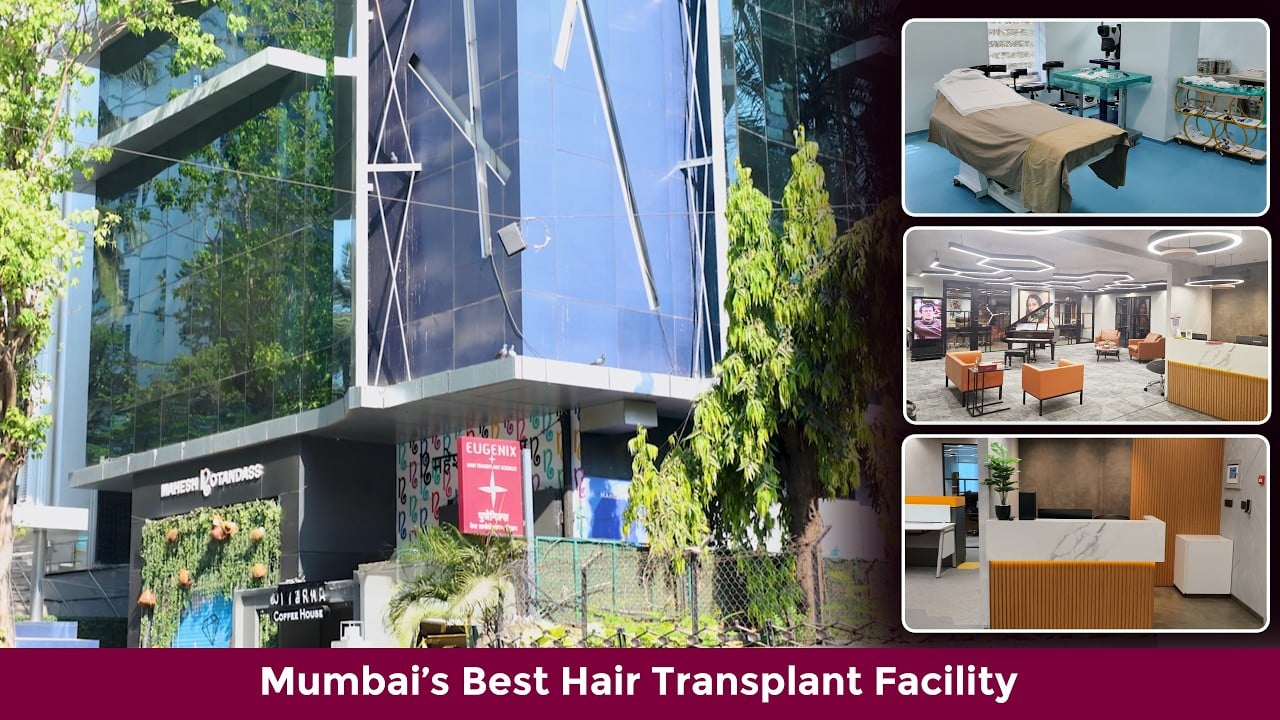
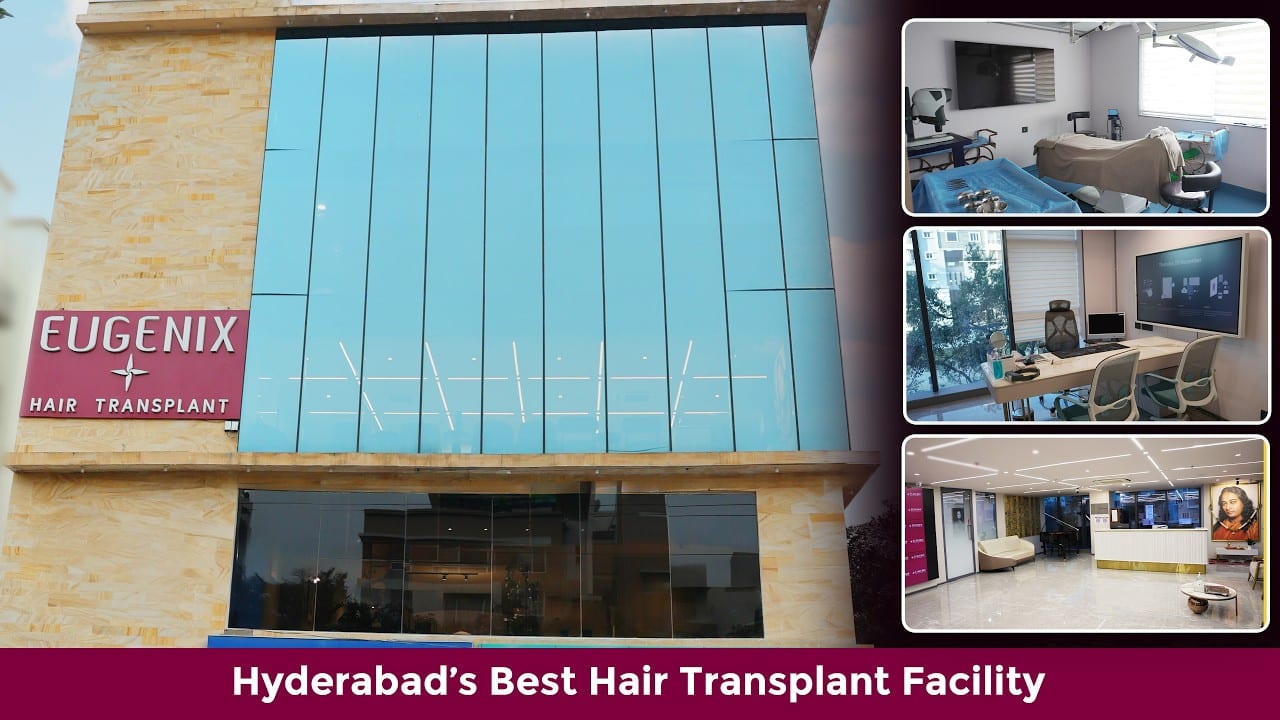
World-Class Infrastructure & Facilities
Why Choose Eugenix?

Trusted Choice of Celebrities, Cricketers and Business Leaders. Under the supervision of Dr. Pradeep Sethi & Dr. Arika Bansal, Eugenix offers international standards in Hair Transplant.

whychoose_icon_1
20,000+

Hair Transplant Procedures Performed

whychoose_icon_2
Free Assessment

Just a Phone Call or WhatsApp Away!

whychoose_icon_3
30+ Years Experience

in Hair Restoration Procedures

whychoose_icon_4
4.8 Google Ratings

From Happy Customers across the World

Hair Transplant Clinic India Locations

Gurugram:
934 & 935P, Opp. Amity International School, Sector 51, Gurugram, Haryana - 122018

Hyderabad:
2nd Floor, Mahathi Towers, Novotel Hotel Road, Izzathnagar, Shilpa Hills, Hyderabad, Telangana - 500084

Mumbai:
3rd Floor, Notan Plaza, 898, Turner Rd, Bandra West, Mumbai, Maharashtra - 400050

Bhubaneswar:
Plot 39-C, VIP Colony, IRC Village, Nayapalli, Bhubaneswar, Odisha - 751015

Book an
Appointment
Graft
Calculator
🇺🇸 English 🇩🇪 Deutsch 🇫🇷 Français 🇪🇸 Español 🇮🇹 Italiano