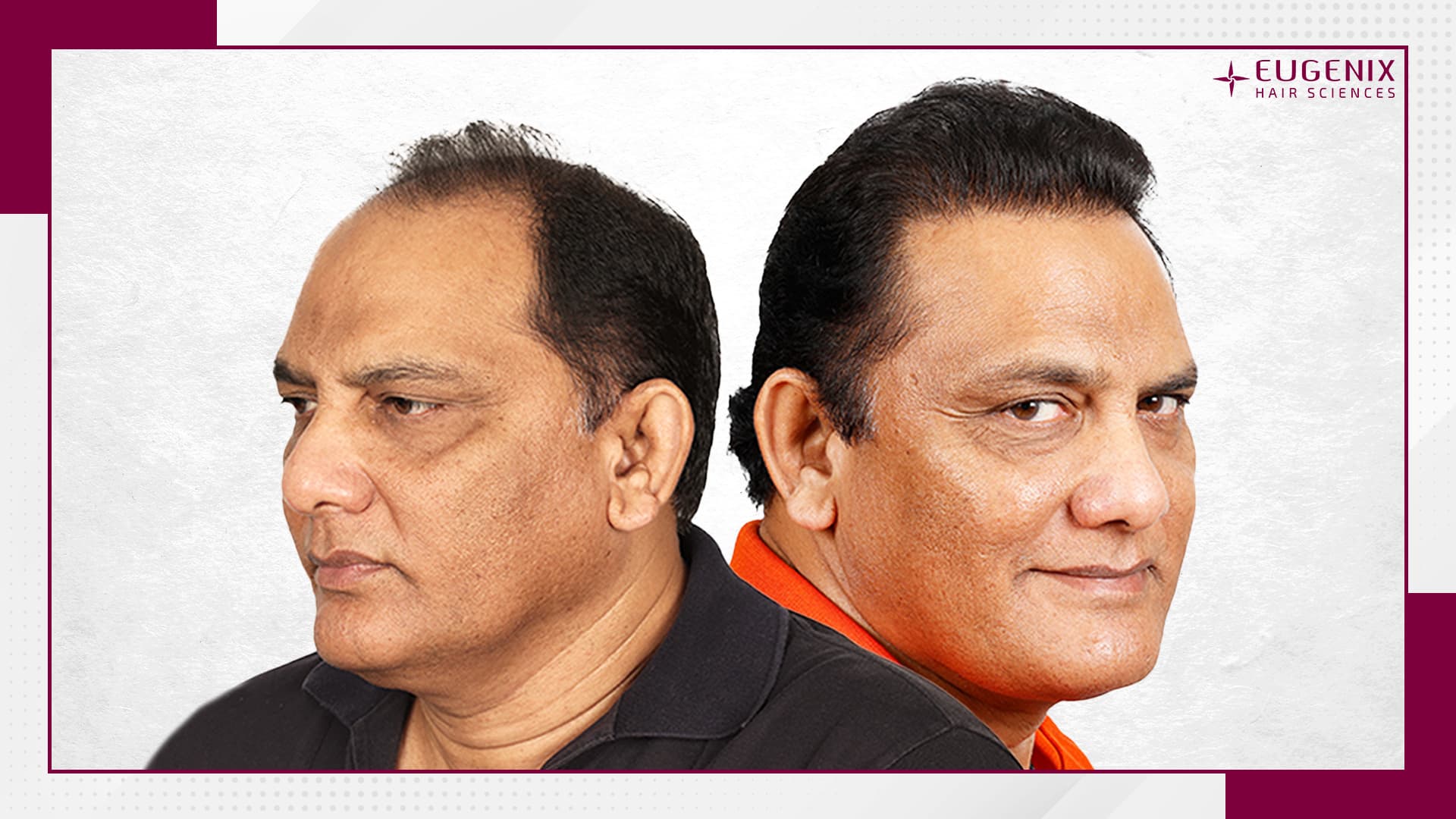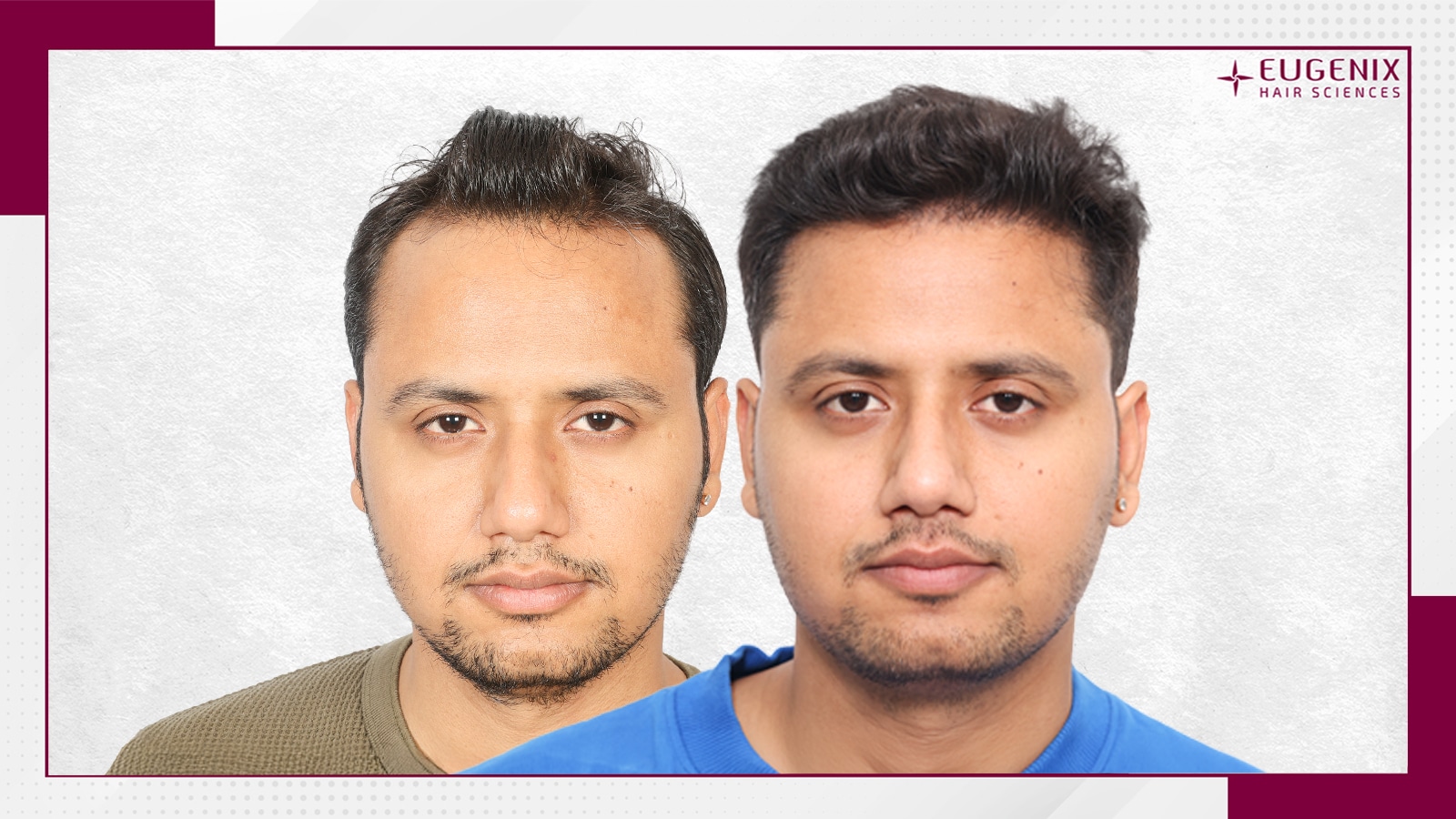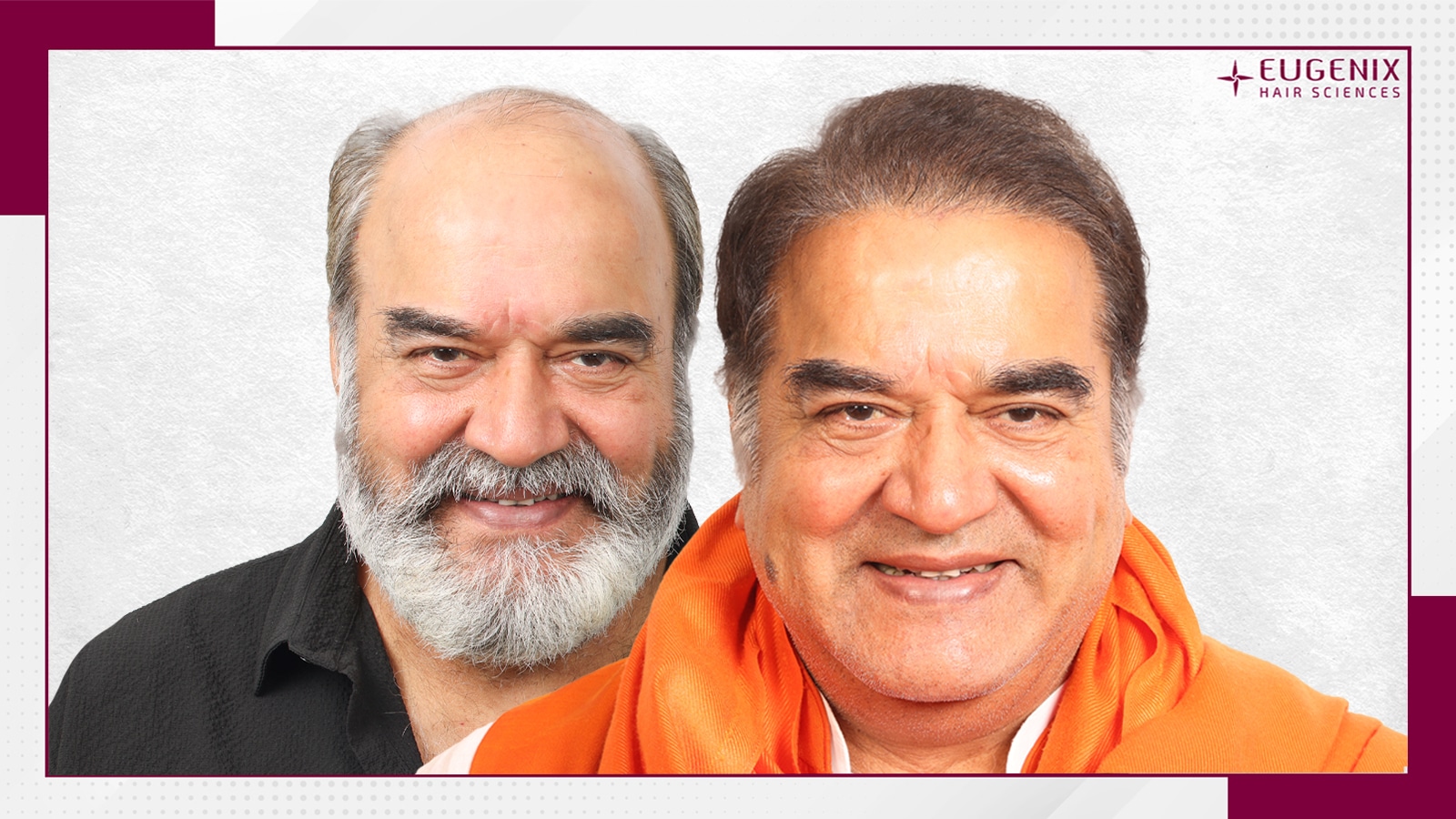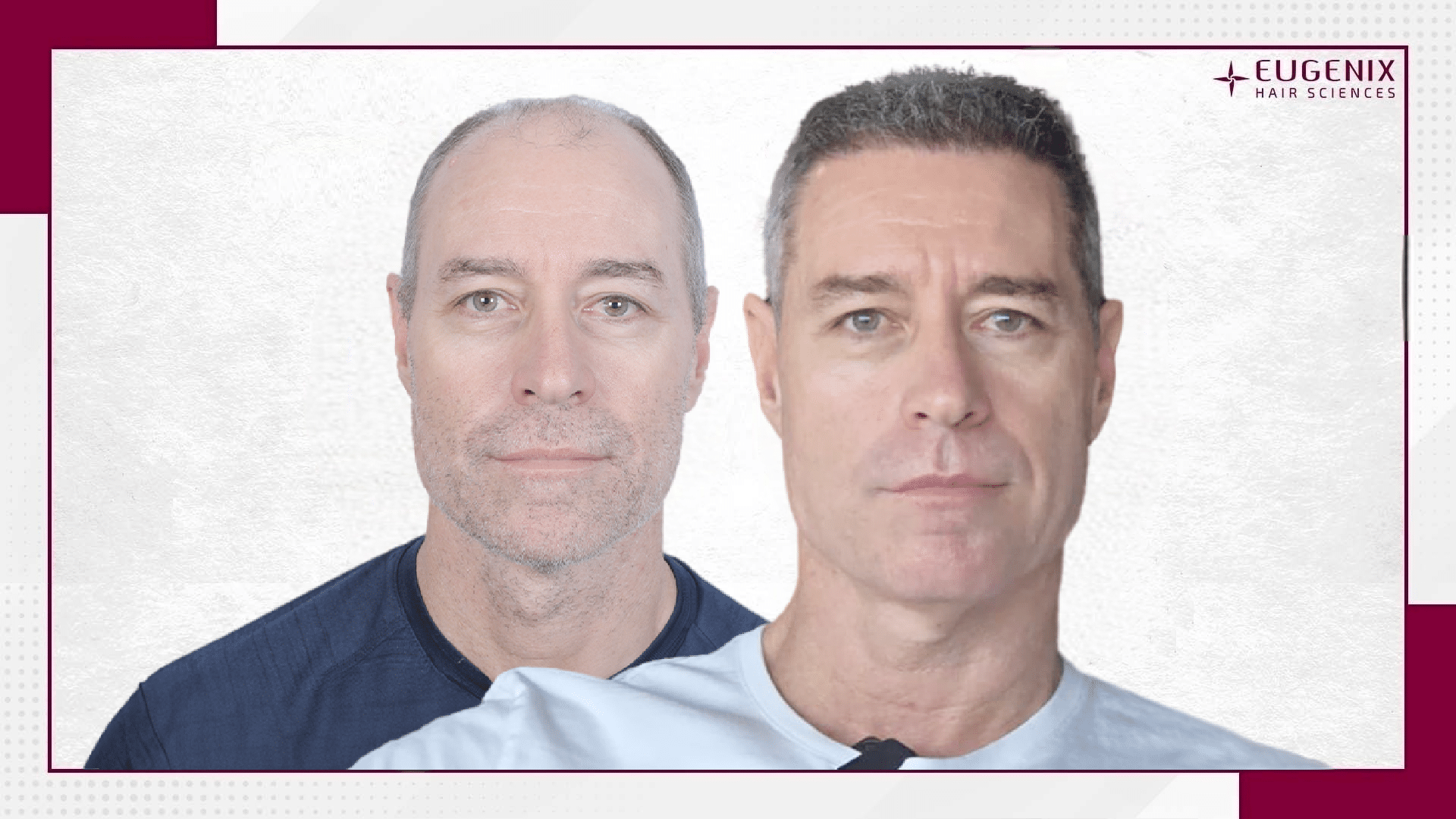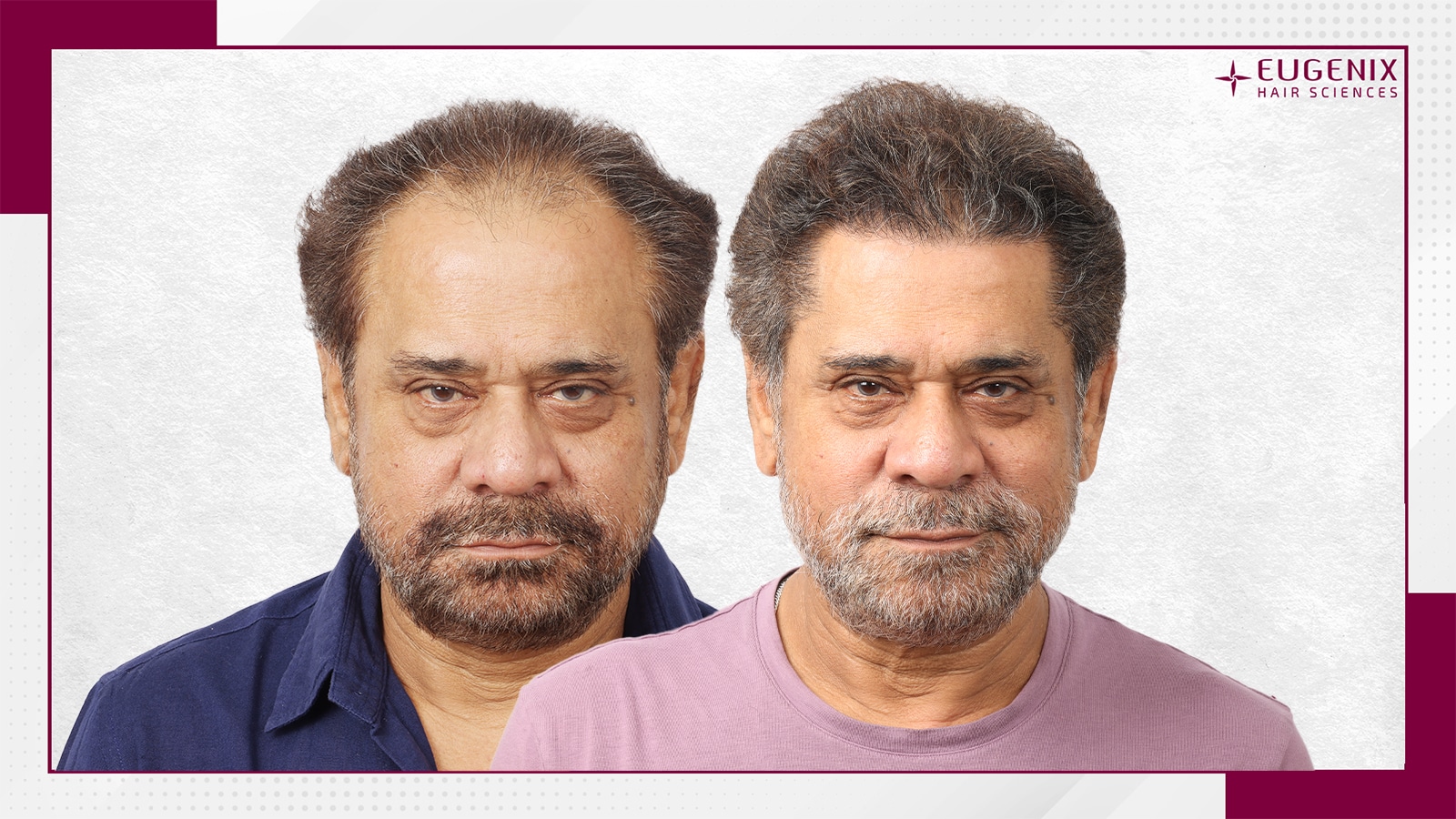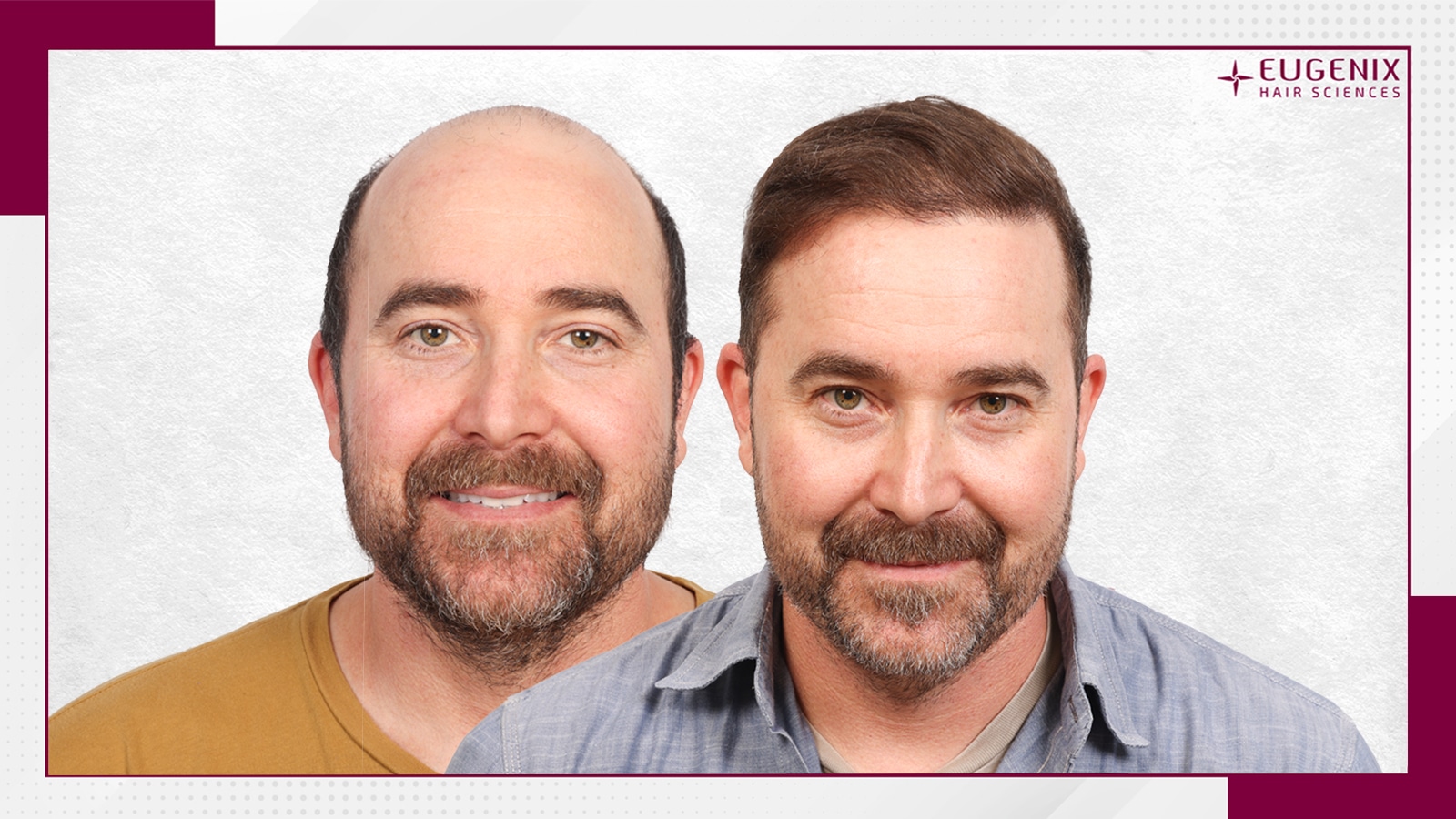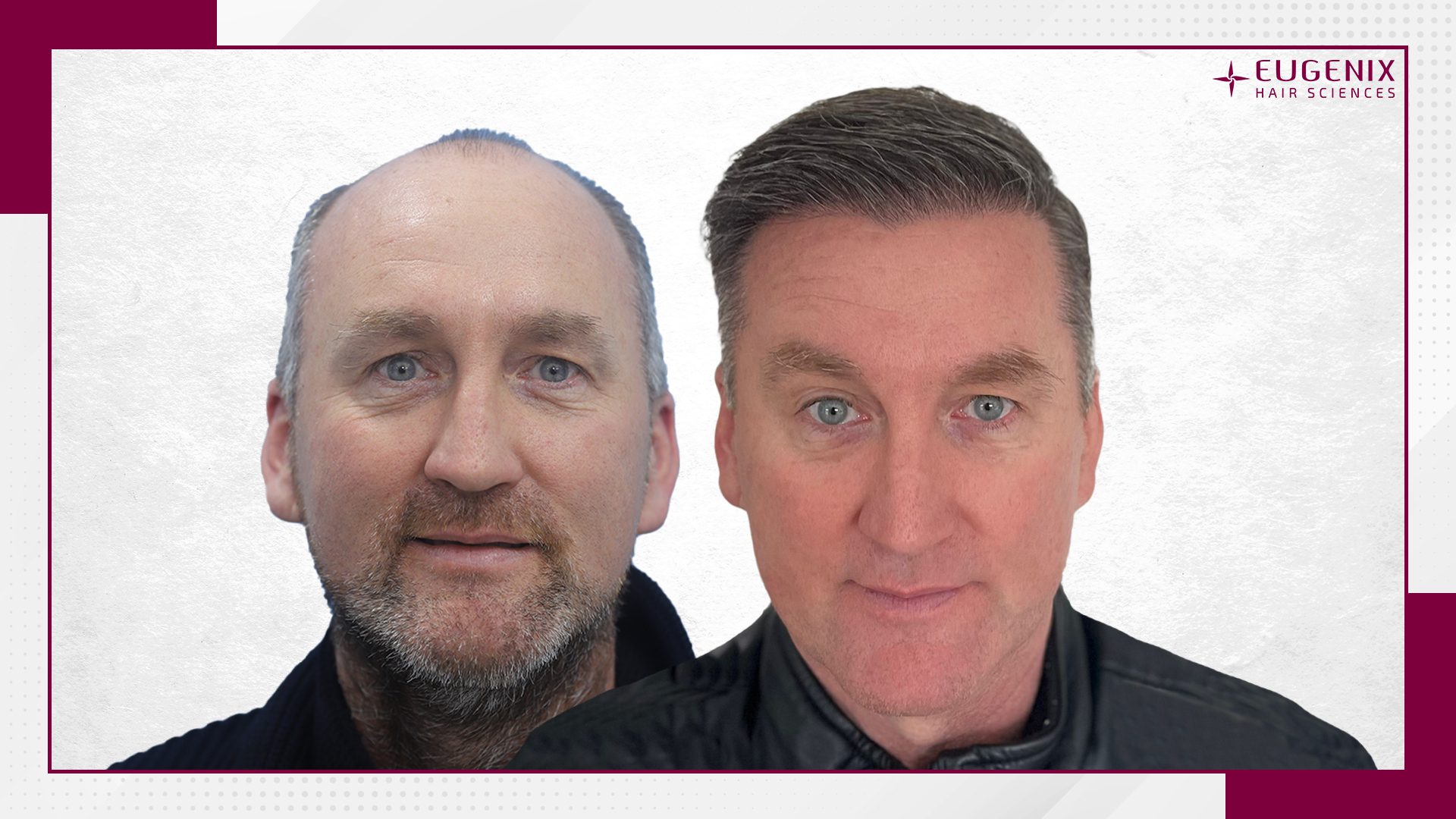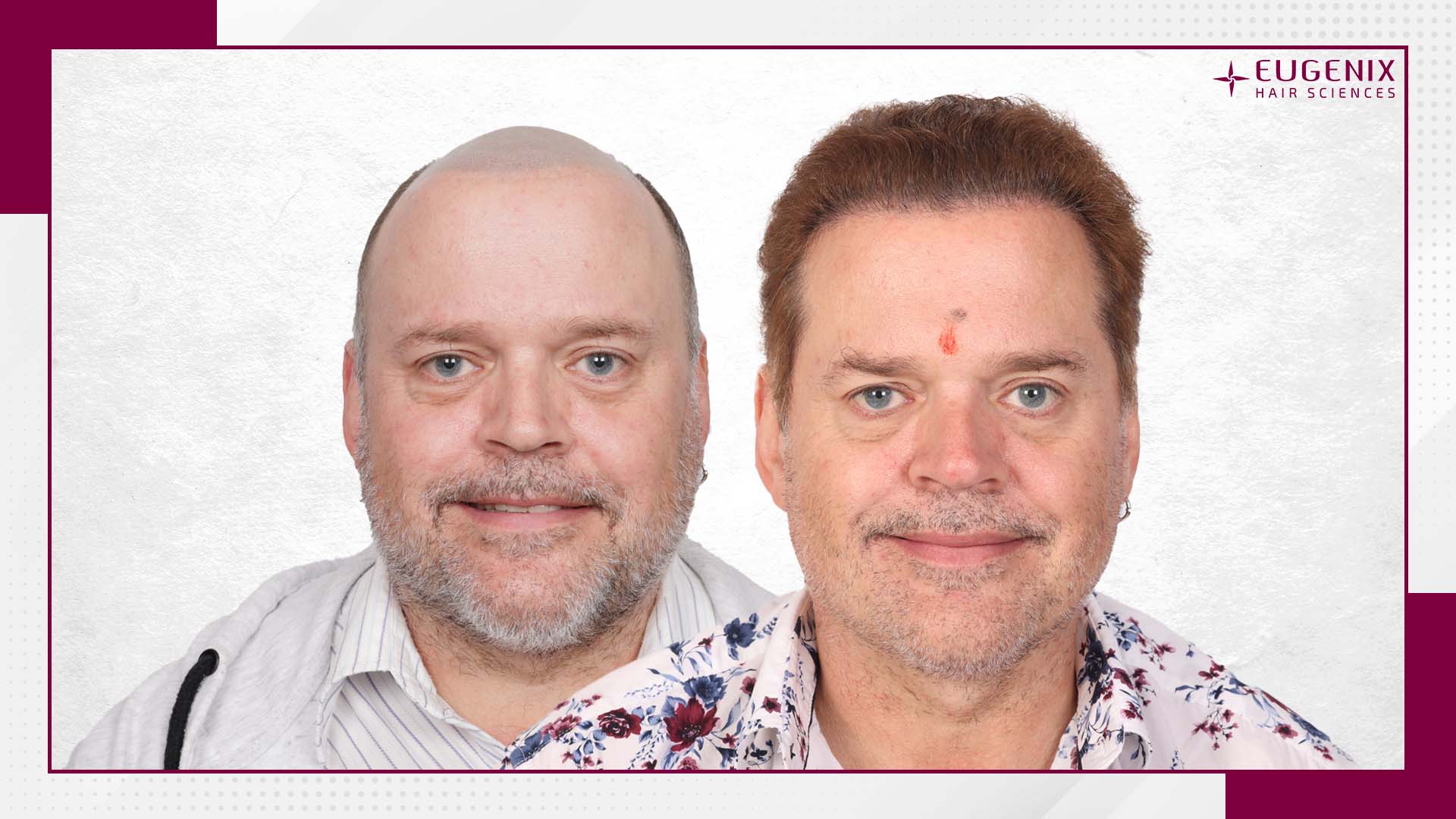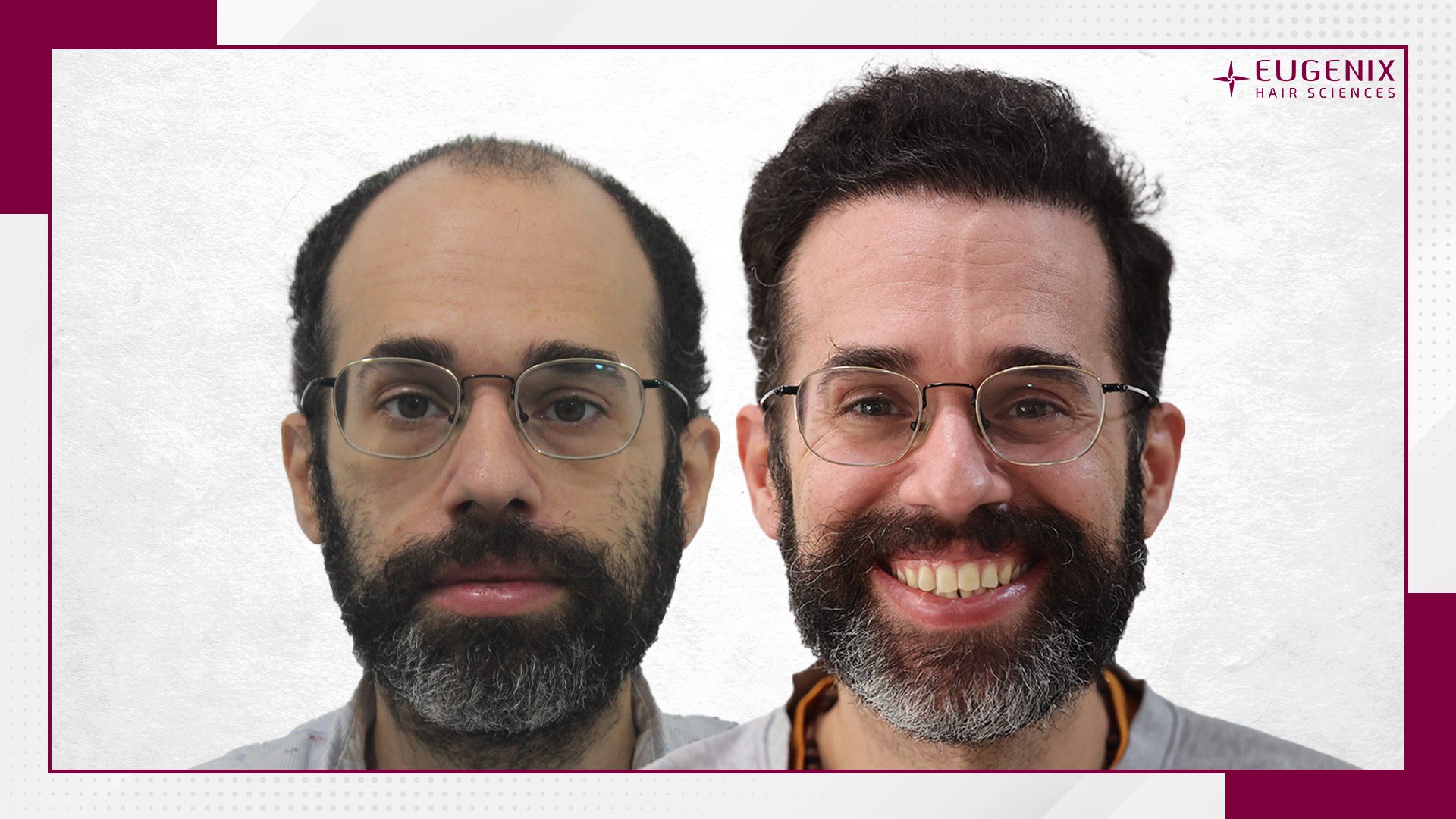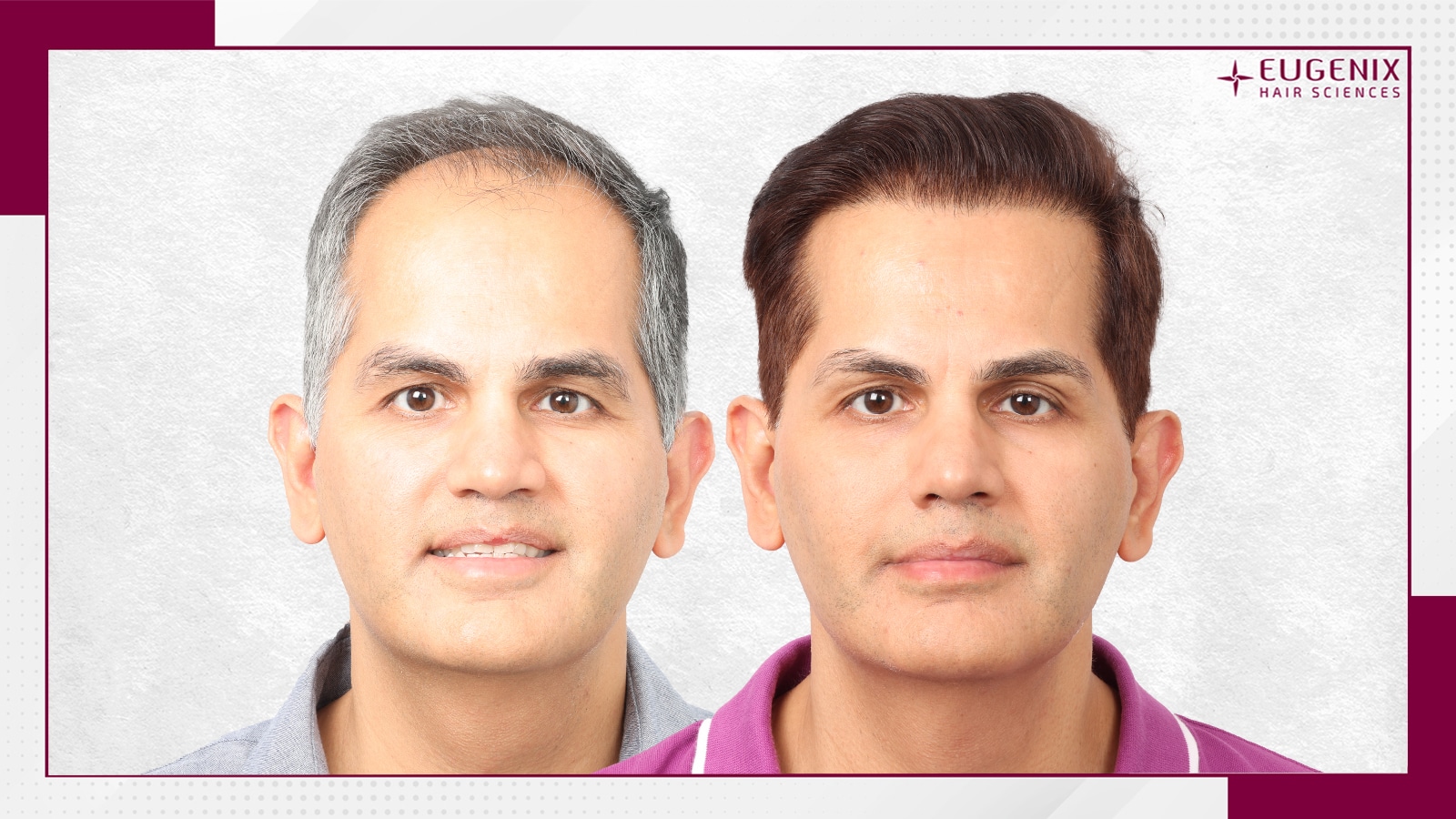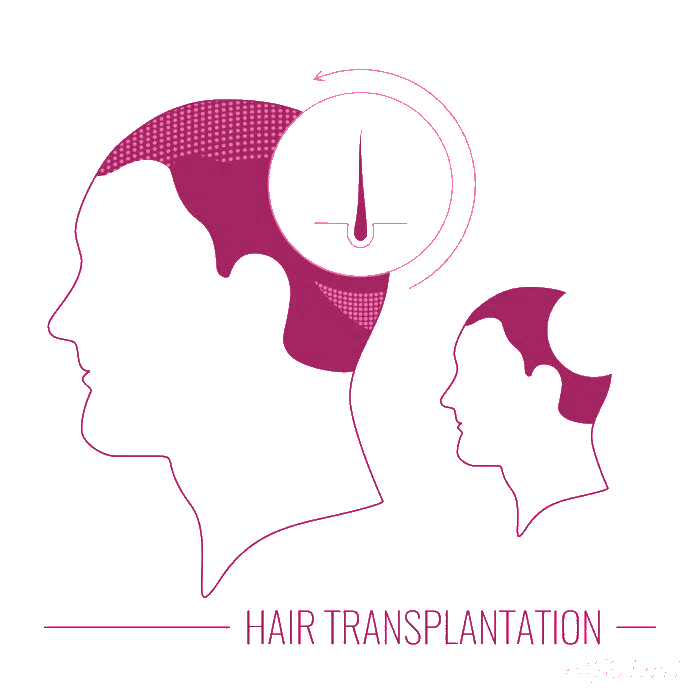
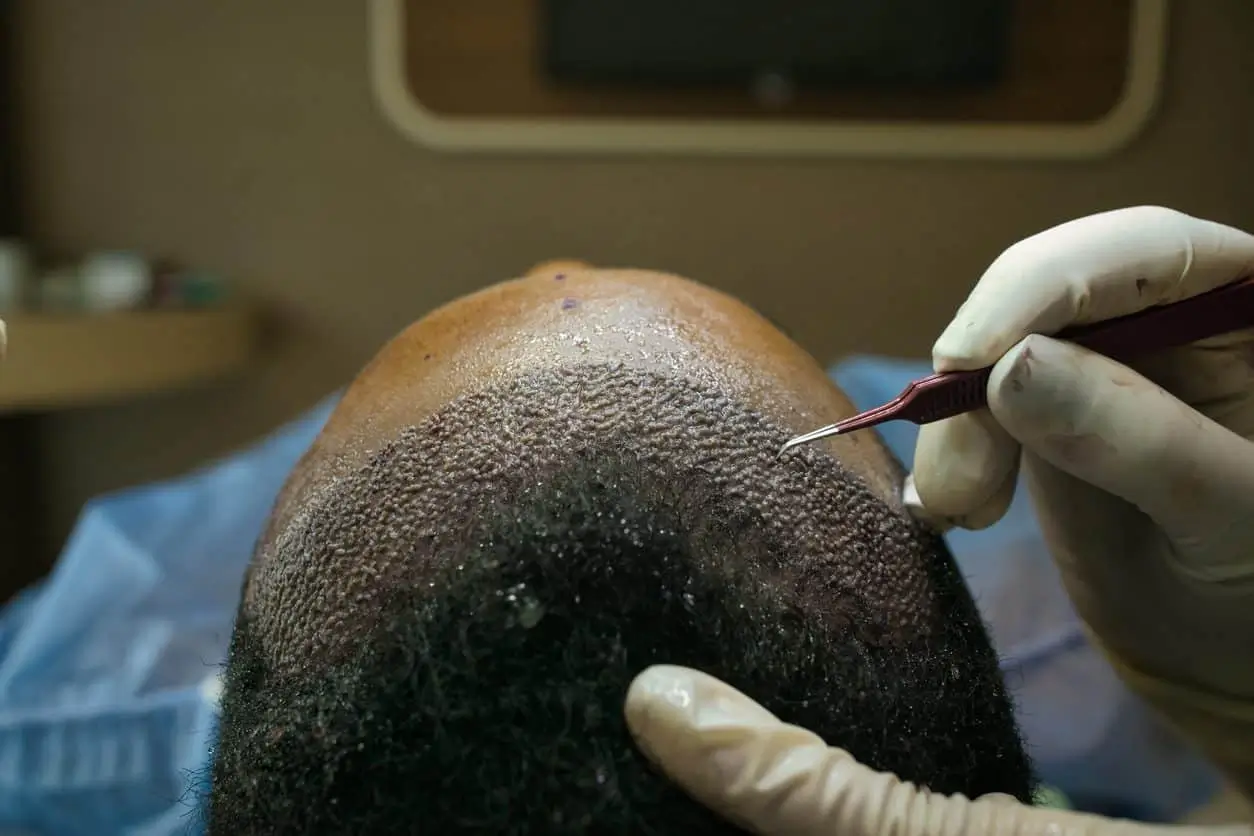
DHT stands for Direct Hair Transplant. It is the technique Eugenix Hair Sciences performs, and it is a modified form of FUE developed by our Co-Founders.
What DHT is
In any FUE procedure, individual follicular units are extracted one at a time from the donor area, which is the region at the back and sides of the scalp where hair resists the process that causes pattern hair loss. Those units are then placed into the thinning or bald area.
DHT changes the order in which that happens, and that change is the whole point of the technique.
In standard FUE, follicular units are extracted first, held outside the body while the recipient sites are created, and only then implanted. The grafts wait.
In DHT, the recipient slits are made first. The doctor creates every slit by hand before extraction begins, setting the angle, direction and density across the whole area. Extraction and implantation then happen at the same time rather than in sequence. Because each slit is already waiting, a graft moves from the donor area into its recipient site directly, which brings the time a graft spends outside the body to under thirty minutes.
How DHT differs from standard FUE
The comparison is between techniques, not between clinics.
- Standard FUE extracts first and creates recipient sites afterwards. DHT creates every recipient slit first.
- In standard FUE extraction and implantation are separate stages. In DHT they happen at the same time.
- Time outside the body. Because slits are pre-made, grafts move directly into place, keeping this to under thirty minutes.
- Who does what. The doctor makes every slit by hand and sets every technical parameter.
Guideline note: FUT may be referenced as historical context only, with an explicit statement that Eugenix does not perform FUT. No competitor technique names appear anywhere on this page.
Why the technique was developed
DHT, or Direct Hair Transplant, is the technique developed and published by the Eugenix founding surgeons. It is a modified FUE, and the modification is specific: extraction and implantation happen simultaneously, so a graft enters a pre-made recipient slit almost as soon as it is removed.
In standard FUE, grafts can remain outside the body for 3 to 6 hours while harvesting is completed. Under DHT, out-of-body time is held under 30 minutes. Less time outside the body means less desiccation, less deoxygenation and less handling, which supports high graft survival.
Graft handling and implantation
Graft survival depends heavily on how follicular units are handled between extraction and placement. Time outside the body, hydration and physical handling all matter.
What DHT means for your result
Two things determine whether a transplant looks natural. The first is design, meaning where the hairline sits, how density is distributed and how the result will still make sense in twenty years. The second is execution, meaning the angle and direction of every graft placed.
Who DHT suits
Suitability is assessed individually. The factors considered include the stage and pattern of loss, whether it has stabilised, donor density, age and general health. Our doctors will tell you if a transplant is not appropriate for your case.
The procedure, step by step
- Consultation and planning, including hairline design where the front is involved.
- Preparation of the donor area and administration of local anaesthetic.
- The doctor makes every recipient slit by hand, setting angle, direction and density across the area.
- Extraction and implantation proceed simultaneously, with grafts moving directly from donor area to recipient site.
- Time outside the body is kept to under thirty minutes.
- Aftercare instructions before you leave the OT.
Bangalore Location:
2nd and 3rd Floor, Featherlite Vantage 100 Feet Rd, HAL 2nd Stage, Domlur, Indiranagar, Bengaluru (Bangalore), Karnataka – 560038
Google Map:
https://maps.app.goo.gl/LM8nJ4j7DadvsDdh9