Hairline Reconstruction in Bhubaneswar
The conversation is almost always the same at every consultation. A patient sits down and asks the big question: “How many grafts will I need?”
It’s a logical question. We’ve conditioned ourselves. To think of transplant as a transaction, a commodity sold by the “graft.” 2000 grafts for the crown, 1500 for the front.
I’m here to tell you that this is the wrong question. It’s a dangerous distraction from the only thing that truly matters.
You can have 5,000 grafts implanted with perfect density, but if the first centimetre, the hairline, is wrong, you haven’t just wasted your money. You have, in many ways, ruined your face.
A bad hairline can be harder to live with than baldness. You can’t hide it, and it doesn’t look natural.
So, what makes a hairline “bad”?
It’s the ruler-straight line. It’s the weird “pluggy” look, where clumps of 3 or 4 hairs are jammed into the front, looking like a doll’s head. It’s the hair that sticks straight out at an unnatural angle.
It’s the signature of a rushed job. It’s what happens when a clinic treats your head like a ‘job’ to be finished, not a piece of art to be created. It’s the hallmark of a procedure where the “artist” (the doctor) isn’t even in the room.
Choose a clinic on facts you can check: the doctor’s name, qualification and registration number, who performs each step, and the written plan.
And the hairline is the hardest part of all.
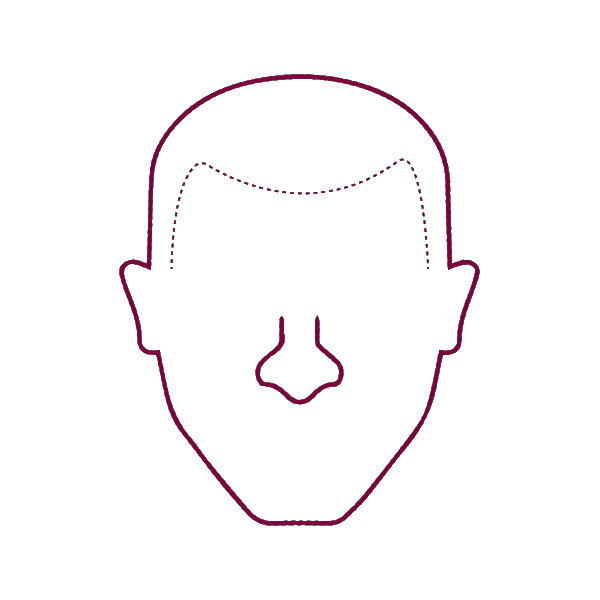
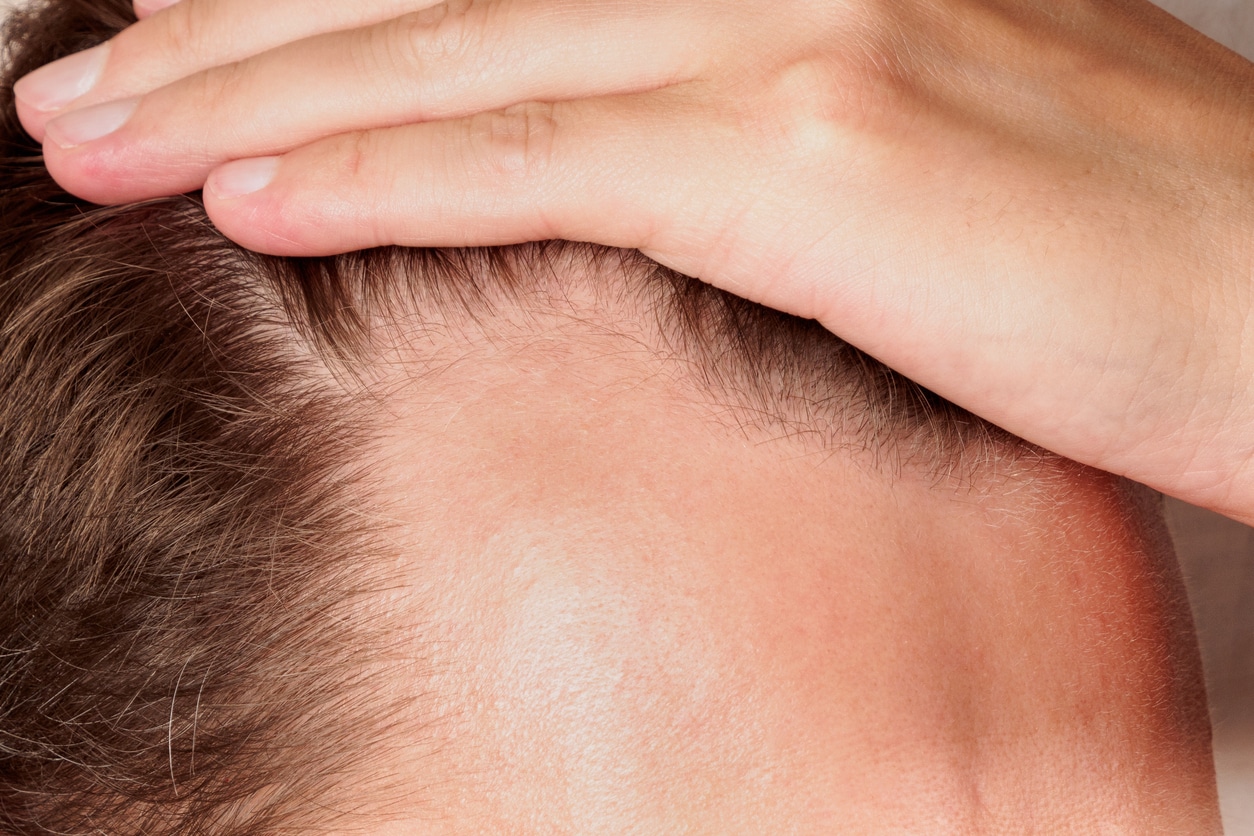
Look at a natural, non-receding hairline on anyone. It’s not a perfect, straight line. It’s soft. It’s slightly uneven. It’s composed of fine, single, baby hairs at the very front, what we call “micro-irregularities.” The density gently builds behind this soft, transitional zone. The hair flows at a specific, sharp-yet-natural angle.
Recreating this isn’t a science. It is pure, unadulterated artistry. It is sculpture, using human hair.
A surgeon who understands this plans every hairline individually.
This is where we have to talk about how a hairline is built.
You can’t create that soft, natural masterpiece with a “one-size-fits-all” technique. The surgeon needs a method that gives them absolute, end-to-end control over every single follicle.
We’re talking about the power to decide the exact angle, the precise direction, and the perfect depth for each hair, one by one, as it’s being placed.
This is the philosophy behind the Direct Hair Transplant (DHT) technique.
In DHT the slits are made first and grafts are placed into them, rather than an implanter pen making the opening and placing the graft in one step. Grafts stay outside the body for under 30 minutes with Direct Hair Transplant, compared to 3 to 6 hours with conventional FUE. Your hairline is planned to suit your face and age.
It’s the difference between a painter using a fine-tipped brush versus a paint-roller. Both cover the canvas, but only one can create a masterpiece.
Here is the good news for patients in Bhubaneswar.
Eugenix Hair Sciences has a centre in Bhubaneswar, at VIP Colony, Nayapalli.
Direct Hair Transplant (DHT) was described by our Co-Founders in their 2013 research paper. It is used for hairline reconstruction at our Bhubaneswar centre.
Eugenix was founded by Dermatologists, alumni of AIIMS, New Delhi, and Fellows of ISHRS. Our Co-Founders are co-editors of Step by Step Hair Transplantation (Jaypee Brothers Medical Publishers, 2019).
So, when you are having that consultation for hairline reconstruction, stop asking, “How many grafts?”
Start asking, “Who will design my hairline, and who performs each step of the procedure?”
The first centimetre of your hair will define your reflection for the next 30 years. Don’t trust it to a factory. Trust it to an artist.
Eugenix Bhubaneswar Clinic Location:
Plot 39-C, VIP Colony, Nayapalli, Bhubaneswar, Odisha 751015.
Google Map:
https://maps.app.goo.gl/V2EyhYWK8hvg9ycE6