
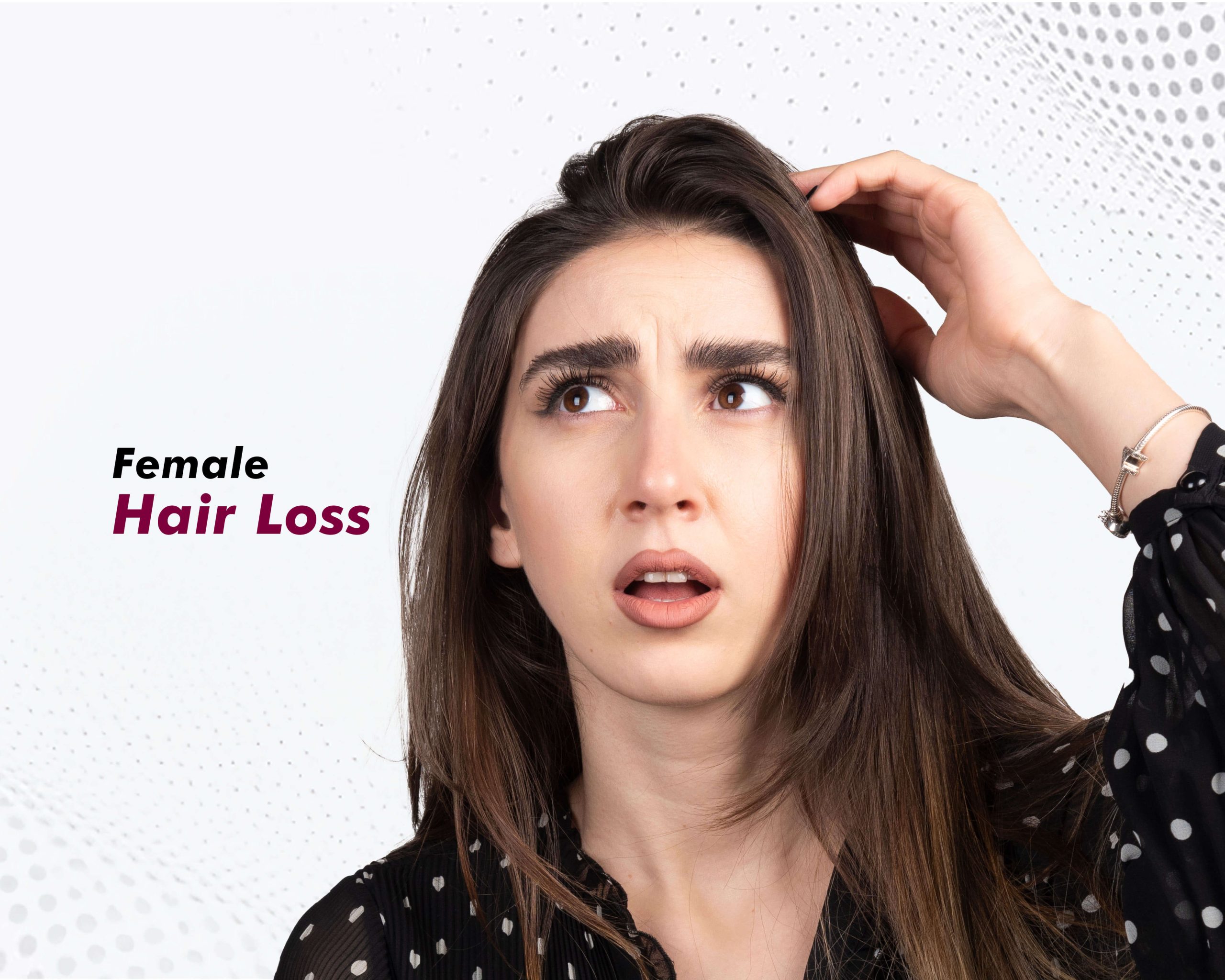
What is Hair Loss in Women?
Hair Loss in Women, often a topic whispered about rather than openly discussed, can be a significant concern for females. While typically associated with men, female pattern hair loss (FPHL) is a surprisingly common phenomenon, affecting millions of women globally. This article delves into the complexities of FPHL, exploring its causes and treatment options for hair loss, including hair transplant.
Unlike male pattern baldness, which presents with a receding hairline, hair loss in women manifests differently. This hair loss is characterized by a gradual thinning of hair density, typically starting at the crown and progressing outwards. The frontal hairline usually remains intact, although some women may experience a slight recession. Hair Loss is not a sign of a serious medical condition, but it can significantly impact a woman’s self-esteem and confidence.
Causes of Hair Loss in Women:
The exact causes of hair loss remain somewhat of a mystery, with several factors likely playing a role:
- Genetics: A family history of hair loss in women increases the risk of FPHL. Specific genes may influence how sensitive hair follicles are to androgens (male hormones) like testosterone.
- Hormonal Fluctuations: Changes in hormone levels throughout a woman’s life, such as during pregnancy, menopause, or due to polycystic ovary syndrome (PCOS), can contribute to FPHL.
- Ageing: As women age, hair growth naturally slows down, and hair follicles may become miniaturized, leading to thinning hair.
- Medical Conditions: Certain medical conditions, thyroid disorders, and nutritional deficiencies can contribute to hair loss.
- Stress: Chronic stress can disrupt the hair growth cycle, leading to temporary or even permanent hair loss.
Diagnosing FPHL typically involves a physical examination of the scalp and a discussion of your medical history and family background. Blood tests may be ordered to rule out any underlying medical conditions. Trichologists, specialists in scalp and hair disorders, can also be involved in the diagnostic process.
Treatment Options for Hair Loss in Women:
While there is no single “cure” for FPHL, several treatment options can help slow down hair loss in women, promote regrowth, or move hair to the areas of loss:
- Medications: Minoxidil, a topical medication available over-the-counter, stimulates hair growth but requires consistent use and has limited effectiveness in advanced stages of female hair loss.
- Spironolactone: This medication may be prescribed to regulate androgen levels in women with FPHL suspected to be hormonally driven.
- Low-Level Laser Therapy: While the evidence is not conclusive, some women may experience hair growth benefits from low-level laser therapy.
- Hair Transplant: A hair transplant moves healthy hair follicles from the back and sides of the scalp to the areas of thinning, when the donor area is stable. The transplanted hair is your own natural hair.
Female Hair Loss Treatment at Eugenix
Eugenix Hair Sciences has worked only in hair restoration since 2009. Here is how Eugenix approaches hair restoration for women:
- Focus on Women’s Hair Loss: Eugenix Hair Sciences understands the emotional impact of FPHL on women and has extensive experience in female hair transplantation.
- The DHT Technique: Eugenix performs Direct Hair Transplant (DHT), a modified Follicular Unit Extraction (FUE) technique. Direct Hair Transplant (DHT) was described by our Co-Founders in their 2013 research paper.
- Artistic Hairline Design: Eugenix Hair Restoration specialists prioritize creating a natural and feminine hairline that complements your facial features.
- The Eugenix Care Team: A dedicated care team supports you throughout the entire journey.
A consultation with a doctor is important. At Eugenix, a doctor assesses your situation, recommends a treatment plan and answers your questions.
While exploring female hair loss treatment options is vital, it’s equally important to embrace self-acceptance. Hair loss, while it can be emotionally challenging, does not define your worth or beauty. If hair loss is affecting you, you are not alone, and a doctor can explain the options that suit you. Results vary from person to person.


