
“1 graft how many hair” is one of the most searched questions in hair restoration. One clinic quotes 2,500 grafts. Another quotes 5,000 hairs. A third talks about follicular units. The numbers sound wildly different even when the plan is identical. Knowing how many hairs sit inside a single hair graft is the clearest way to compare hair transplant proposals honestly, and to set realistic expectations for hair growth, hair density, and scalp coverage.
What Is a Hair Graft?
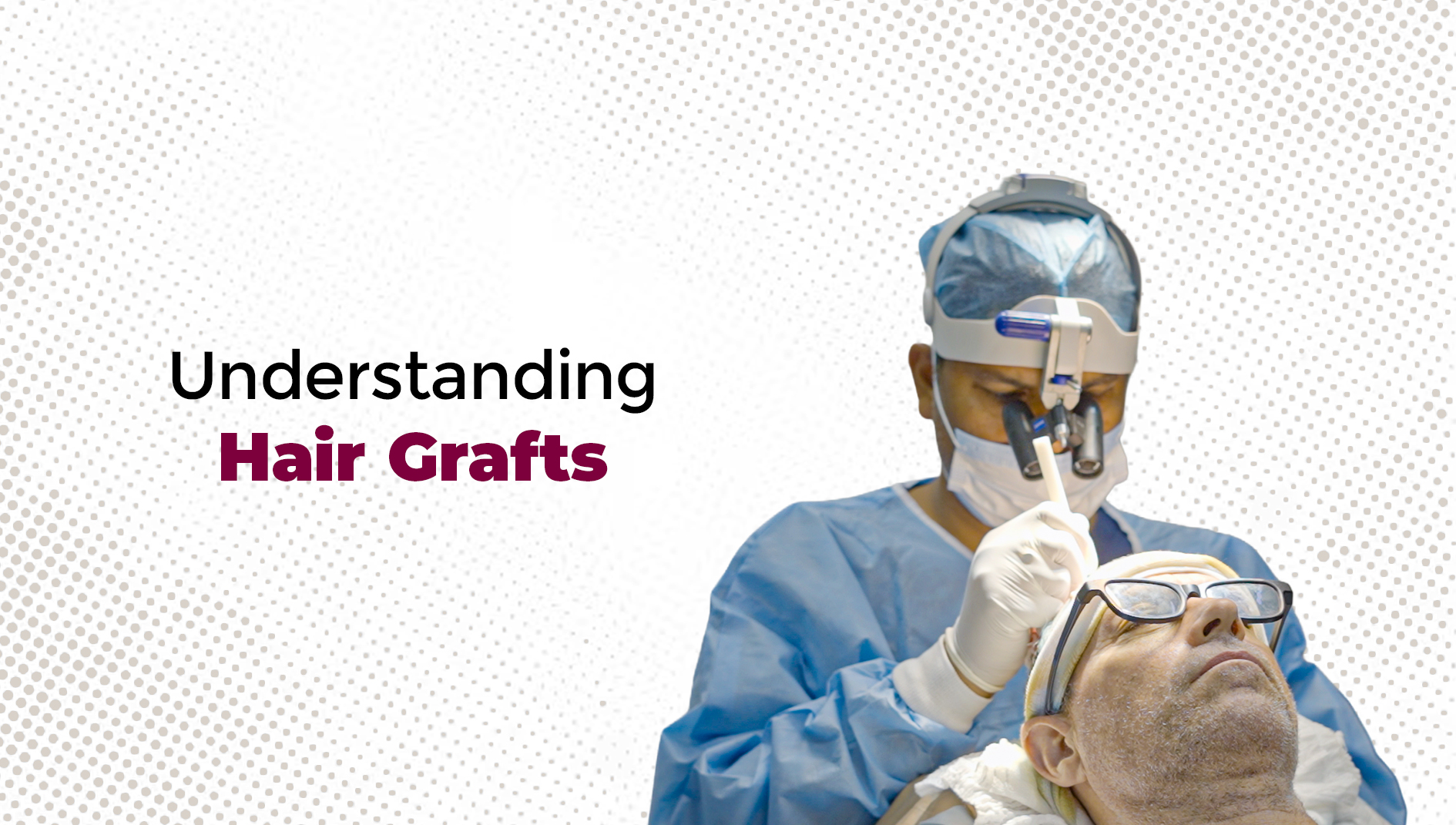
A hair graft is not a single hair. A hair graft is a small piece of scalp tissue holding a naturally occurring group of hair follicles that grow together from the same point, enclosed in a common sheath. That cluster is called a follicular unit, which is why hair transplant surgeons use graft and follicular unit interchangeably.
Hair does not grow as evenly spaced strands. On a healthy scalp it emerges in natural clumps of two, three, and sometimes four. Grafts that respect those groupings produce natural results.
The donor area for grafts is the safe zone at the back and sides of the scalp, where hair follicles resist the hormone driving male pattern baldness. Grafts taken from this donor site are permanent.
1 Graft How Many Hair? The Direct Answer
One graft contains 1 to 4 hair follicles. Grafts are classified by how many hairs they hold:
– Single graft (single hair graft): 1 hair
– Double graft: 2 hairs
– Triple graft: 3 hairs
– Quadruple graft: 4 hairs, less common
On average, one graft carries approximately 2 hairs, so hairs per graft sits around 2.0. One graft therefore does the work of about two hairs, and roughly 1,000 grafts correspond to about 2,000 hairs. If your plan calls for 2,000 grafts, the number of hair moved is around 4,000, far more hair than the graft figure suggests.
Beard grafts differ. Beard hair grows predominantly as single follicles, so a beard hair graft usually carries about 1 hair. Beard grafts add volume to the mid scalp and periphery, but deliver less scalp coverage per graft than scalp grafts do.
Why Hairs Per Graft Varies From Person to Person
Two people quoted the same number of grafts can receive a different number of hair. How much hair you gain, and how many hairs each graft varies by, comes down to:
– Follicular grouping. Some scalps are rich in triples and quadruples. Others are dominated by singles and doubles.
– Hair characteristics. Thicker straight hair covers more than fine thin hair.
– Donor area quality. This sets the ceiling on how many hair grafts can safely be harvested.
– Ethnicity. Curl pattern changes how grafts look once grown.
Graft vs Hair vs Follicular Unit
– Follicular unit: the natural grouping of 1 to 4 hair follicles in your scalp.
– Hair graft: the same follicular unit once extracted, ready for implantation.
– Hair: a single strand. One graft can hold up to four of them.
A quote in hairs always sounds larger than the same quote in grafts, though nothing has changed. A plan of 2,000 grafts can be presented as 4,000 hairs. Both are true. Only one uses the standard clinical unit.
How to Read a Hair Transplant Quote
Before comparing proposals, ask one question. Is this a number of grafts, or a number of hair? If a quote is in hairs, ask for the graft count so you compare like with like. Graft count is what planning and pricing in hair transplant procedures are built on, and a reputable clinic will restate it without hesitation.
How Many Grafts Do You Need?
The number of grafts you need depends on the area covered, your donor area, your hair loss pattern, and how that hair loss will progress. A responsible plan accounts for future hair loss, not just today’s visible thinning area. No surgeon can quote grafts required over the phone, and the grafts needed by one person tells you nothing about another case.
A healthy scalp carries roughly 80 to 100 follicular units per square centimetre. A hair transplant does not match that. Implanting more grafts than the blood supply can nourish works against survival, so dense packing beyond a safe threshold is counterproductive. Optimum density beats maximum density.
Implantation densities at Eugenix:
– Frontal hairline: 35 to 45 grafts per square centimetre
– Mid scalp and crown: 25 to 35 grafts per square centimetre
– Grade 6 and 7 hairline: 40 to 45 grafts per square centimetre, with 20 to 25 behind the hairline
How many grafts fit a zone is set by these densities, not by preference. A transplanted zone settles at approximately **50 percent of natural density**, with grafts about 1.5 mm apart against 0.5 mm for natural hair, so a realistic result carries a slight see through quality in sunlight. Planning and Designing, plus strategic placement, turns that 50 percent into a result that reads as full.
How Much Area Will 2,500 Grafts Cover?
Work back from the hair density planned for each zone. At 25 to 35 grafts per square centimetre across the mid scalp, 2,500 grafts cover roughly 70 to 100 square centimetres. At frontal hairline densities the same number of grafts covers less area at higher impact. Mild hair loss at the frontal hairline needs far fewer grafts than extensive hair loss across mid scalp and crown, which may need multiple sessions rather than one session. How many grafts fit into a single session is limited by donor supply and safety.
Is 500 Grafts Enough?
For a small gap, a scar, or temple refinement, that graft number can be appropriate, and such cases are often completed in one session. For moderate hair loss across a broad zone, 500 grafts will not give meaningful scalp coverage. Grafts needed is an output of assessment, never an input chosen in advance.
Where Single Hair Grafts and Multi Hair Grafts Go
A natural appearance comes from matching graft types to zones.
Single hair grafts go along the frontal hairline, in the first 5 to 6 rows. A hairline built from single hair grafts has the soft irregular edge a natural hairline has. Multi hair grafts at the front are a clear giveaway of poor work.
Triple and quadruple grafts go to the forelock and mid scalp, where volume and the optical illusion of fullness matter more than a delicate edge. Overall density improves when graft types match zones, which is why graft quality matters, not just graft numbers.
Why the Number of Hair You See Is Not the Number Implanted
How many hairs you see at one moment is never the full number, even after complete hair growth. This is normal biology, not a shortfall. Every hair cycles between growth and rest, and at any time approximately 80 percent of scalp hair is growing while 20 percent is resting. Resting hairs are still present and healthy. Visible yield per 1,000 transplanted grafts therefore differs by donor source:
– Scalp grafts: approximately 700 to 800 visible at any time
– Beard grafts: approximately 500 to 600
– Chest grafts: approximately 200 to 300
How Eugenix Handles Every Hair Graft
Counting grafts is one thing. In hair transplant procedures, what happens to each graft during hair transplant surgery decides whether those numbers become growing hair.
Eugenix performs DHT (Direct Hair Transplant), the flagship technique developed by its Co-Founders and published in a 2013 peer reviewed paper titled “Direct hair transplantation: a modified follicular unit extraction technique”. DHT is a modification of follicular unit extraction. In traditional FUE, grafts stay outside the body for 3 to 4 hours. In DHT, extraction and implantation run simultaneously, bringing out of body time for grafts to **under 30 minutes**. Less exposure means less risk of drying and handling damage to fragile hair follicles.
Grafts are placed using the SAVA Implanter (no root touch): the graft is visible throughout, and it is inserted smoothly into a pre made slit without a plunger based blind push.
The lead surgeon performs Planning and Designing, creates recipient slits hands on using the coronal slit technique, and sets all technical parameters including punch size, angle, depth, and density. Scoring, punching, extraction, and implantation are carried out by senior surgical assistants working to those parameters. The lead surgeon supervises your procedure throughout, taking rounds between active steps and remaining available at all times during your surgery.
Eugenix Hair Sciences Gurgaon is NABH accredited under Certificate No. DE-2026-0004, valid from 12 March 2026 to 11 March 2030. At Eugenix, major complications are exceptionally rare, supported by over 22,000 procedures performed across more than 15 years of clinical practice.
Frequently Asked Questions
Does 1 Graft Mean 1 Hair?
No. How many hairs a graft holds depends on its follicular unit. Only a single hair graft contains exactly one hair, and these grafts are used mainly at the frontal hairline. Most scalp grafts hold 2 or more.
How Many Grafts Are 3,000 Hairs?
At about 2 hairs per graft, 3,000 hairs is roughly 1,500 grafts. Your follicular grouping decides the exact number of grafts, which hair transplant surgeons assess in person.
Do More Grafts Always Mean Better Outcomes?
No. More grafts do not automatically mean more hair on show. Scalp coverage depends on healthy hair graft quality, hair characteristics, and placement. Forcing more grafts into an area than the blood supply supports harms survival, which is why a skilled surgeon plans for the desired density rather than the maximum.
How Many Hairs Will I Gain From My Grafts?
Multiply your graft count by roughly 2 to estimate how much hair is being moved. For the average person that works, though the true figure depends on how many hair grafts in your donor area are doubles, triples, and quadruples.
Can My Graft Requirement Be Estimated Without a Consultation?
Not reliably. Your donor area, hair loss pattern, and likely progression need assessment before a graft requirement means anything. Planning must also leave grafts in reserve for future sessions.
The Bottom Line
How many hairs one graft holds ranges from 1 to 4, averaging around 2 on the scalp. Grafts and follicular units are the same thing. Hairs are the strands inside them. Hold that distinction and every quote in hair transplantation becomes easier to judge.
Hair loss is progressive, and early planning almost always produces better outcomes than waiting. For an accurate assessment of your donor area and a graft plan built around your own hair loss pattern, book a consultation with the Eugenix panel of experienced surgeons, all personally handpicked and trained by our Co-Founders.
Dr. Arika Bansal
One of only a few female surgeons specializing in hair transplant surgery in India, Dr. Arika Bansal has been voted one of the best doctors in the world. She maintains an active fellowship in the ISHRS and regularly submits research papers to medical journals. 15+ years down the line, 22,000+ surgeries are accomplished under Dr. Bansal’s supervision. She specializes in female hair transplant, density improvement, corrective hair transplantation and hairline design.