A beard hair transplant is one of the most requested facial hair procedures in India today, and one of the most misunderstood. Patchy facial hair on the cheeks, a thin jawline border, a sparse moustache line, or a scar from an old injury can all be addressed surgically, but not everyone is a suitable candidate and not every donor plan produces a natural appearance. Beard hairs are coarser than scalp hair, grow on a different cycle, and demand a different set of surgical decisions.
This guide explains how a beard transplant and a moustache transplant are planned and performed at Eugenix Hair Sciences, what recovery looks like, and what a realistic result looks like at twelve months. The aim is to give you enough clinical detail to decide whether beard transplant surgery is right for you.
What a Beard Transplant Is
A beard transplant moves individual hair follicles into the beard area, where they take root and grow permanently as facial hair. No strip of tissue is removed, there is no linear scar, and nothing artificial is implanted. The grafts are your own hair, redistributed from a zone where growth is dense to one where it is not.
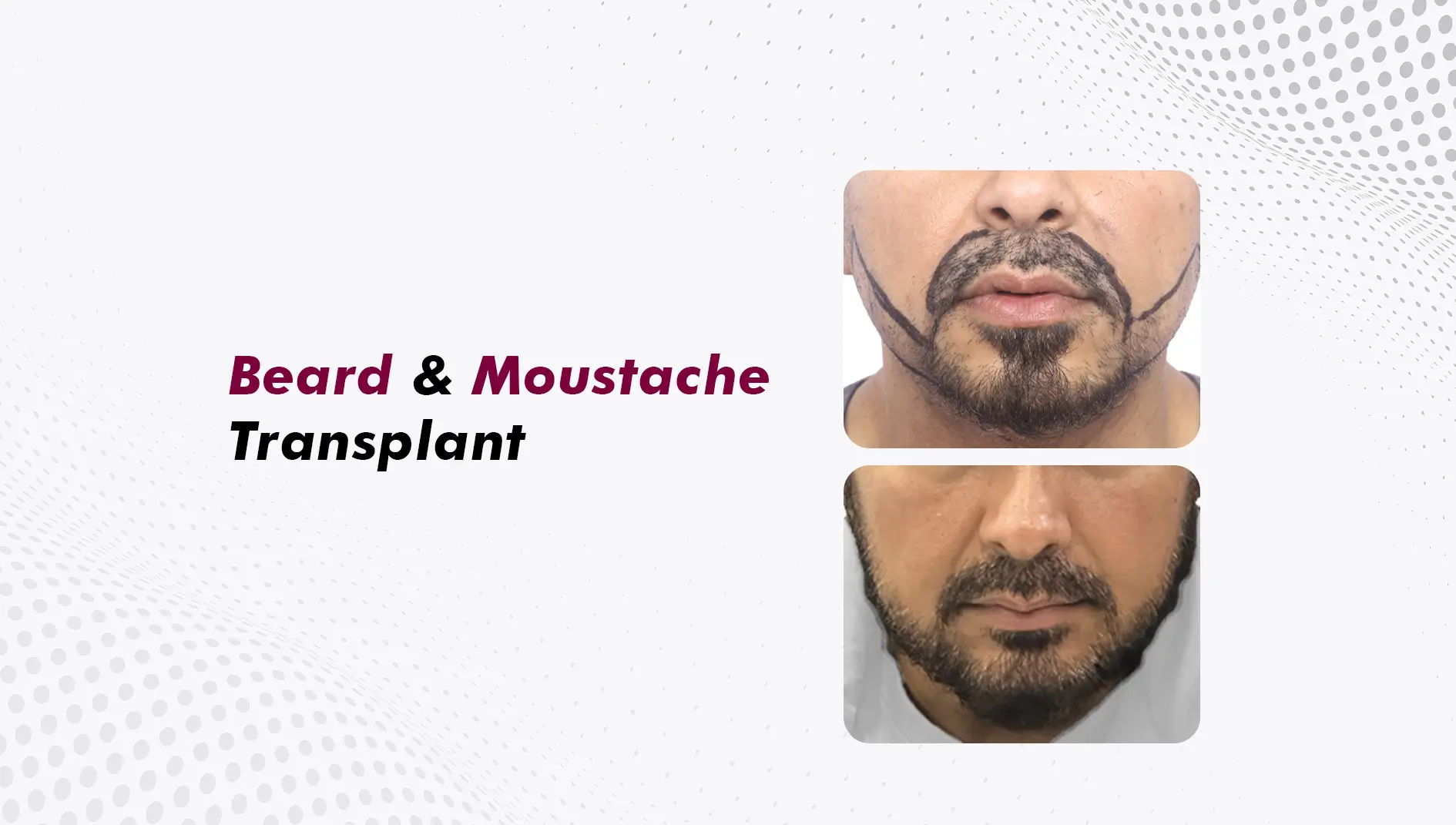
The beard transplant procedure fills patchy beards, builds a defined border along the jaw and cheek line, restores facial hair over scarred skin, and adds density to a beard region that has always grown thin. Transplanted hair follicles are permanent. Once established they behave like natural facial hair, and the new beard grows, trims, and shaves exactly as the rest of your natural beard does.
Why Patchy Facial Hair Happens
Facial hair loss and poor growth have several causes, and the cause matters before any hair transplant procedure is planned.
– Genetics. The most common reason for patchy beards. Beard density is inherited, and some men have fewer hair follicles in the beard region.
– Alopecia areata. An autoimmune condition in which the immune system attacks hair follicles, producing sharply defined bald patches. Active alopecia areata must be medically stabilised before beard transplantation is considered.
– Thyroid disease. Underactive and overactive thyroid states both affect hair growth.
– Injury and scarring. Burns, surgical scars, and accidents destroy hair follicles locally and leave uneven facial hair growth.
– Chemotherapy drugs, which can cause temporary facial hair loss, with regrowth usually following treatment.
Surgery is the right answer for stable, structural gaps in beard growth, not for an active medical condition. A qualified surgeon will tell you so.
Are You a Candidate for Beard Transplant Surgery
Everything turns on the donor area. A beard transplant suits individuals with sufficient healthy donor hair, and the donor decision is made during Planning and Designing with the lead surgeon.
– Beard to beard is the ideal match. Individual hair follicles taken from a denser part of the beard, typically below the chin or below the jawline, share the calibre, curl, and growth pattern of the area being filled, so the new beard hairs blend with the natural beard around them.
– Scalp to beard suits mild density enhancement in a man who already has a moderate beard. Scalp hair is straighter, finer, and faster growing, so it can supplement existing hair but never substitute for a beard that was never there.
Not everyone should have the surgery. A man with almost no beard growth who wants a full beard built entirely from scalp hair is not a good candidate. The texture mismatch is severe, the result reads as unnatural, and the procedure consumes scalp donor reserve he may need later for his own hairline or crown. The honest recommendation is a topical beard growth treatment first, with reassessment after six to twelve months. Some men respond well enough that surgery becomes unnecessary, and those who do not have at least protected their donor site.
Follicular Unit Extraction, FUT, and the Technique Eugenix Uses
Most beard transplants worldwide use follicular unit extraction, or FUE, which removes extracted hair follicles one at a time through small circular incisions in the donor area, leaving dot scars that are undetectable at conversational distance. The older method, follicular unit transplantation, or FUT, removes a strip of scalp and leaves a linear scar. Eugenix does not perform follicular unit transplantation. It appears here only because patients researching hair transplantation abroad still meet the comparison.
Every procedure at Eugenix uses DHT, or Direct Hair Transplant, the technique developed by the Co-Founders and published in the peer reviewed literature in 2013 as a modified follicular unit extraction technique. The defining modification is simple to describe and difficult to execute. Extraction and implantation happen simultaneously rather than in sequence. In traditional FUE the grafts sit outside the body for three to four hours while the team completes extraction. Under DHT, out of body time stays under 30 minutes.
This matters more in facial hair transplant work than most patients realise. Beard grafts carry less fat than scalp grafts, which makes them more prone to desiccation and heat damage. The shorter a newly implanted hair follicle spends outside the body, the better its chance of surviving and producing new hair.
Moustache Transplant and Mustache Hair Transplant
A moustache transplant follows the same surgical principles but sits in a far more mobile zone. The upper lip moves constantly with speech, eating, and expression, which makes the first week the most demanding part of recovery. Patients searching in American English will find the same procedure described as a mustache hair transplant. The spelling differs, the surgery does not.
A moustache transplant fills a sparse or absent moustache, defines a border, or corrects a gap left by scarring. Density is graded so it reads as naturally dense rather than blocked in, and angle control is critical, because moustache hair grows at a shallow downward angle that has to be reproduced graft by graft.
Moustache, eyebrow, and beard restoration at Eugenix are led by Senior Eugenix Hair Transplant Doctors as a minimum standard. These are small field procedures where surgical judgement matters more than volume.
How the Beard Hair Transplant Procedure Is Performed
Facial hair transplant work at Eugenix follows the same two tier structure used across every DHT procedure.
The lead surgeon carries out Planning and Designing, including the border design, the graft estimate, and the donor plan. The lead surgeon creates the recipient slits hands on and sets every technical parameter: punch size, angle, depth, and density, following the ADDD principle of Angle, Depth, Density, and Direction or Design. The lead surgeon supervises your procedure throughout, taking rounds between active steps and remaining available at all times during your surgery.
Senior surgical assistants perform scoring, punching, extraction, and implantation under the lead surgeon’s parameters and supervision, using the SAVA Implanter, a no root touch instrument. The graft stays visible throughout and is inserted smoothly into a pre made slit without a plunger based blind push, which protects the follicle at the most fragile moment of the entire procedure.
Two technical details are specific to facial hair. Beard extraction requires sharp serrated punches rather than standard punches, particularly in the chin region where the skin is dense, and punch sizing is matched to hair type, with 0.8 mm the Eugenix standard. Grey or white beard hairs are dyed on the day of the surgical procedure, after markings and consent, so the team can orient each graft correctly.
Angle discipline separates a well defined facial hair result from an obvious one. Single hairs are placed along the border so the beard naturally reads as your own hair.
Recovery Week by Week
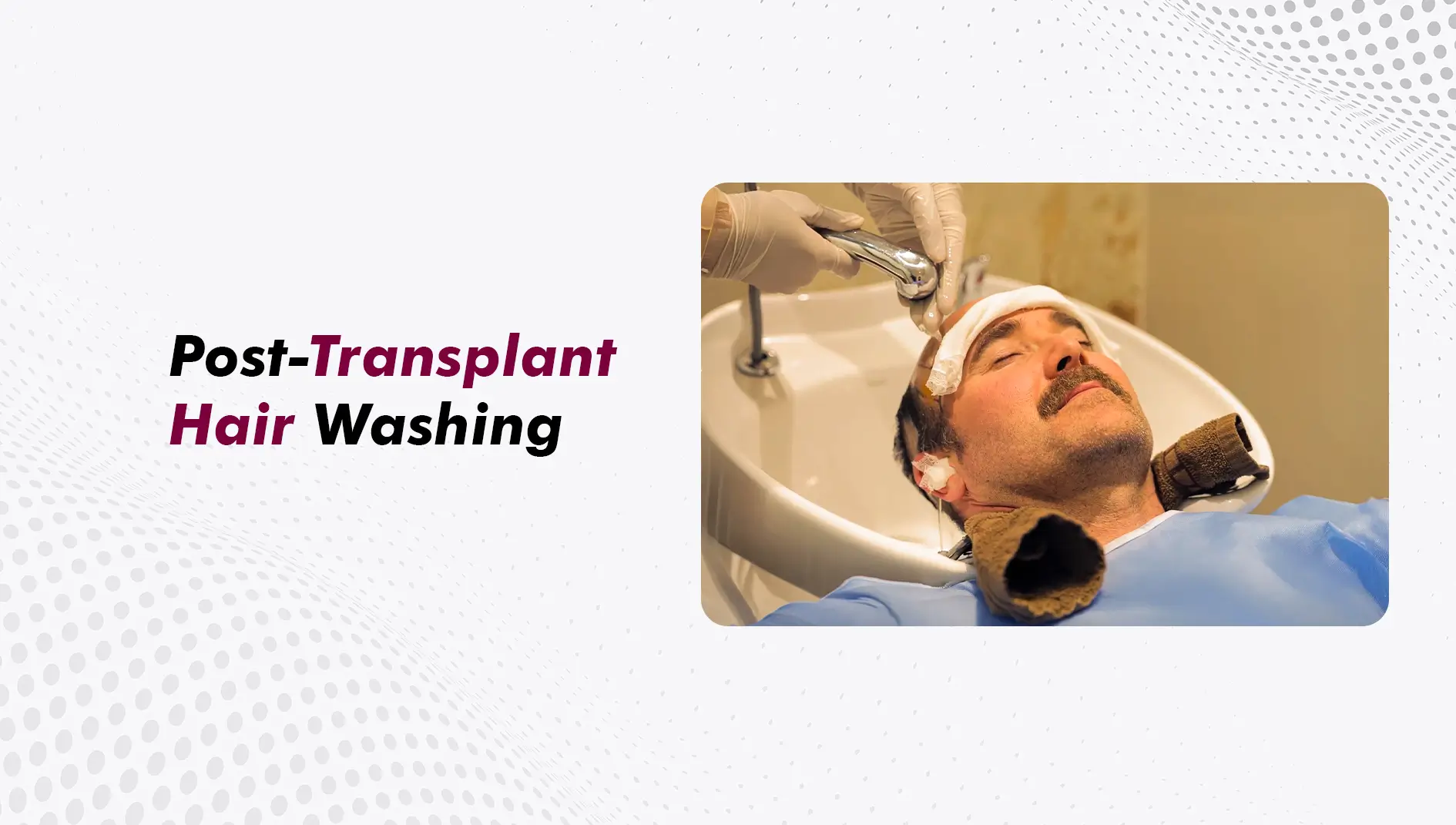
The first seven days carry almost all of the post procedure care burden, and facial hair recovery has its own rules. For the first seven days after beard transplant surgery:
– Eat semi solid food only. Avoid hard or chewy food that forces heavy jaw movement.
– Avoid excessive speaking and smiling, which stretches the recipient skin.
– Spray Normal Saline on the recipient area every one to two hours through the day.
– Shower below the neck only. Water must not touch the transplanted area.
– Clean the donor site, including the beard donor, with betadine once daily, then Mupirocin ointment.
Betadine must never touch the recipient area at any point. It is an antiseptic that destroys graft viability.
Tiny crusts form around each implanted hair follicle within two days and settle over the following week. Mild redness and slight swelling are normal and temporary. Avoid direct sunlight on the transplanted area for the first week, and minimise prolonged exposure after that, since it can irritate healing skin and cause pigmentation.
The standard medication course runs for seven days: Augmentin 625 mg twice daily after food, SignoFlam twice daily after food, BIFILAC twice daily, and Pantop once daily before breakfast. SignoFlam is the only painkiller prescribed at Eugenix. Do not substitute other pain killers without speaking to the team first.
Blood thinners need a conversation before surgery, not after. Patients on Aspirin following heart surgery in the previous six months require written cardiologist clearance before any Aspirin is stopped, and no procedure is scheduled until it is in hand. The routine stoppage rule does not apply automatically to cardiac patients.
Gentle walking, office work, and household tasks resume the day after the procedure. No bed rest is required. Yoga, gym, heavy exercise, and contact sports are cleared after one week, and alcohol and smoking are avoided for one week. Shaving of the donor area resumes after seven days. Shaving over the recipient area is cleared by your Eugenix team at follow up, once the grafts have settled.
What Results Look Like, and When
Facial hair grows on a slower and less synchronised cycle than scalp hair, so the timeline runs differently. Transplanted hair sheds roughly 30 to 90 days after the transplant procedure. This is temporary shedding, not failure. The shaft falls, the root stays, and the transplanted hair regrows. Initial growth begins around month four, new beard hairs become visible over months six to eight, and full beard results are expected at 12 to 13 months rather than the 10 to 12 months seen with scalp grafts.
The most important expectation is visibility. Beard hair has a shorter growth phase than scalp hair, so only about 50 to 60 percent of transplanted follicles are visible at any moment. If 1,000 grafts are implanted, roughly 500 to 600 show at a time. This is normal biology, not graft loss, and it is why beard results are judged on coverage and border definition rather than raw numbers.
Beard graft survivability in a healthy donor area sits between 80 and 88 percent, the highest of any body hair source. Some patients choose a second session for more facial hair density once the first result has matured. Transplanted hair also needs upkeep, and most men look best maintaining a short, well groomed beard.
Using the Beard as a Donor for the Scalp
The relationship runs both ways. For patients with advanced hair loss, the beard is the strongest body donor available for scalp restoration. A healthy beard typically yields 500 to 800 grafts without affecting beard appearance, with a lifetime donor capacity of roughly 3,000 to 5,000 grafts. Beard hair follicles resist the hormone that drives male pattern baldness, so they are durable once implanted. They are mixed with scalp grafts rather than placed alone in any one zone, and kept out of the hairline, temple points, and crown whorl, where their coarser texture would be conspicuous.
If you are considering both a beard procedure and future scalp work, that sequencing conversation belongs in the first consultation. Donor supply is finite and should be allocated deliberately.
Beard Transplant Cost in India
Beard transplant cost is graft driven. The price of a hair transplant in India depends on how many follicular units are required, which depends on the size of the gaps, your existing hair density, donor texture, and the border design. A small border refinement and a full beard build are different pieces of work and are priced accordingly. Beard transplantation is cosmetic surgery and is not covered by health insurance. A quote given without an assessment of your donor area is a guess, not a quote. Eugenix shares complete, itemised pricing for your beard hair transplant procedure at consultation, once the graft requirement has been assessed.
Risks, and What Can Go Wrong
Every hair transplant procedure carries risk. Temporary swelling, mild redness, tiny crusts, and short lived numbness are expected and settle within days. Infection is uncommon and is managed with the prescribed antibiotic course. The more meaningful risks in facial hair transplantation are aesthetic rather than medical. Wrong angle, wrong density, or a mismatched donor choice produces beard growth that never looks like it belongs on the face. A high level of surgical skill prevents this, which is why the technique and the team matter more than the price. At Eugenix, major complications are exceptionally rare, supported by over 22,000 procedures performed across more than 15 years of clinical practice.
Why Patients Choose Eugenix for Facial Hair Restoration
Eugenix Hair Sciences was founded by Dr. Pradeep Sethi and Dr. Arika Bansal, both Co-Founders, both Fellows of ISHRS, and both alumni of AIIMS, New Delhi, with over 15 years of exclusive hair transplant experience each. DHT was deliberately left unpatented so the wider hair restoration community could adopt it freely.
Consultations are conducted by a panel of experienced surgeons, each personally handpicked, trained, and overseen by the Co-Founders, with consultations directly with Dr. Pradeep Sethi or Dr. Arika Bansal available by prior appointment. The Gurgaon centre is NABH accredited under Certificate No. DE-2026-0004, valid from 12 March 2026 to 11 March 2030, under the Allopathic Clinics 2nd Edition Dermatology Clinics Programme, and NABH is itself internationally accredited by ISQua.
Frequently Asked Questions
Is beard hair good for hair transplant?
Beard hair is the strongest body donor available for a hair transplant. It has the highest survivability of any non scalp source, roughly 80 to 88 percent in a healthy donor area, and it resists the hormone responsible for male pattern baldness. It is coarser and curlier than scalp hair, so it is mixed with scalp grafts rather than used alone, and kept out of the hairline, temple points, and crown whorl.
How much do beard transplants cost?
A beard transplant in India is priced per graft, so the total depends on how many grafts your beard area needs, and insurance does not cover it. Rather than quote a range that may not apply to you, Eugenix gives a complete cost breakdown at consultation, after the donor area and recipient zones have been assessed.
Is a beard transplant successful?
In appropriately selected patients with a healthy donor area, yes. Beard transplant surgery places permanent follicles that grow as natural beard hair for life. Success depends more on candidate selection, donor choice, and angle precision than on graft count. The men who do poorly are usually those who had no beard to begin with and had a full beard built from scalp hair, which is precisely the case Eugenix declines to operate.
Will the new beard look patchy at first?
Early growth can look uneven, and it is worth expecting that. Because only 50 to 60 percent of beard grafts are visible at any one time, density builds gradually and reads best at around 12 to 13 months. Keeping it trimmed short through this period helps it blend.
Does a moustache transplant hurt?
The procedure is done under local anaesthesia and is comfortable. Post operative discomfort is mild and managed with SignoFlam for the first week. The bigger adjustment is the seven day restriction on speaking, smiling, and solid food.
Can a beard transplant fix alopecia areata patches?
Not while the condition is active. Alopecia areata is autoimmune and unpredictable, and transplanting into an active patch risks losing the grafts to the same process. Where it has been stable and treated for a sustained period, restoration may be possible. That assessment is individual and starts with a free photo evaluation.
Taking the Next Step
Facial hair restoration rewards careful planning more than volume. The right donor choice, an honest assessment of whether surgery is the correct answer at all, and a realistic view of twelve months separate a beard that reads as naturally yours from one that does not. Done well, a beard transplant does more than add hair. For many men it helps restore self confidence in how they present themselves every day.
If you are considering a beard hair transplant or a moustache transplant, book a consultation with the Eugenix team. You will get an assessment of your donor supply, a clear design proposal, an itemised cost, and a straight answer about whether the procedure will deliver what you want.
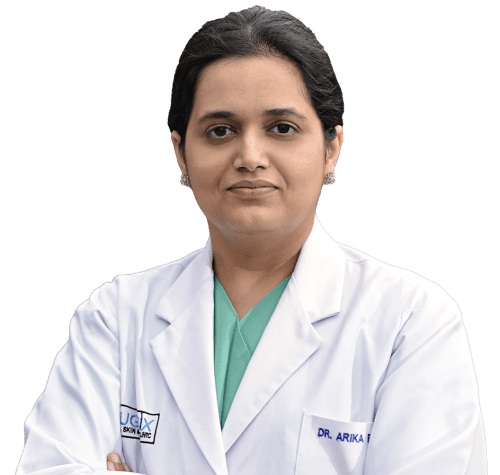
Dr. Arika Bansal
One of only a few female surgeons specializing in hair transplant surgery in India, Dr. Arika Bansal has been voted one of the best doctors in the world. She maintains an active fellowship in the ISHRS and regularly submits research papers to medical journals. 15+ years down the line, 22,000+ surgeries are accomplished under Dr. Bansal’s supervision. She specializes in female hair transplant, density improvement, corrective hair transplantation and hairline design.