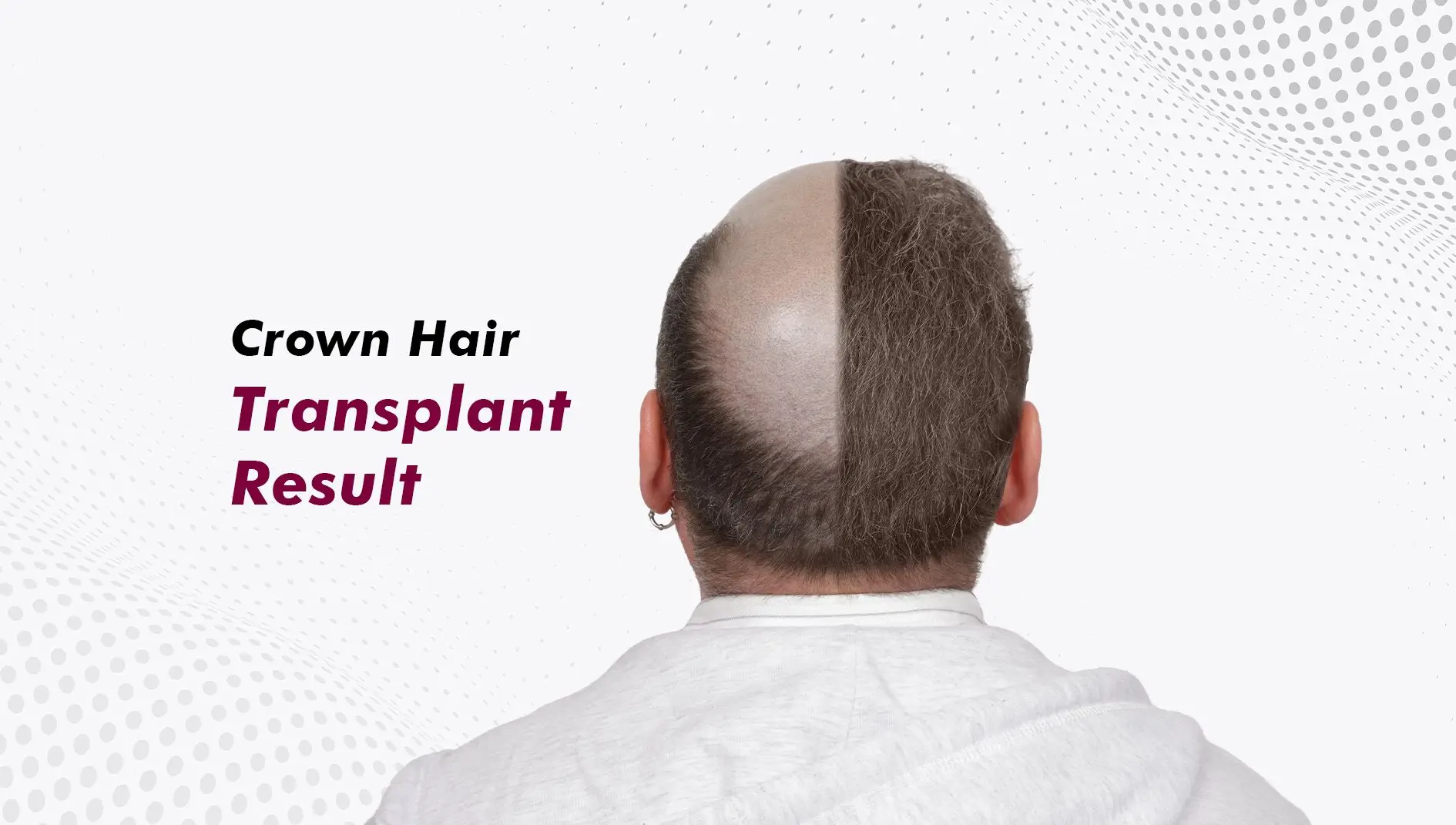

If you have had a hair transplant that included the crown, or you are planning one, there is something worth knowing before you start counting months. Crown hair transplant results almost always arrive later than results in the frontal zone, often by three to five months. Patients whose frontal hairline is filling in beautifully at month seven, while the bald spot at the back still looks bare, are not seeing a failure. They are seeing the crown behave exactly as the crown behaves.
The crown is the circular zone at the top and back of the scalp. It is structurally different from the frontal scalp, it grows differently, and it is judged by the eye differently. It is also, among hair restoration surgeons, one of the most technically challenging areas to restore well. This guide explains what makes the crown the slowest zone to fill in, what a realistic crown hair transplant timeline looks like, why your surgeon may recommend restoring the front first, and what good crown coverage looks like in real life.
The Crown Is Built Differently From the Rest of Your Scalp
Four facts about crown hair growth explain most of what patients find confusing here.
Crown hair grows in a spiral pattern, not a single direction
The frontal scalp grows forward, in a broadly consistent direction, which makes hairline design comparatively straightforward to plan. The crown does not behave this way. Crown hair grows in a whorl, a natural spiral radiating outward from a central point, and every graft placed into it has to follow that spiral pattern. Around the centre of the whorl, hair emerges at extremely acute angles, almost flat against the scalp.
This is the most demanding piece of design work in the whole hair transplant procedure. Each recipient slit has to sit at the correct angle and direction for its exact position in the whorl pattern, which means the crown requires a circular grafting approach built around the whorl pattern rather than the row-by-row logic used at the front. Get it right and the crown reads as a natural result from every angle. Get it wrong and the final result looks disordered in a way that is very difficult to correct. The hair restoration surgeon’s experience in mapping the swirl is not a minor variable here. It is the variable.
The crown is a curved surface, not a flat one
The frontal scalp is comparatively flat and viewed head-on, where frontal hair falls across it and adds apparent thickness. The crown area is a dome, viewed from above and behind, with overhead light falling directly onto it, and it covers more square centimetres than it appears to from any single angle.
The practical consequence: the same hair density creates a visibly stronger impression at the front than in the crown area. The crown is a harder surface on which to create the illusion of natural coverage, and one reason crown transplant planning consumes more donor hair than patients expect.
Blood circulation is lower at the crown
Blood supply to the crown is lower than to the frontal and mid-scalp zones. Transplanted follicles depend on it to establish themselves and begin cycling, so where circulation is lower the whole process runs slower. This is the main reason the crown grows on a slower schedule than the front, and why its grafts take longer to show visible hair. That is a biological reality, not a sign that anything has gone wrong with the transplanted grafts.
Hair character changes how much coverage you see
Two patients can undergo the same hair transplant and see different results, because donor hair quality has a real influence on hair transplant results. Coarse hair gives better visual coverage than fine hair. Wavy hair covers more scalp than straight hair, since each shaft occupies more space. Dark hair against pale scalp creates more contrast and can look thinner than the same graft count in a patient whose hair and skin tone are closer, which is also why crown hair thinning is noticed later in fair-haired patients. None of this changes whether a crown transplant will work. It changes how much apparent thickness a given number of hair follicles buys, and how much more hair is needed for the same visual effect.
Crown Hair Transplant Results Follow a Longer Timeline
Here is the standard hair growth timeline after hair transplant surgery, and where the crown departs from it.
Shedding, and how it differs from shock loss
For the first few weeks most transplanted hair stays in place and grows in length, so the scalp looks dense and patients feel encouraged. That early appearance is not the result. Between day 30 and day 90 the transplanted hair sheds, anywhere from 30 to 90 percent of it. The shaft drops away, the root remains intact inside the scalp. This happens to every patient without exception and is not a failure.
Shock loss is a different thing, and the two are frequently confused after a hair transplant. Shock loss is the temporary loss of pre-existing hair in or around the treated zone, and unlike shedding it does not happen to every patient. It is more likely where existing hair was already heavily miniaturised, where the hair transplant was placed into a thinning rather than fully bald area, or where the patient is not on medical therapy. It falls within the same day 30 to day 90 window rather than the first fortnight, and in most cases the affected surrounding hair recovers over the following months.
Month 4 onward: where new hair appears
Growth begins around month four, not month three. This matters, because patients told to expect new hair at three months spend a month convinced something has failed.
– Month 4: approximately 30 to 40 percent of density becomes visible
– Month 5: approximately 40 to 50 percent
– Month 6: approximately 60 percent
– Month 7: approximately 70 percent
– Months 8 to 9: approximately 70 to 80 percent
– Months 10 to 12: full results in the frontal and mid-scalp zones
Month 12 to month 15: where crown results complete
That last line applies to the front. Crown results take 12 to 15 months to develop fully. While the frontal zone is finishing, the crown continues to fill.
At month four or five, patients frequently report that the crown appears to be doing nothing at all. It usually is, slowly and invisibly. The crown does not report its progress on the same schedule as the rest of the scalp, and any timeline promising complete crown hair transplant results at twelve months is describing the front, not the back.
What happens at 14 to 15 months
One further stage is worth knowing if you are reading this past your first year. At 14 to 15 months, transplanted hair settles back into the natural hair cycle, a process called anagen desynchronisation. Until then it had been growing in unison, which produces the peak density seen around months 10 to 12. Afterwards, roughly 80 percent of hair sits in the growth phase and roughly 20 percent in the resting phase at any time, exactly as ordinary scalp hair does. Patients notice this as around a 20 percent reduction from the peak. It is not a loss and not a reversal. It is the permanent stable state of the transplant and the final result it holds at going forward.
Why Your Surgeon May Recommend Filling the Frontal Zone First
Patients most troubled by their crown are sometimes surprised to hear it is not the first priority. There are sound clinical reasons.
The frontal hairline frames your face
The frontal hairline and the zone behind it are what you see in the mirror and what other people register. Restoring the frame changes how you read far more than restoring the back does. The crown area is genuinely less cosmetically decisive than the frontal hairline, which is why hairline results are usually prioritised in hair transplant planning when donor supply forces a choice. The same logic applies to a temple hair transplant, planned to support the frame rather than compete with it.
Donor supply is limited
Your donor area is finite. Every graft placed in the crown is one not available for the front, now or in ten years. Because the crown area is large, curved and light-exposed, it absorbs a great many grafts before it reaches significant density. In patients with advanced loss, crown restoration alone can consume a substantial share of what the donor area will ever yield, leaving you short at the front later. A limited donor supply is the single hardest constraint in hair restoration, and no surgical technique overcomes it.
Hair loss is progressive
This matters most for young patients, whose hair loss is furthest from settled. If the crown is restored while surrounding native hair is still thinning, that surrounding native hair may continue to recede and leave the transplanted crown standing as an isolated island with bare scalp around it. Progressive hair loss does not pause because a hair transplant has taken place. Planning has to account for where your hair loss pattern is going, not only where it is today, which is why the ideal candidate for crown restoration is someone whose hair loss pattern has stabilised, usually with medical management in place.
None of this means the crown cannot be treated. Sequence matters, and that sequence is a clinical judgement made after assessing your donor area, your pattern, your age, and your rate of hair loss progression.
What Realistic Crown Coverage Looks Like
Density planning in the crown area
Transplanted hair density is planned at approximately 50 percent of your original natural density, deliberately, across the whole scalp. Native hair sits at gaps of roughly 0.5 mm, while transplanted hair is placed at gaps of around 1.5 mm. Packing hair follicles closer would compromise blood supply and graft survival, and no surgeon can responsibly promise otherwise.
For the crown and mid-scalp, planned density is generally 25 to 35 grafts per square centimetre, against 35 to 45 in the hairline zone. Combine that with curvature and overhead light, and a well-executed crown transplant may look slightly see-through under a bright ceiling light while appearing entirely natural in ordinary daylight. Patients who wear their hair short notice the crown more, since length itself contributes coverage. That is a successful crown result, not a compromised one. Full thickness across a large crown is not something any donor area can support, and a clinic promising it is promising what biology does not permit.
Why graft count cannot be quoted in advance
Patients often arrive with a graft number in mind, usually collected from a hair loss forum. A graft count for the crown depends on the surface area involved, the degree of baldness within it, hair calibre and colour contrast, the strength of your donor area, and your likely future hair loss. Those variables produce very different answers in two patients who look similar. This is why a responsible hair restoration surgeon will not quote how many grafts your crown needs from a photograph alone. A crown hair transplant plan comes out of an examination.
How the Crown Is Approached at Eugenix
DHT and out-of-body time
Eugenix performs DHT, the Direct Hair Transplant technique developed by our Co-Founders and published in peer-reviewed literature in 2013 as “Direct hair transplantation: a modified follicular unit extraction technique”. DHT is a modified form of FUE. In a traditional FUE procedure, grafts are extracted first and implanted afterwards, which keeps them outside the body for three to four hours. In DHT, extraction and implantation happen simultaneously, bringing out-of-body time under 30 minutes. Less time outside the body means less stress on hair follicles already facing a slower establishment period in the crown, which supports graft survival in exactly the zone where circulation is weakest. If you have been researching an FUE hair transplant, DHT is the evolved form of that same approach.
Who does what during your procedure
For the crown specifically, your lead surgeon carries out Planning and Designing, maps the whorl, sets every technical parameter including punch size, angle, depth and density, and creates the recipient slits hands-on. The whorl is designated a crucial zone, meaning the aesthetically decisive portion of slit-making and implantation there is performed personally by the named doctor, capped at 300 to 400 grafts, with senior surgical assistants continuing beyond that cap. Scoring, punching, extraction and implantation are carried out by senior surgical assistants working to the lead surgeon’s parameters, using the SAVA Implanter (no-root-touch): the graft is visible throughout and is inserted smoothly into the pre-made slit without a plunger-based blind push.
The lead surgeon supervises your procedure throughout, taking rounds between active steps and remaining available at all times during your surgery. Our Gurgaon centre is NABH accredited, and both Co-Founders are Fellows of the ISHRS.
Why beard grafts are not used at the crown whorl
Beard hair has a legitimate role as a supplementary donor source in advanced hair loss. It is not implanted at the crown whorl. Beard hair is coarser and behaves differently from scalp hair, and the whorl is exactly where that difference would announce itself.
Supporting Your Crown Result
Medical management
Finasteride slows the progression of hair loss and supports existing hair, including native hair in and around the crown area. It is not a cure and should be taken under medical supervision. Side effects occur in only 2 to 3 percent of patients, and reduced libido, the one most commonly asked about, is reversible. Minoxidil improves hair growth and works best with consistent daily use. Among available treatment options, medical therapy protects the hair a hair transplant does not replace, which is why it is not optional while hair loss is still active.
Post-operative care
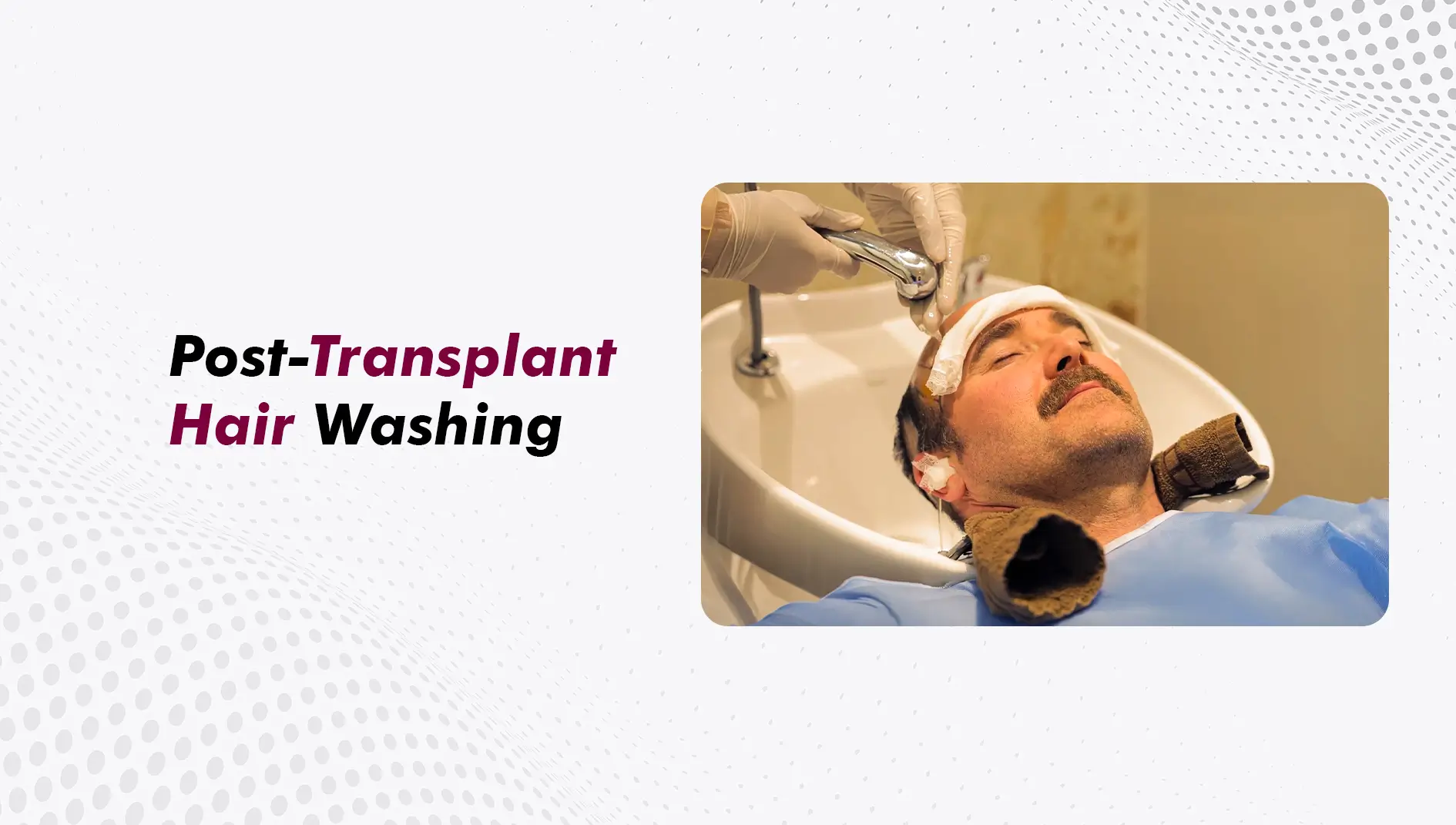
Post-operative care matters more after a crown hair transplant than most patients realise, precisely because the margin for graft survival in a crown transplant is narrower where blood flow is lower. Your team will ask you to sleep with your head elevated for the first several nights, avoid direct sun exposure on the treated area for a week, take the prescribed seven-day course as issued, and hold your first head wash until day seven. SignoFlam is the only painkiller prescribed at Eugenix. Alcohol and smoking are avoided for a week each, and smoking is worth pausing longer given what it does to peripheral circulation.
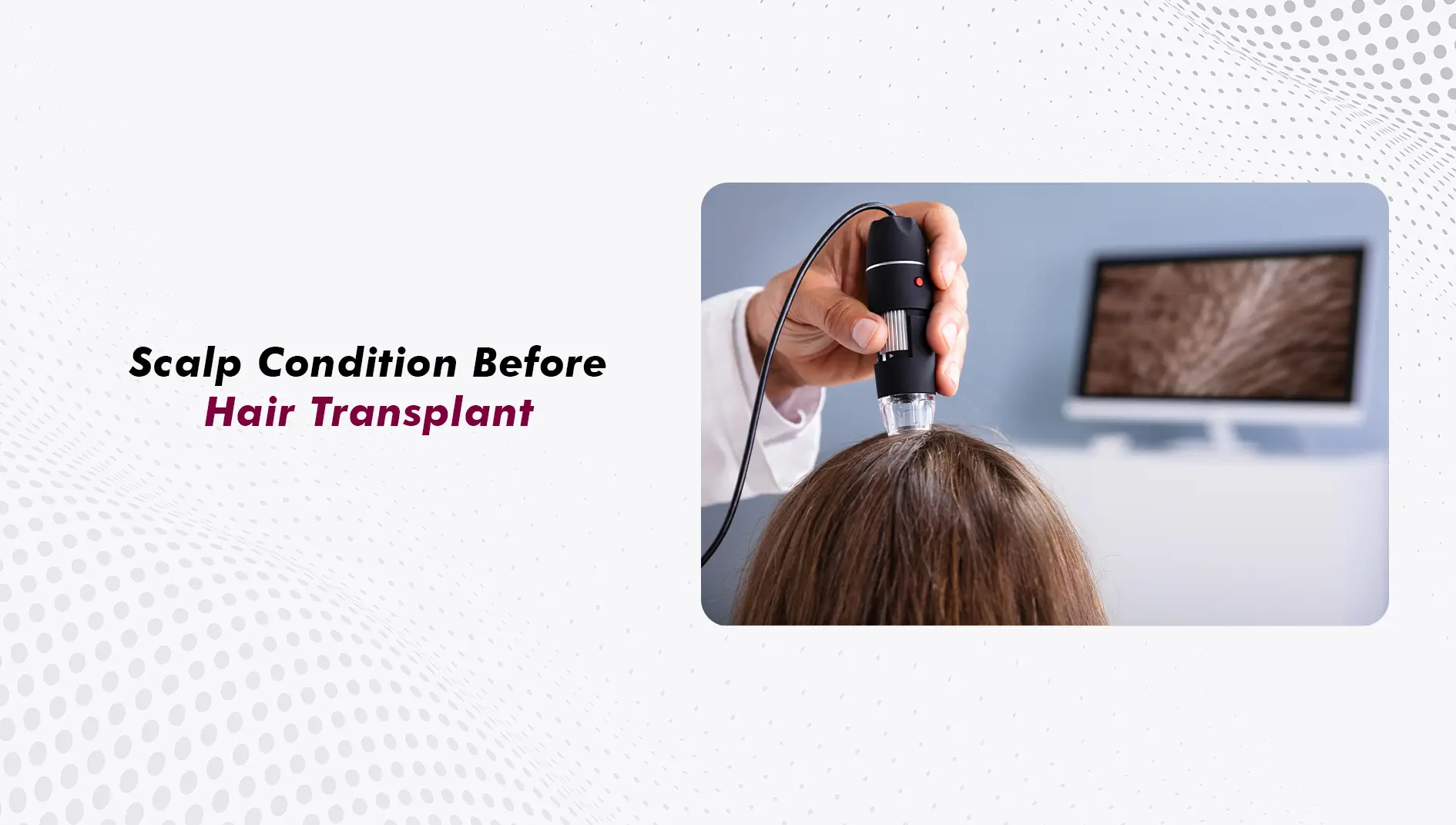
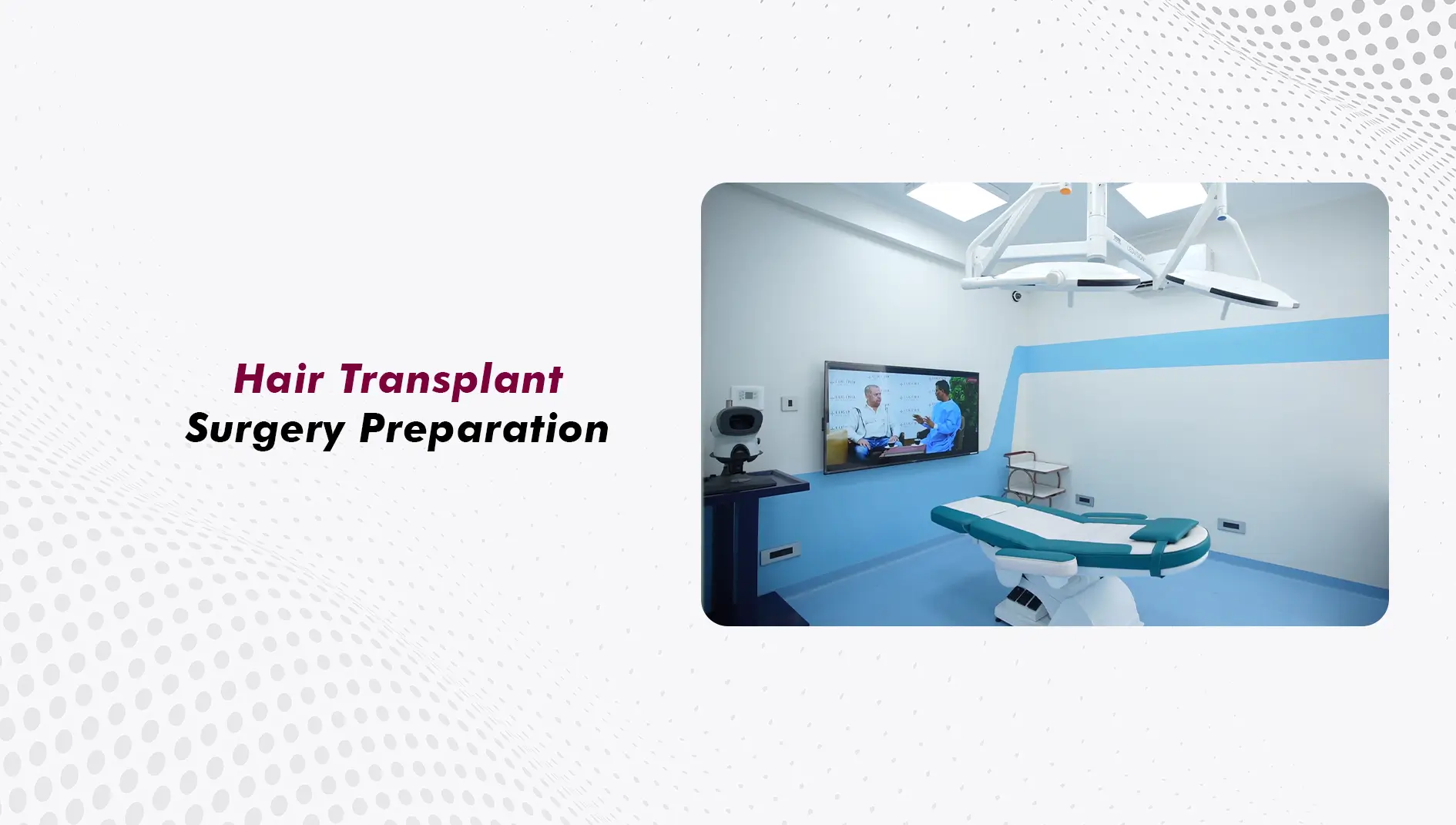
Fitness for surgery is confirmed beforehand through a standard blood panel, a blood pressure check, and an ECG for patients aged 40 and above, with medicine department clearance mandatory for every patient.
PRP and GFC
PRP and GFC are prepared from your own blood and deliver concentrated growth factors to the scalp. They support existing hair and, given during surgery, help minimise shock loss risk. Neither is a substitute for the transplant, neither is FDA approved for this use, and results are held through repeat sessions.
Frequently Asked Questions About Crown Hair Transplant Results
Is a hair transplant successful on the crown?
Yes, with realistic expectations. Crown hair restoration is not a different operation, only a slower and more demanding one, and the crown responds to hair transplant surgery as reliably as any other zone. What differs is the timeline, the design difficulty, and the donor hair required to reach convincing density. Success here means a natural looking result in ordinary light that still makes sense in ten years, not a scalp that becomes invisible under a ceiling lamp.
Is 1,000 grafts enough for the crown?
There is no honest general answer. It depends on how large the bald area is, how complete the baldness within it is, your hair calibre and colour contrast, and what your donor area can spare after the front. For a small early crown thinning it might be reasonable; for an established bald spot it would not be. A crown hair transplant is planned from surface area and donor capacity, not from a round number.
What is the success rate of a crown hair transplant?
Graft survival in DHT is high, and the under-30-minute out-of-body time is the main reason. What no clinic should offer is a percentage guarantee, because outcomes depend on donor quality, the surface area treated, your medical management, and how your hair loss progresses afterwards. At Eugenix, major complications are exceptionally rare, supported by over 22,000 procedures performed across more than 15 years of clinical practice.
Does crown hair regrow after a transplant?
Yes. Transplanted hair sheds between day 30 and day 90, then regrows from the retained root. Growth begins around month four, with crown results completing between 12 and 15 months. Crown hair loss is driven by the same process as loss at the front, but the hair used comes from a zone genetically resistant to it, so it keeps growing as it did at the back of your head.
Why is my crown not growing at four months?
Because the crown runs on a longer clock. Growth generally begins around month four across the scalp, but crown results take 12 to 15 months against 10 to 12 for the frontal zone, largely due to lower blood circulation. Minimal crown growth at month four is expected, and photographs three months apart show change your mirror cannot.
Can I have multiple hair transplants to build the crown up further?
Often yes. Where the same area is revisited, the standard interval is 11 to 12 months from the first procedure. Many patients with advanced loss plan a staged approach deliberately, doing the frontal zone first and returning for the crown once the first result has matured.
The Crown Rewards Patience
The crown is the last area to fill in because it is the hardest area to fill in. Its spiral growth demands the most exacting hairline design work of the whole hair transplant. Its curvature and light exposure make hair density harder to achieve visually, and its blood supply makes transplanted follicles slower to establish. None of that makes an excellent crown result impossible. It takes longer, and honest planning matters more here than anywhere else in hair restoration. Surgical excellence in the crown is mostly patience, arithmetic about donor supply, and refusing to promise what cannot be delivered.
If you are considering crown restoration, or already waiting and want a clear read on your progress, book a consultation with our panel of experienced surgeons, all personally handpicked and trained by our Co-Founders, Dr. Pradeep Sethi and Dr. Arika Bansal. A proper assessment of your donor area and your hair loss pattern is the only way to know what your crown can realistically achieve, and when.
Dr. Arika Bansal
One of only a few female surgeons specializing in hair transplant surgery in India, Dr. Arika Bansal has been voted one of the best doctors in the world. She maintains an active fellowship in the ISHRS and regularly submits research papers to medical journals. 15+ years down the line, 22,000+ surgeries are accomplished under Dr. Bansal’s supervision. She specializes in female hair transplant, density improvement, corrective hair transplantation and hairline design.