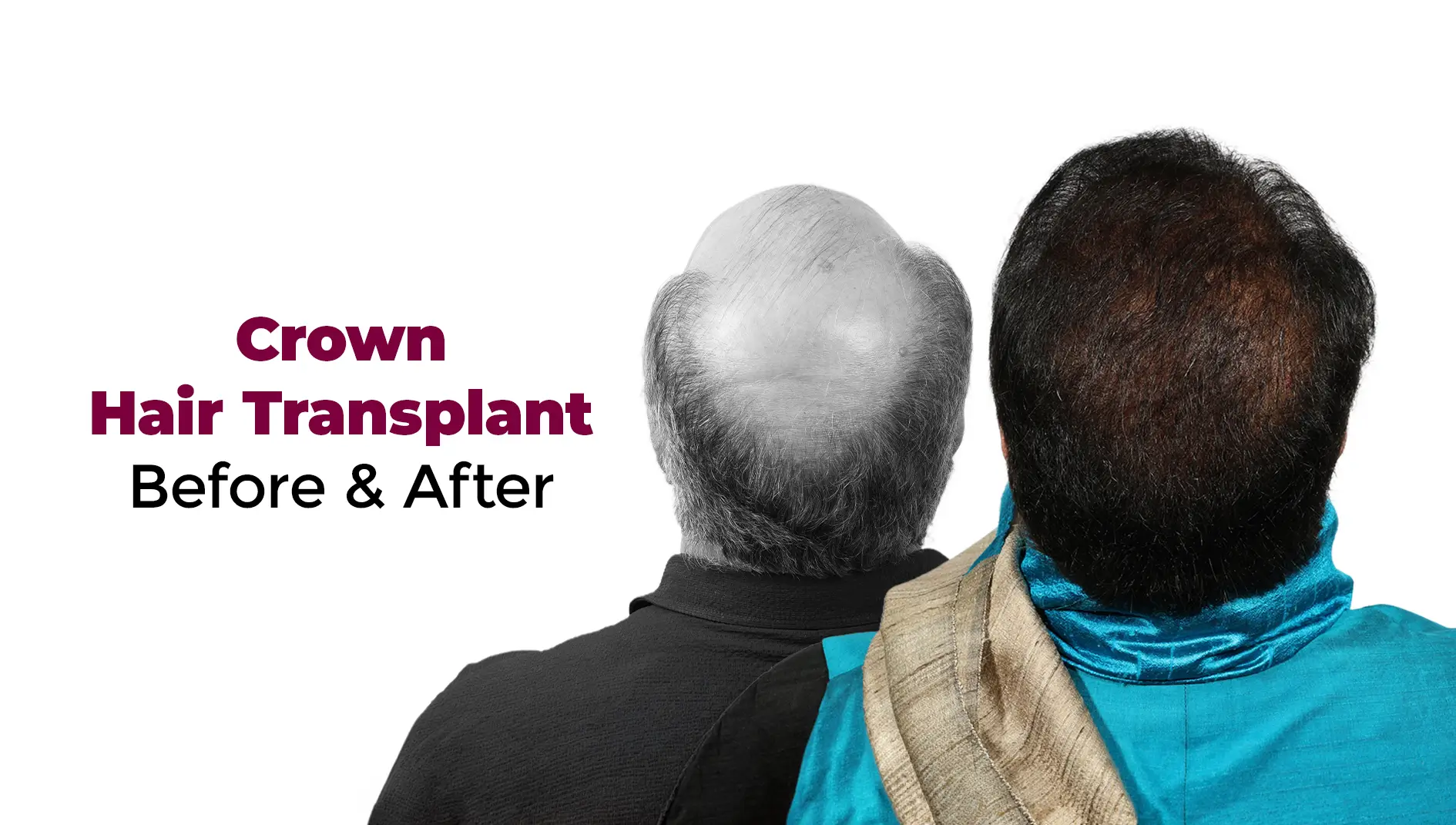

Almost every patient researching crown restoration starts in the same place. They open a gallery, scroll through a crown hair transplant before and after set, and try to work out whether they are looking at a genuine result or a well lit photograph. It is a reasonable instinct, and also where most people go wrong, because the crown is the hardest area of the scalp to photograph honestly.
Change the light source, tilt the camera, let the hair grow half an inch longer, and the same head looks dramatically different without a single graft being added.
This guide will make you a better reader of these photographs: which variables to check, what a realistic hair transplant outcome looks like, when a result photo is worth judging at all, and what should make you pause.
Why the Crown Is the Hardest Area on the Scalp to Photograph
The Natural Spiral
The crown is a curved dome with a spiral pattern of growth, called the whorl, at its centre, and crown hair radiates outward from that point in a circular sweep. Light striking a curved, radiating surface behaves very differently from light striking the flat plane of a frontal hairline. The natural spiral is also what makes crown hair transplant work technically demanding. Grafts placed against the crown whorl, or at the wrong angle, look wrong in a way that is difficult to correct later.
Blood Supply and Slower Growth
Blood supply in the crown region is lower than in the frontal scalp and mid scalp, so hair growth is genuinely slower here. Crown transplants may take 12 to 15 months for full results, against 10 to 12 months for the frontal zone. That single difference invalidates many crown hair transplant photos presented as finished results.
Surface Area and Graft Count
The crown area covers a large surface, so a graft count that would transform a hairline looks modest spread across the crown region. This is one reason a hair restoration surgeon often prioritises the frontal hairline when donor hair is limited: the same number of hair follicles buys more visible change at the front of the scalp than at the back of the head.
Check the Timeline Stamp Before Anything Else
The first question to ask of any hair transplant photograph is not “how does it look” but “when was this taken”.
The Growth Sequence After a Crown Hair Transplant
– Days 30 to 90: the transplanted hair sheds. This is normal. The hair follicles stay in place; only the visible shafts fall away.
– Month 4: initial hair growth begins.
– Months 6 to 8: crown hair transplant results become genuinely visible.
– Months 10 to 12: full results in the frontal and mid scalp zones.
– Months 12 to 15: full results in the crown.
Why Month Labels Matter
Crown hair grows and matures until 12 to 15 months, so an after photo at month six is a progress photo, not a result. Judging early produces unnecessary anxiety about an outcome still arriving. One taken at month three, during the shedding phase, can look worse than the before photo and tells you nothing except that the patient is on schedule. If a gallery does not label the month, you cannot interpret it. That is the difference between evidence and decoration.
Five Technical Variables That Can Manufacture a Result
Once you have the timeline, look at how the two photographs were made. A fair hair transplant comparison holds all of these constant.
Lighting
The biggest single variable. Harsh overhead light drives shadow into the gaps between hairs and makes the scalp read as bare. Soft, diffused, front facing light does the opposite. If the before photo was taken under a ceiling spotlight and the after near a window, you are looking at a lighting comparison, not a hair growth comparison.
Camera Angle and Distance
A camera pointed straight down into the crown whorl exposes maximum scalp. One held level with the back of the head exposes far less. Check that the crop and the ear position match across both images. A tighter crop on the after photo also removes context and makes the crown area dominate. If either has shifted, the comparison is not valid.
Hair Length and Styling
Longer hair falls over thinner areas and creates natural coverage that has nothing to do with hair density. A close trim in the before photo against three inches of grown out hair in the after is not a like for like comparison. Wavy hair covers more scalp than straight hair at identical density. Honest galleries show both images at similar length.
Wet Versus Dry
Wet hair clumps into strands and reveals scalp mercilessly. Dry, textured hair spreads and covers. A wet before photo against a dry after is one of the oldest ways to overstate a change in crown hair.
Hair Colour and Scalp Contrast
Dark hair against fair scalp shows every gap. Where contrast between hair and skin is lower, the same hair density looks fuller. Colouring, tanning, or scalp redness during healing all shift how dense crown hair appears.
What Realistic Crown Density Actually Looks Like
Graft Density by Zone
A hair transplant restores approximately 50 percent of your original natural density. It does not recreate the head of hair you had at twenty. The crown and mid scalp are typically restored at 25 to 35 grafts per square centimetre, against 35 to 45 in the hairline zone. In advanced Grade 6 and Grade 7 cases, where donor hair must cover a very large bald area, the zone behind the natural hairline may be planned at 20 to 25 grafts per square centimetre. Temple hair transplant work and temporal points sit in their own category, where 70 to 80 percent naturalness is the ceiling.
Coverage Versus Density
What a well planned crown transplant delivers is visual density. The eye reads a scalp as covered long before it reaches full thickness, so a good crown result looks like a natural result: appropriately covered and consistent with the rest of your hair. If a set shows a crown that has gone from a complete bald spot to adolescent density, apply scepticism rather than hope. Outcomes depend on donor hair supply, hair calibre, and your hair loss pattern, which is why two patients with an identical graft count can produce different photographs. It is also why no responsible hair transplant surgeon will tell you how many grafts you need from a photograph alone.
Reading the Donor Area, Not Just the Crown
A crown hair transplant result set that never shows the donor area is telling you half the story. Every graft came from the back of the head, and a responsible hair transplant clinic photographs what was taken as well as what was placed. Look for minimal scarring, even density rather than patchy over harvesting, and enough remaining hair for future work if your hair loss progresses. Multiple hair transplants across a lifetime are not unusual where hair loss is aggressive, and a donor zone stripped for one dramatic hair transplant gallery leaves little for a second procedure.
Standardised photography is the best single signal of clinical honesty: matching angles, lighting, distance, and hair state across both images, month stamps on each, and the same patient documented repeatedly rather than one dramatic pair.
What Happens Between the Two Photographs
Surgery Day and the First Two Weeks
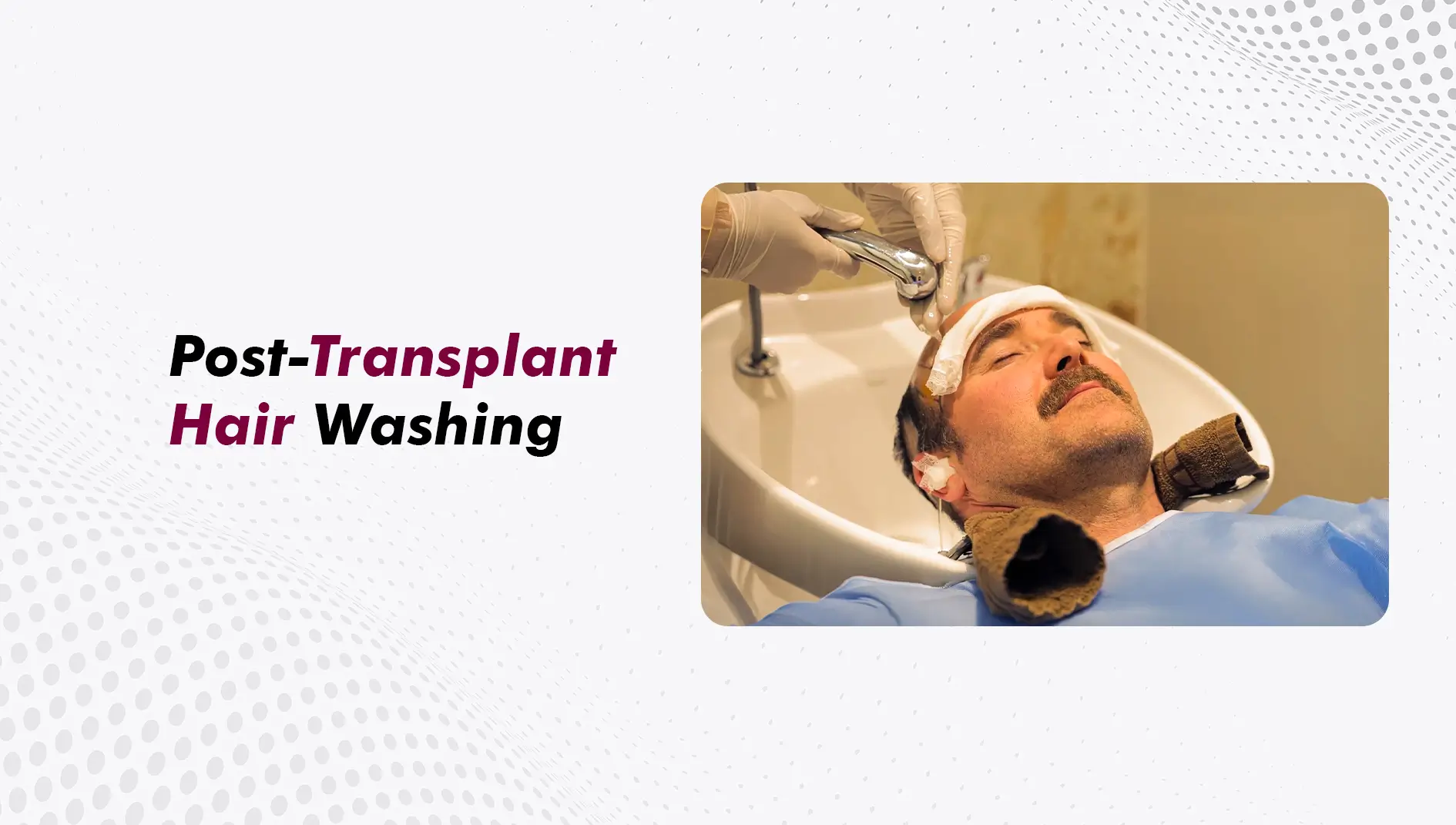
On surgery day the crown area is planned and marked, hair follicles are harvested, and implantation follows. Graft survival is most vulnerable in the first two weeks. Patients sleep with the head elevated, avoid alcohol intake and smoking for a week, and leave the first head wash until Day 7. Most return to work within 7 days of crown hair transplant surgery.
The Shedding Phase Is Not Shock Loss
These two are frequently confused, including in captions under hair transplant photos. Shedding is transplanted hair falling away between days 30 and 90 while the follicles remain in place, resting before the next growth phase. Shock loss is temporary thinning of existing hair around the treated zone. Different events on different timelines, and a photograph taken during either is not a result photo.
Red Flags Worth Noticing
Some things in a crown hair transplant gallery should make you slow down:
– No month labels on either image
– A visible change in lighting, angle, hair length, or wet versus dry state between the photos
– Only the crown shown, with the donor area never pictured
– Results presented at six or eight months as final outcomes
– A flat crown hair transplant cost quoted beneath the images. Cost depends on graft count, surgical technique, and surgeon experience, and is established at consultation, not in a caption.
– Images that appear digitally smoothed, retouched, or generated. Eugenix takes a firm position against artificially generated result imagery in hair transplant marketing. Simulated images are not an acceptable basis for a permanent medical decision.
– No video documentation on the site. Stills are easy to control; continuous video of a hair transplant procedure and its follow up is much harder to stage. Eugenix maintains an extensive video library for exactly this reason.
How the Crown Is Approached at Eugenix
Planning and Designing the Whorl
At Eugenix, the crown is planned around its natural spiral. The lead surgeon carries out Planning and Designing, sets every technical parameter including punch size, angle, depth, and density per the ADDD principle, and creates the recipient slits hands on. Crown work calls for extremely acute angles following the whorl outward, much as hairline design governs a frontal hairline. This step is not delegated: incorrect angulation here is one of the hardest things in hair restoration to put right.
Extraction and Implantation
Senior surgical assistants then carry out scoring, punching, extraction, and implantation using the SAVA Implanter, under the lead surgeon’s parameters and supervision. The SAVA Implanter is a no root touch device: the graft stays visible throughout and is inserted smoothly into the pre made slit without a plunger based blind push. Within the whorl, slit creation and implantation are designated Crucial Steps, each capped at 300 to 400 grafts. The lead surgeon supervises your hair transplant throughout, taking rounds between active steps and remaining available at all times during your surgery.
Because extraction and implantation happen simultaneously in DHT, out of body time for each graft stays under 30 minutes, against three to four hours in a traditional FUE hair transplant. This advanced technique was developed by Eugenix’s Co-Founders, Dr. Pradeep Sethi and Dr. Arika Bansal, both Fellows of ISHRS and alumni of AIIMS, New Delhi. At Eugenix, major complications are exceptionally rare, supported by over 22,000 procedures across more than 15 years of clinical practice.
Holding the Result Over Time
A crown hair transplant moves permanent hair follicles into a bald area. It does not stop the hair loss that created the bald spot. Existing hair around the treated zone can continue thinning, and if it does, a crown that looked complete at 15 months slowly becomes an island of transplanted hair inside a widening bald area.
Surgical excellence alone is not the whole answer. Medical management runs alongside it. Finasteride slows hair loss progression, though it is not a cure, and Minoxidil supports hair growth when used consistently. Both belong under medical supervision. Treatment options such as PRP and GFC, which concentrate growth factors from the patient’s own blood, are supportive therapy, temporary without maintenance.
Crown hair loss can expand outward for years, so a hair transplant done early without a medical therapy plan can age poorly. An ideal candidate for crown restoration has a stable hair loss pattern, adequate donor hair, and realistic expectations about desired density.
Frequently Asked Questions
Is hair transplant successful on the crown?
Yes, when planned realistically. Crown hair transplant results are judged on natural coverage rather than adolescent thickness, and they take longer to arrive. Success depends on donor supply, the spiral design, and whether surrounding hair is protected medically.
Is crown hair transplant more painful?
No. The crown is no more painful than any other zone. The hair transplant procedure is carried out under local anaesthesia, and the donor zone is usually the source of most soreness rather than the recipient site. SignoFlam is the only painkiller prescribed at Eugenix, taken for 7 days.
Is crown hair transplant permanent?
The transplanted hair comes from the safe donor zone at the back of the head, where follicles are genetically resistant to the hormone driving pattern hair loss. They keep that resistance after transplantation, so the transplanted hair is permanent. The existing hair around it is not, which is why medical therapy matters.
Why does the crown look thinner than a frontal result at the same month?
Blood supply is lower at the crown, so growth is slower, and its larger surface area and spiral pattern expose more scalp to the camera. Both are expected, not signs of failure.
Will the crown ever reach the density I had before hair loss?
No, and no honest hair transplant clinic will tell you otherwise. A hair transplant restores approximately 50 percent of original natural density, planned to create the impression of coverage. That is a very good outcome, and a different thing from full reversal.
What is the change in fullness some patients notice after the first year?
At around 14 to 15 months, transplanted hair returns to the natural scalp cycle, distributing back to the usual 80 percent anagen and 20 percent telogen split. Against the peak synchronised density at 10 to 12 months, this reads as roughly a 20 percent reduction in hair mass. It is normal, not a sign of failure, and it is the stable long term state rather than a temporary dip. If you are reviewing your own photos past the one year mark, raise it with your surgeon.
Should the crown be treated before the hairline?
Not usually. Frontal framing does more for how a face reads, and hairline results are more visible per graft. For younger patients, hair loss can expand around a restored crown, leaving an island. Sequencing is a clinical judgement made at consultation, based on several factors including donor supply and likely progression.
Looking at Photographs With Realistic Eyes
A crown hair transplant before and after photograph is evidence only when it is taken under controlled conditions, labelled with a timeline, and shown alongside the donor area it came from. Everything else is presentation, and that is true of any hair transplant gallery at any clinic.
The most useful thing you can do with this checklist is apply it to your own scalp rather than a stranger’s. Photograph your crown at the same angle, in the same light, at the same hair length, once a month. Over a year that sequence tells you more than any gallery, because it holds every variable constant.
If you are considering crown restoration, a consultation is where the real answers sit: your donor density, your hair loss pattern, your likely progression, and a graft plan that accounts for future hair loss rather than only what is visible today. Book a consultation with the Eugenix team and bring your questions about the photographs. They are the right ones to be asking.
Dr. Arika Bansal
One of only a few female surgeons specializing in hair transplant surgery in India, Dr. Arika Bansal has been voted one of the best doctors in the world. She maintains an active fellowship in the ISHRS and regularly submits research papers to medical journals. 15+ years down the line, 22,000+ surgeries are accomplished under Dr. Bansal’s supervision. She specializes in female hair transplant, density improvement, corrective hair transplantation and hairline design.