
Most people researching a hair transplant procedure spend weeks comparing clinics, reading reviews, and watching before-and-after videos. But one question almost always gets answered too late: what actually happens on the day itself?
This guide covers the complete hair transplant procedure from start to finish. You will find a step-by-step walkthrough of what happens on surgery day, a clear explanation of how hair transplant techniques have evolved over the decades, honest guidance on who is and is not a good candidate for hair transplantation, a breakdown of recovery and results, and answers to the most commonly asked questions about hair transplant surgery in India.
Whether you are in the early stages of research or preparing for a confirmed procedure date, this is a complete reference for anyone considering surgical hair restoration.
Who Is a Good Candidate for Hair Transplant Surgery?
Not every person experiencing hair loss is immediately ready for hair transplant surgery. A thorough candidacy assessment is one of the most important steps in the process, and honest guidance at this stage protects patients from poor outcomes and unnecessary procedures.
The ideal candidate for hair transplantation has noticeable hair loss in the front, top, or crown of the scalp, alongside healthy donor hair growth in the permanent zone at the back and sides of the head. The condition, quality, and density of the donor area is critical. Candidates should have a sufficient amount of donor hair available for extraction, as the total number of grafts achievable from the donor site determines how much coverage the hair transplant procedure can deliver.
The most common reason patients seek hair transplant surgery is androgenic alopecia, the medical term for pattern baldness. Also referred to as androgenetic alopecia, this condition is influenced by genetic and hormonal factors and is the most prevalent form of permanent hair loss globally. Patients with androgenic alopecia are typically the strongest candidates for hair transplantation, because hair loss follows a predictable pattern and donor hair in the permanent zone of the hair bearing scalp remains stable over time.
Realistic expectations matter as much as medical candidacy. A hair transplant procedure restores hair to bald or thinning areas but does not recreate the original density of a full head of hair. Approximately 50% of natural original density is the achievable benchmark for most patients. Hair transplant surgery for patients with unrealistic expectations about outcomes can result in dissatisfaction regardless of the technical quality of the procedure.
Young patients under 25 are generally advised to delay hair transplantation. Hair loss patterns are often unpredictable at younger ages, and performing a hair transplant procedure before the pattern stabilises can produce results that look unnatural as further hair loss progresses around the transplanted area over time.
Medical factors also affect candidacy. Thyroid disorders, autoimmune conditions, and certain nutritional deficiencies can accelerate hair loss and should be identified and treated before surgical hair restoration is considered. Patients with scarring alopecia require specialist evaluation before any hair transplant surgery is planned.
Understanding Hair Loss: Types That Hair Transplant Surgery Can Address
Before undertaking any hair restoration procedure, it is worth understanding the type of hair loss you are experiencing. The cause of hair loss shapes the consultation approach, the treatment plan, and whether hair transplant surgery is appropriate or whether medical therapy should come first.
Male and Female Pattern Hair Loss
Androgenic alopecia is the most prevalent cause of hair loss worldwide and the primary reason most patients pursue hair transplantation. In men, male pattern hair loss is classified using the Norwood scale, grading from early frontal recession to advanced diffuse thinning and crown loss. In women, female pattern hair loss is described using the Ludwig classification and typically presents as a widening central part or generalised thinning rather than a receding frontal hairline.
Other Conditions Affecting Candidacy
Alopecia areata is an autoimmune condition that causes patchy hair loss on the scalp and elsewhere. Because the condition is unpredictable and can affect previously transplanted hair, most clinics recommend managing alopecia areata medically before any surgical hair restoration is considered.
Traction alopecia results from prolonged tension on the hair and can often be addressed without surgery if identified early. For many patients, permanent hair loss due to androgenic alopecia does not respond meaningfully to medical therapy alone at more advanced stages, making surgical hair transplantation the most reliable path to long-term coverage.
How Hair Transplant Techniques Have Changed Over Time
The history of hair transplantation spans more than six decades. Understanding how the field has evolved puts the precision of modern hair transplant surgery into clear perspective.
The Era of Hair Plugs, Scalp Reduction, and Flap Surgery
The earliest hair transplant procedures, developed in the 1950s and 1960s, used large circular punches to extract clusters of hair follicles from the hair bearing scalp at the back of the head. These large grafts, known as hair plugs, were implanted into bald scalp areas in rows. While hair plugs produced some degree of coverage, the results were often visibly unnatural: rows of clustered hair on an otherwise smooth scalp became a widely recognised sign of older hair transplant work.
Throughout the 1970s and 1980s, plastic surgeons and dermatologists working in the hair restoration space developed two additional surgical techniques to address larger areas of bald skin: scalp reduction and flap surgery.
Scalp reduction is a procedure in which portions of bald scalp are surgically removed and the surrounding hair bearing scalp is stretched and advanced inward to close the gap. Multiple sessions of scalp reduction could be performed in sequence, progressively reducing the bald area. While scalp reduction produced visible coverage improvements in some patients, the technique carried significant limitations: pulling the hair bearing skin under tension altered natural hair direction, visible scarring from scalp reduction often became apparent as hair thinned further, and the procedure carried a risk of the so-called slot deformity as tissue contracted during healing. Scalp reduction was frequently combined with other procedures by plastic surgeons seeking to maximise coverage in a single phase of treatment.
Flap surgery takes a different approach. In flap surgery, a section of hair-bearing skin is partially detached from the scalp while remaining connected at one end to preserve its blood supply. This section is then rotated or advanced to cover an adjacent area of bald scalp. Flap surgery allowed plastic surgeons to achieve rapid coverage of large bald scalp areas in a single procedure, which was a meaningful advantage over slower graft-by-graft approaches.
However, flap surgery introduced serious challenges of its own. The primary risk in flap surgery is failure of the blood supply: if the pedicle is compromised at any point, the transplanted skin and hair may not survive. Flap surgery also produced unnatural results in many cases because the direction of hair growth in the transposed flap did not match the surrounding hair or the flow of a natural hairline. Like scalp reduction, flap surgery has been largely replaced at reputable hair restoration centres by follicular unit techniques. Neither scalp reduction nor flap surgery is considered a standard approach in modern hair transplant surgery.
Follicular Unit Extraction
Follicular unit extraction harvests individual hair follicles one at a time from the donor area using a small circular punch, leaving only tiny dot scars rather than a linear scar. Follicular Unit Extraction (FUE) is now the foundation of most hair transplant procedures performed worldwide, and is also referred to as follicular unit excision in some clinical literature. Most hair transplants today build on the FUE extraction model, with variations in how the recipient sites are created and how grafts are implanted.
Direct Hair Implantation and Direct Hair Transplant
Two advanced techniques have built on the FUE foundation: Direct Hair Implantation (DHI) and Direct Hair Transplant (DHT).
DHI uses a specialised tool called the Choi Implanter Pen to perform extraction and implantation without pre-made recipient sites. While this eliminates the separate incision step, the implantation process in DHI relies on a blind plunger mechanism. This carries a risk of graft damage as individual hair follicles are pushed into unprepared tissue without full visual control throughout the insertion.
The DHT technique, developed by the founding surgeons of Eugenix Hair Sciences and published in a peer-reviewed paper in 2013, combines pre-made recipient slits with simultaneous extraction and implantation. Recipient sites are created first by the operating doctor, establishing the precise angle, depth, density, and directional design of every graft before a single follicle is taken from the donor site. Grafts are then extracted and placed immediately into the prepared sites using the SAVA Implanter. This approach keeps each graft outside the body for under 30 minutes, compared to three to six hours in traditional FUE hair transplant workflows, and which protects graft viability.
Before the Hair Transplant Procedure: Your Arrival and Pre-Op Sequence
On surgery day, the hair transplant procedure does not begin the moment you arrive. There is a structured pre-operative sequence that sets up everything that follows, typically taking 60 to 90 minutes.
A nurse checks your vitals: blood pressure, oxygen level, and pulse. A local anesthesia sensitivity test is performed on your forearm. You sign the general consent form. Your first dose of post-operative medications is dispensed before you enter the operating theatre.
Your head is trimmed and pre-operative photographs are taken from multiple angles to document your baseline. Your scalp is cleaned with a Betadine shampoo, and blood is drawn for intraoperative PRP, which will be applied to the recipient area during the procedure to support healing and reduce shock loss risk to the surrounding native hair.
Step 1: Hairline Planning and Design
The planning and design session is one of the most significant parts of the entire hair transplant procedure, and it happens while you are fully awake and able to participate in the discussion.
The operating doctor draws the proposed hairline directly on your scalp using a skin-safe marker. Hairline design accounts for your facial proportions, your current degree of hair loss, the projected trajectory of further hair loss, and the donor hair available for the procedure. The full plan is displayed on screen so you can visualise exactly what is being proposed and give informed consent before markings are finalised. The planning session is video-recorded for documentation purposes.
The frontal hairline is the most visible outcome of any hair transplant surgery and must be designed with long-term hair loss progression in mind. A natural hairline set too low today may look unnatural in ten years as the surrounding hair continues to recede. For men, the mid-frontal point is typically placed 7 to 10 cm above the glabella; for women, 5 to 7 cm. Single hair grafts are placed in five to six rows along the frontal hairline to create a soft, graduated edge that mimics the way natural hairlines grow.
The ADDD principle governs slit making and hairline design at Eugenix: Angle, Depth, Density, and Direction or Design. These four parameters, applied together at every recipient site, determine whether a hair transplant result looks completely natural or visibly surgical.
Step 2: Local Anesthesia
Local anesthesia is administered once you are inside the operating theatre. For most patients, this is the moment they are most apprehensive about going into the hair transplant surgery. In practice, it is significantly more manageable than most people expect.
Two agents are combined: Lidocaine, which acts quickly and provides immediate numbing, and Bupivacaine, which is long-acting and maintains anaesthesia for six to eight hours across the full duration of the transplant surgery. The injection is given via a fine insulin syringe with a vibrating massager applied simultaneously to the scalp. The massager floods the sensory nerve receptors at the injection site, substantially reducing the perceived intensity of the local anesthesia administration. Most patients describe the sensation as brief and tolerable.
Once local anesthesia has taken effect, there is no pain for the rest of the hair transplant procedure. Patients remain fully conscious throughout and are welcome to watch a film, listen to music, or rest.
Step 3: Recipient Site Creation
Before any graft is taken from the donor area, the operating doctor creates all the recipient sites across the transplant zone. This is the stage where the architectural blueprint of your hair restoration result is built.
Coronal slits are used for hairline creation at Eugenix. A coronal slit runs laterally across the scalp, allowing a highly acute angulation that keeps hair lying flat and natural-looking as it grows. In the hairline zone, slit angulation typically ranges from 10 to 20 degrees. At the temples, slits are created at 0 to 10 degrees to achieve the very flat, natural appearance that makes hair transplant results undetectable.
Graft implantation density varies by zone: 35 to 45 grafts per square centimetre in the frontal hairline zone, and 25 to 35 grafts per square centimetre in the mid-scalp and crown. These figures are calibrated to the available donor hair, the coverage required across the full transplant area, and the need to preserve the donor site for any future sessions.
Step 4: Extraction and Simultaneous Implantation
This is the defining stage of the hair transplant surgery, and where the technique choice has the greatest impact on your outcome.
How DHT Differs from Standard FUE Hair Transplant
In a standard FUE hair transplant, all grafts are extracted from the donor area first. Individual hair follicles spend three to four hours outside the body before implantation, exposed to temperature fluctuation, desiccation, and cellular damage throughout that time. Every additional minute outside the human scalp increases the risk of compromised graft viability.
The DHT technique at Eugenix performs extraction and implantation simultaneously. A graft is extracted from the donor site and placed immediately into one of the pre-made recipient slits. No graft spends more than 30 minutes outside the body. This near-continuous preservation of the graft environment is why DHT achieves close to 100% graft survival, making it one of the most efficient hair transplant procedures currently available.
Extraction uses Cole Punches imported from Atlanta, Georgia. Their thin-wall design minimises the wound created around each graft, ensuring faster healing and no visible scarring at the donor site. Graft implantation uses the SAVA Implanter (patented device). Unlike blind implantation tools, the SAVA Implanter allows visual control throughout the entire insertion. The graft enters a pre-made slit rather than being forced through unprepared tissue, protecting individual hair follicles from damage and reducing graft displacement risk. The combined use of pre-made slits and the SAVA Implanter was validated in Eugenix’s second PubMed-indexed research paper, published in 2019.
The lead surgeon performs the extraction and sets every technical parameter. The Eugenix medical team assists and carries out implantation under the lead surgeon’s parameters and supervision, using the SAVA Implanter, a no-root-touch instrument.
How Long Does a Hair Transplant Take?
The duration of the transplant surgery depends on the number of grafts being placed. Sessions involving 1,500 to 2,000 hair grafts typically run six to eight hours from arrival to departure. Sessions of 3,000 or more grafts, particularly those combining scalp and facial hair donor extraction, can run to ten to twelve hours. Scheduled meal breaks and rest periods are included.
A question that comes up frequently during consultation is: how many hair transplants will a patient need over their lifetime? For most patients with pattern baldness, a single well-planned session covering the primary zones delivers meaningful long-term coverage. Some patients choose a second hair transplant procedure to increase density or address new areas of progression. Planning the number of grafts at the first sitting with future hair loss in mind is essential to avoid over-depleting the donor area.
The Technology Behind a Premium Hair Transplant Surgery
The instruments used in a hair transplant surgery directly affect the precision and quality of the result.
At Eugenix, instrumentation includes Carl Zeiss Loupes at 6X and 8X magnification imported from Germany, used by surgeons. On a typical procedure day, four to five pairs are in simultaneous use. Cole Punches imported from the USA are used for donor harvesting, with their thin-wall design ensuring minimal scarring. The SAVA Implanter (patented device) handles all graft implantation with full visual control. Advanced LED illumination systems ensure consistent visibility throughout. Intraoperative PRP prepared from the patient’s own blood is applied to the recipient area to accelerate healing and reduce shock loss risk to the surrounding hair.
Post-Operative Care After Your Hair Transplant
Recovery after a hair transplant procedure is relatively quick for most patients. Following the prescribed care routine protects your hair grafts and supports the best possible outcome.
The First Week After Hair Transplant Surgery
When you leave the clinic, you receive a seven-day medication pack: Augmentin 625mg (antibiotic, twice daily after food), SignoFlam (anti-inflammatory painkiller, twice daily after food), BIFILAC (probiotic, Twice daily), and Pantop (antacid, once daily before breakfast). Taking all medications on schedule for the full seven days is important.
For the first seven days: avoid touching or rubbing the transplanted area, sleep with your head elevated at approximately 30 degrees to reduce swelling, and spray saline on the recipient area every two to three hours during the day to keep the scalp moist. Wash your hair gently from day three. A full wash is appropriate from day seven. Wear the surgical cap provided by the clinic when going outdoors during the first week.
Avoid direct sun exposure on the transplanted area for four weeks, alcohol for at least one week, and smoking for two weeks. Strenuous exercise should be deferred for four weeks. Return to desk-based work is typically comfortable within seven days.
Contact your clinic immediately if you notice excessive bleeding, signs of an allergic reaction, or any unusual symptoms.
Results Timeline: When Will You See New Hair Growth?
Transplanted hair sheds between 30 and 90 days after the procedure. This is completely normal: hair follicles remain intact beneath the scalp and are not lost. New hair begins to grow from around month four. Visible results build from months six to eight. Full results are typically seen at 10 to 12 months for most zones and 12 to 15 months for the crown.
At 14 to 15 months, transplanted hair returns to its natural growth cycle. Approximately 18 to 20% of follicles enter a resting phase simultaneously, producing a modest density reduction compared to the peak at 10 to 12 months. This is the expected permanent long-term appearance. It is not a sign of failure, and density does not return to the 100% synchronisation peak seen earlier in the results timeline.
Hair Transplant Cost in India: What Determines Your Final Price
Hair transplant pricing in India varies considerably depending on several key factors. Understanding what drives the cost helps patients make a more informed comparison.
The number of grafts required is the primary cost driver. More extensive pattern baldness requires a higher number of grafts, which increases both surgical time and the final price. Total cost depends on the required number of grafts to know more about the cost Consult withe the Doctor. For a session involving 3,000 hair grafts, costs across the Indian market range from approximately INR 60,000 to INR 90,000 at budget clinics to INR 2,50,000 or more at premium hair restoration centres. This variation reflects differences in technique, instrumentation, surgeon experience, facility quality, and the comprehensiveness of pre- and post-operative care.
The technique used has a significant bearing on hair transplant pricing. Advanced procedures using precision instrumentation and premium graft implantation methodology are priced higher than volume-focused basic procedures. The difference in graft survival rates and result quality typically justifies the investment.
Other factors include NABH accreditation status of the facility, post-operative care inclusion, the involvement of facial hair or body hair donor extraction, and whether prescribed medications and follow-up consultations are bundled in the package. Never commit to a hair transplant procedure based on per-graft cost comparisons alone. A consultation with a qualified hair transplant surgeon is the only reliable way to determine the correct number of grafts for your case and the accurate price for the procedure you need.
Frequently Asked Questions
What are the steps of a hair transplant?
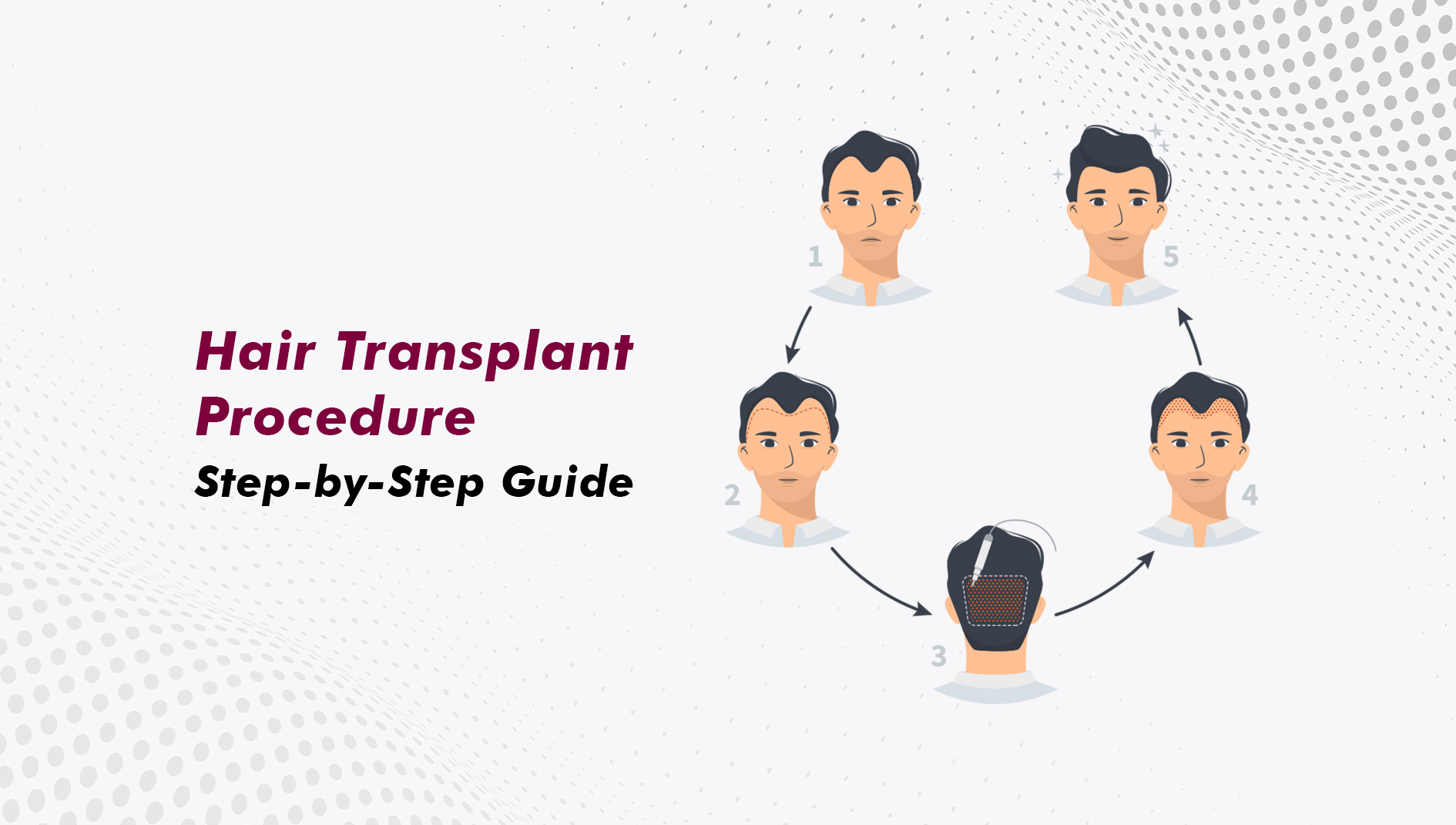
A hair transplant procedure follows this sequence: pre-operative checks including vitals, consent, and photographs; planning and design of the hairline with the operating doctor; local anesthesia administration; recipient site creation across the transplant zone; extraction and graft implantation (simultaneous in DHT, sequential in standard FUE); and post-operative see-off with medication pack and written care instructions. Most hair transplants require one full day at the clinic. Full results develop over 10 to 12 months.
How much do 3,000 hair grafts cost in India?
The cost of a 3,000-graft hair transplant in India varies significantly by clinic, location, and technique. Budget clinics may price a session at INR 60,000 to INR 90,000. Premium hair restoration centres using advanced DHT technique, imported instrumentation, and NABH-accredited facilities typically charge more, reflecting higher graft survival rates, superior results, and comprehensive post-operative support. A consultation is necessary to determine the number of grafts your specific degree of hair loss requires and the accurate cost for your case.
Is it painful to get a hair transplant?
Hair transplant surgery is performed entirely under local anesthesia, it’s minimally invasive procedure. The local anesthesia injection is the most uncomfortable moment for most patients, and at Eugenix this is managed using a vibrating massager applied simultaneously with the syringe to reduce the sensation considerably. Mild soreness in the donor area for two to three days after the procedure is normal and resolves quickly with the prescribed medications.
Eugenix Hair Sciences has performed over 22,000 hair transplant procedures across 15 years of operation, with patients from more than 90 countries choosing Eugenix for hair restoration surgery. Founding surgeons Dr. Pradeep Sethi and Dr. Arika Bansal are both Fellows of ISHRS and alumni of AIIMS, New Delhi. The Gurgaon clinic is NABH accredited (Certificate No. DE-2026-0004, valid to March 2030). To speak with a Hair Advisor at no charge, or to book a consultation at one of Eugenix’s four clinics across Gurgaon, Mumbai, Hyderabad, and Bhubaneswar, visit eugenixhairsciences.com.
Dr. Arika Bansal
One of only a few female surgeons specializing in hair transplant surgery in India, Dr. Arika Bansal has been voted one of the best doctors in the world. She maintains an active fellowship in the ISHRS and regularly submits research papers to medical journals. 15+ years down the line, 22,000+ surgeries are accomplished under Dr. Bansal’s supervision. She specializes in female hair transplant, density improvement, corrective hair transplantation and hairline design.