
A hair transplant is one of the safest cosmetic procedures performed today, and a hair transplant infection is genuinely rare when the surgery is done in a sterile, accredited clinic and post-operative care is followed correctly. That said, the first week after a hair transplant procedure can feel uncertain. You see scabs, you see oozing, you feel itchy, and it is easy to wonder whether something has gone wrong.
This guide covers what causes a hair transplant infection, the early signs to watch for, the difference from normal healing, how to prevent infection, and when to escalate to your doctor or surgeon. Modern hair transplant procedures protect the new hair follicles from contamination, but patients with underlying medical conditions, a weakened immune system, or hair loss concerns should manage infection risk actively.
How Common Is a Hair Transplant Infection?
Infection rates after hair transplant procedures are generally low, under 1% in sterile environments with proper post-operative care. Most unusual changes in the first two weeks are normal healing symptoms, not infection. Choosing a reputable clinic with strong infection control protocols, an experienced medical team, and a properly trained surgical team significantly reduces the risk of post transplant infections.
The risk of an infected hair transplant rises in two situations: when sterility is compromised during the surgical procedure, and when post-operative instructions are not followed in the first 7 days while grafts are anchoring.
What Causes a Hair Transplant Infection?
A hair transplant infection occurs when microbes enter open wounds at the graft sites or donor area before healing is complete. These are wound infections, driven by clear risk factors common to surgical infections:
– A non-sterile surgical environment carries a higher risk of surgical infections.
– Long out-of-body time. In standard FUE, grafts can sit out of body for 3 to 4 hours. Eugenix’s DHT (Direct Hair Transplant) technique keeps out-of-body time under 30 minutes, reducing graft trauma and infection risk.
– Missed prophylactic antibiotics. The 7-day prophylactic antibiotic course is the single most important defence against post-operative bacterial infection.
– Poor hygiene during recovery. Touching, rubbing, or scratching the recipient area transfers bacteria onto healing wounds. Improper hygiene on the donor area can also cause issues.
– Wrong antiseptic on the wrong area. Betadine is for the donor area only; on the recipient area it destroys graft viability.
– Premature exposure to dirty water, swimming pools, public baths, or polluted environments.
– Underlying medical conditions. Uncontrolled diabetes, a weakened immune system, and active smoking all reduce blood flow to the scalp and slow the healing process. The blood vessels need to deliver immune system cells to healing wounds, and any condition compromising circulation raises the chance of an infected hair transplant. This is why Eugenix mandates medicine department clearance before surgery.
– Excessive scabbing and excessive crust formation. Heavy scabs trap bacteria, and the itching they cause prompts patients to scratch.
Early Signs and Symptoms of a Hair Transplant Infection
Early signs of an infected hair transplant typically appear 3 to 7 days after hair transplant surgery, so checking your scalp daily during the first 10 days is the best way to catch problems early. Watch for:
– Pus or thick yellow, green, or cloudy discharge
– Excessive redness that worsens after Day 5
– Severe swelling that continues to spread after Day 4
– Fever above 100°F (37.8°C), or other systemic symptoms such as chills or fatigue
– Throbbing or sharp pain not responding to painkillers
– A foul smell from the scalp
– Bleeding that does not stop with 10 to 15 minutes of pressure
– Blackening or darkening of skin, indicating possible tissue death (necrosis) or significant tissue damage
If symptoms persist or you see any of these, contact your surgeon immediately. Most infections are treated promptly. Severe infections left untreated can spread to a systemic infection or compromise graft survival.
Normal Healing vs Infection: How to Tell the Difference
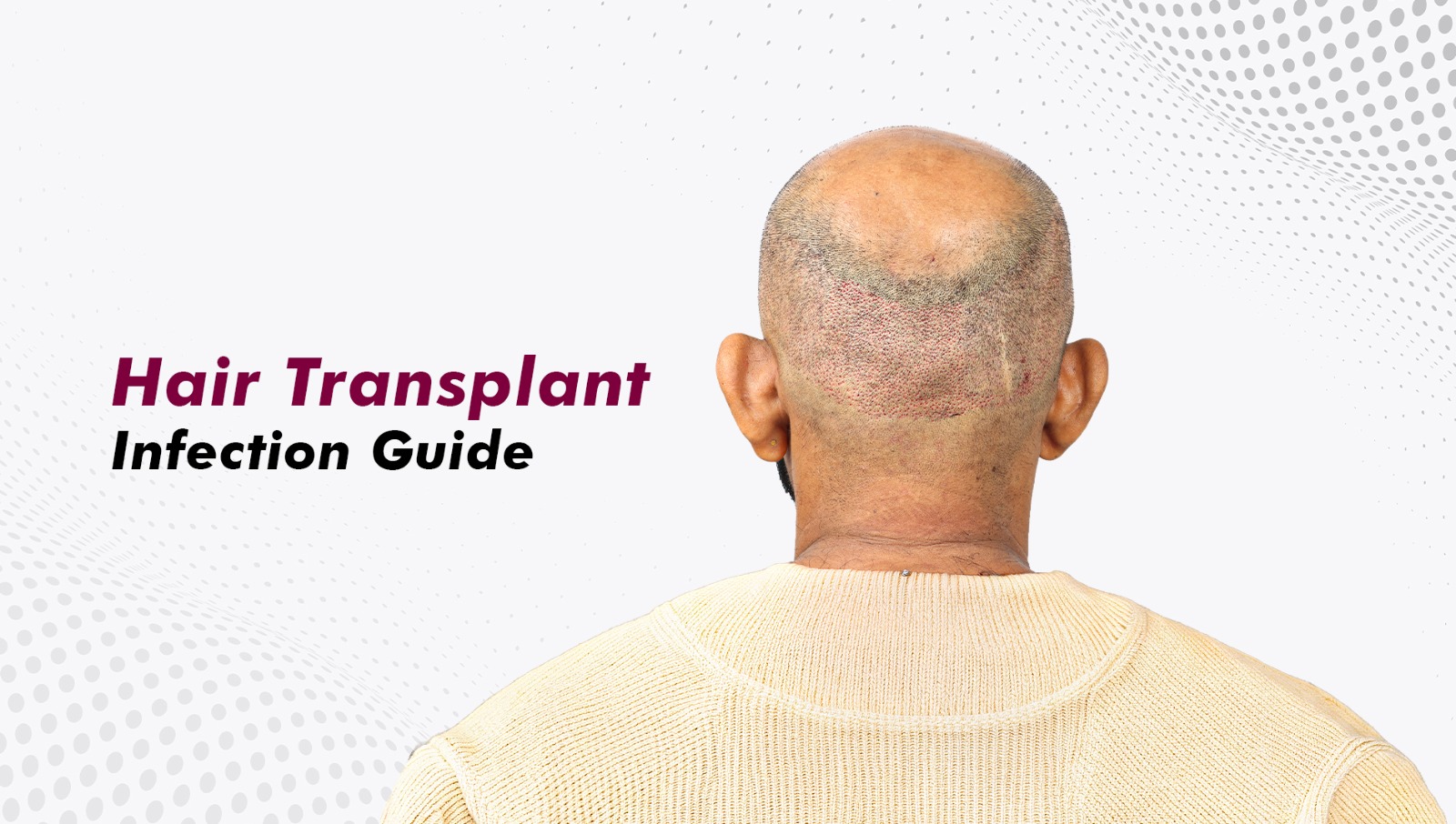
In the first week, the visible signs can look alarming. The following are normal healing symptoms that need no action beyond standard post-operative care:
– Days 1 to 2: Light serum oozing; healing fluid, not pus
– Days 1 to 3: Yellowish, fat-like plasma secretion from the recipient area
– Day 3 onwards: Itching as the skin enters the active healing phase
– Days 3 to 4: Mild forehead swelling, resolved by gentle massage and keeping the head elevated, which helps increase blood flow and reduce fluid build-up
– Days 5 to 7: Scab formation; comes off naturally during the first headwash
– Up to 8 weeks: Mild even redness in the recipient zone
– Up to 6 months: Patchy numbness; sensation returns gradually
If your symptoms match the above, you are healing well; this is not an infected scalp. Infection symptoms differ in degree (severe pain, severe swelling, excessive redness) and in kind (pus, fever, foul odour, blackening), not just intensity of normal healing.
Folliculitis: Pimples in the Months After Surgery
Around month 3 to month 6, when transplanted hair follicles push new growth through the skin, some patients see small pimples around the transplanted grafts. This is folliculitis, the most common late-stage complication of hair transplantation. There are two types: sterile folliculitis (an ingrown hair shaft triggers a non-bacterial reaction) and bacterial folliculitis (bacteria colonise the follicle). Most cases are sterile. A folliculitis bacterial infection that does not resolve may need a short course of topical antibiotics. Never squeeze or pick at folliculitis pimples; this can cause secondary infection or scarring.
Prevention: How to Prevent Infection After a Hair Transplant
Prevention happens in three places: the clinic you choose, the days right after surgery, and how strictly you follow the protocol. Poor hygiene during recovery is the leading avoidable cause of complications.
Choose a sterile, accredited clinic and disclose your medical history
The biggest infection risk reducer is choosing a reputable clinic with proper accreditation, dedicated operating theatres, single-use instruments where required, and an experienced medical team. Strong infection control prevents serious complications before they happen. Eugenix’s Gurgaon facility holds NABH accreditation (Certificate No. DE-2026-0004, valid March 2026 to March 2030); NABH itself is internationally accredited by ISQua. At consultation, disclose your full medical history (diabetes, immunity issues, heart conditions, blood-thinning medication, recent surgeries) so the team can plan safely. The pre-operative blood panel and mandatory medicine department clearance flag these for every Eugenix patient.
Follow your aftercare instructions exactly
The aftercare instructions and post op instructions you receive on surgery day are the single biggest factor under your control to prevent infection. The 7-day post-operative protocol at Eugenix includes:
– Augmentin 625mg, twice daily, after food (antibiotic)
– SignoFlam, twice daily, after food (pain and inflammation)
– BIFILAC, Twice daily (probiotic)
– Pantop, once daily before breakfast (antacid)
Skipping the antibiotic course is the most common avoidable cause of post-operative infection. Take all four medications for the full 7 days.
Donor area, recipient area, and scalp clean routine
For the first 7 days, clean the donor area once daily with Betadine, then apply T-Bact (Mupirocin) ointment. Never apply Betadine on the recipient area. On the recipient area, use saline or Ringer Lactate spray every 30 minutes to 1 hour during the day for the first 7 days. After the first headwash on Day 7, wash the scalp daily with a mild shampoo. Your doctor may recommend an antibacterial shampoo for a short period to keep the scalp clean. Keeping the scalp clean is one of the simplest ways to prevent infection.
Protect the grafts from contamination and trauma
– Do not touch, rub, or scratch the recipient area in the first week
– Wear button-front shirts only for the first 7 days
– Avoid swimming pools, the sea, public baths, and saunas for at least 7 days; chlorinated pools for the first month
– Sleep with your head elevated on a clean travel pillow
– Avoid heavy sweating and dusty workplaces during the first week
– No oil on the scalp during recovery; no smoking for at least 7 days; Avoid intake of Alcohol at least for 7 days while on antibiotics
Scalp Infection Treatment: What to Do If You Suspect Infection
If you see warning signs, do not self-medicate. The right scalp infection treatment depends on severity. Mild infections can be managed with topical antibiotics and improved scalp hygiene; severe infections may require oral antibiotics, drainage, or both.
Depending on assessment, your doctor may prescribe oral or topical antibiotics, drainage of any localised abscess, and supportive care. Most infections resolve fully when treated promptly, and the transplanted hair grafts continue to grow as expected.
If you suspect infection:
1. Photograph the affected tissue from multiple angles and note your body temperature.
2. Note when the symptom started and how it has progressed.
3. Contact your hair transplant aftercare team immediately. At Eugenix, the E-Care team is on WhatsApp, call, and email between 9 AM and 9 PM daily.
4. Follow the clinic’s instructions exactly. Do not start a new antibiotic on your own.
If treatment is delayed, infection can cause delayed healing in the affected tissue, scarring, shock hair loss, and in rare cases compromise graft survival. Most other complications trace back to delayed action; if symptoms persist or worsen, contact your doctor immediately.
When to Contact Your Doctor or Surgeon Immediately
Call your surgeon immediately if you see any urgent warning sign from the Early Signs section: pus, fever above 100°F lasting hours, severe pain, spreading redness or swelling after Day 4, foul odour, uncontrolled bleeding, or skin blackening (rare complications such as tissue death need urgent assessment). For anything less urgent, send photos to your post-operative care team during working hours.
How Eugenix Minimises Infection Risk
Eugenix has performed over 22,000 procedures across 15 years, treating patients with hair loss from 90+ countries. The clinical protocols are built to keep the risk of a hair transplant infection low:
– NABH accredited Gurgaon facility under the Allopathic Clinics, 2nd Edition, Dermatology Clinics Program
– The DHT technique, with grafts kept out of body under 30 minutes versus 3 to 4 hours in standard FUE
– A core team of senior surgical assistants, all personally trained by the founding doctors
– The ADDD principle (Angle, Depth, Density, Direction or Design) governs slit-making, preserving blood vessels and supporting clean healing of the hair follicles
– Mandatory medicine department clearance for every patient
– A dedicated hair transplant aftercare team monitoring every patient daily for 7 days, with photo check-ins at weeks 2, 3, 4, then monthly for 5 years
The founding doctors, Dr. Pradeep Sethi and Dr. Arika Bansal, are both Fellows of ISHRS and alumni of AIIMS, New Delhi. The DHT technique is documented in the 2013 PubMed-indexed paper “Direct hair transplantation: a modified follicular unit extraction technique.” For anyone planning hair restoration surgery, this is the foundation of a successful hair transplant. Donor hair follicles are a finite resource; the natural hair you grow should look indistinguishable from your existing hair.
Frequently Asked Questions
How do you know if your hair transplant is infected?
Look for early signs: pus or yellow discharge, excessive redness that worsens after Day 5, severe swelling, fever, foul smell, or pain not responding to medication. These typically appear 3 to 7 days after hair transplant surgery. Normal healing signs (clear serum oozing, mild redness, scabs, itching) are not the same.
How do you treat an infected hair transplant?
Treatment depends on severity. Mild infections respond to topical antibiotics and improved hygiene. More serious cases may need oral antibiotics, drainage, or both. Self-medicating is not advised. Contact your post-operative care team or surgeon immediately, send photos, and follow their plan.
What is the most common infection after a hair transplant?
The most common condition mistaken for infection is folliculitis, the small pimples that appear at 3 to 6 months as new hair pushes through the skin. Most are sterile folliculitis, not bacterial. True post-operative bacterial infections occur in less than 1% of hair transplant procedures done in sterile clinics.
How long am I at risk of a hair transplant infection?
The first 7 days. By end of week two, infection risk drops sharply. By 4 weeks, infection from the original procedure is rare.
Can I swim or use a sauna during early recovery?
Avoid swimming pools, the sea, public baths, and saunas for at least 7 days. Saunas can be resumed after Day 7 once the first headwash is done. Chlorinated pools are best avoided for the first month.
The Bottom Line
A hair transplant infection is rare and almost always preventable when the protocol is followed. The first week is the critical window. Take your medications, protect the recipient area, clean the donor area, keep the scalp clean, and stay in contact with your clinic. Most infections caught early and treated promptly resolve cleanly. In very rare cases where infection compromises graft survival, speed of action decides the outcome.
Book a free consultation with a Eugenix Hair Transplant Doctor to walk through your case.
Dr. Arika Bansal
One of only a few female surgeons specializing in hair transplant surgery in India, Dr. Arika Bansal has been voted one of the best doctors in the world. She maintains an active fellowship in the ISHRS and regularly submits research papers to medical journals. 15+ years down the line, 22,000+ surgeries are accomplished under Dr. Bansal’s supervision. She specializes in female hair transplant, density improvement, corrective hair transplantation and hairline design.