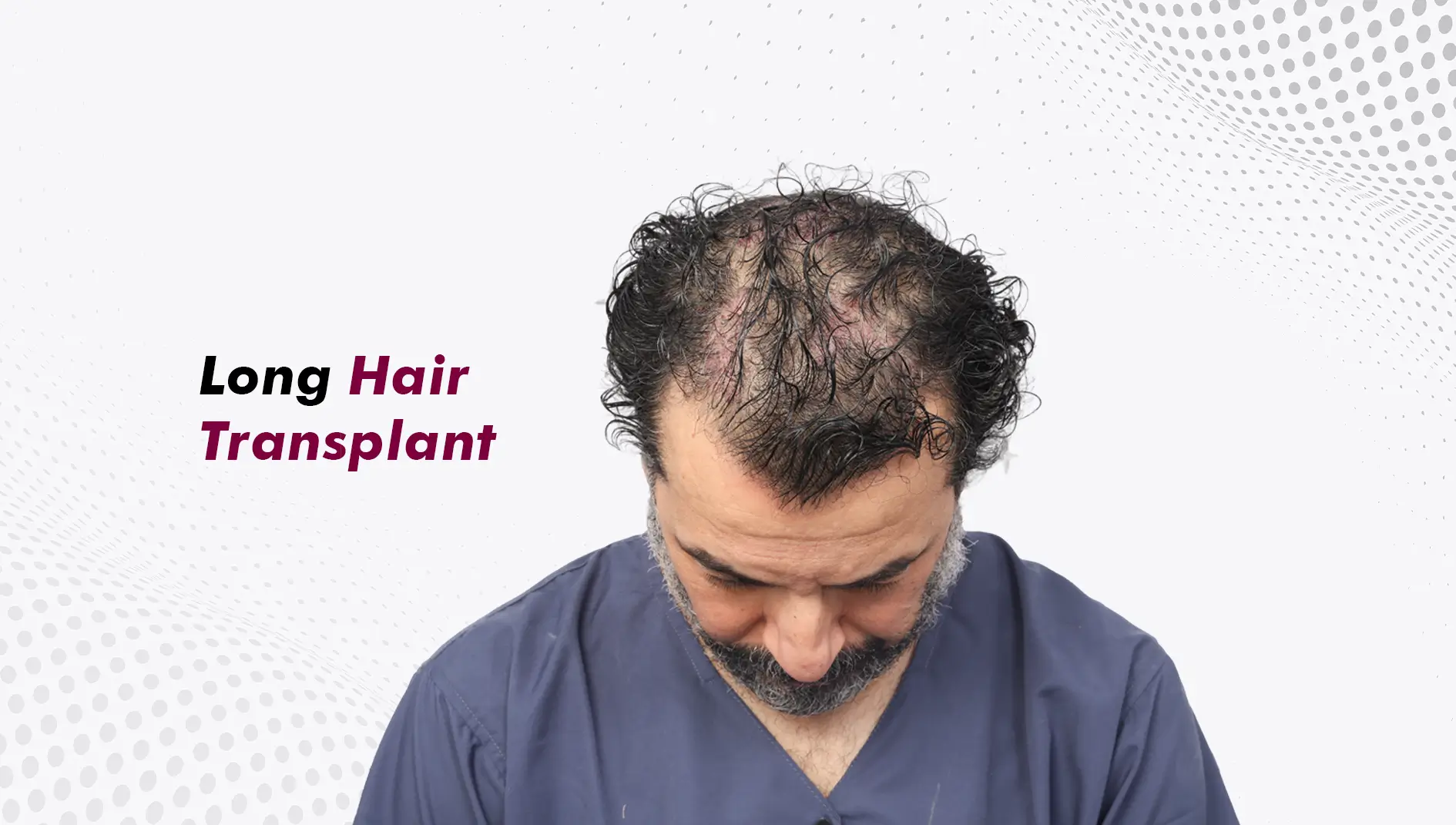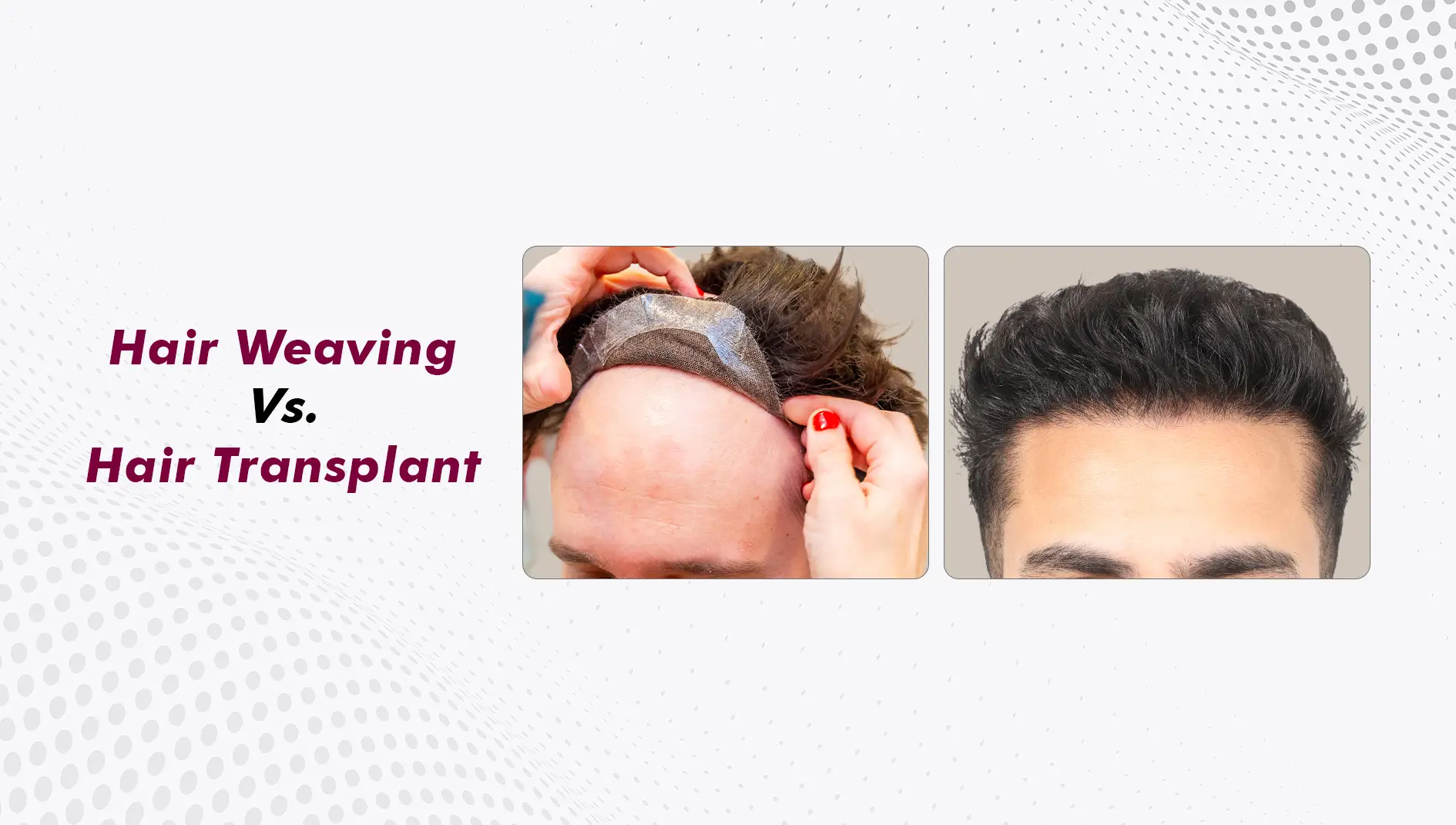
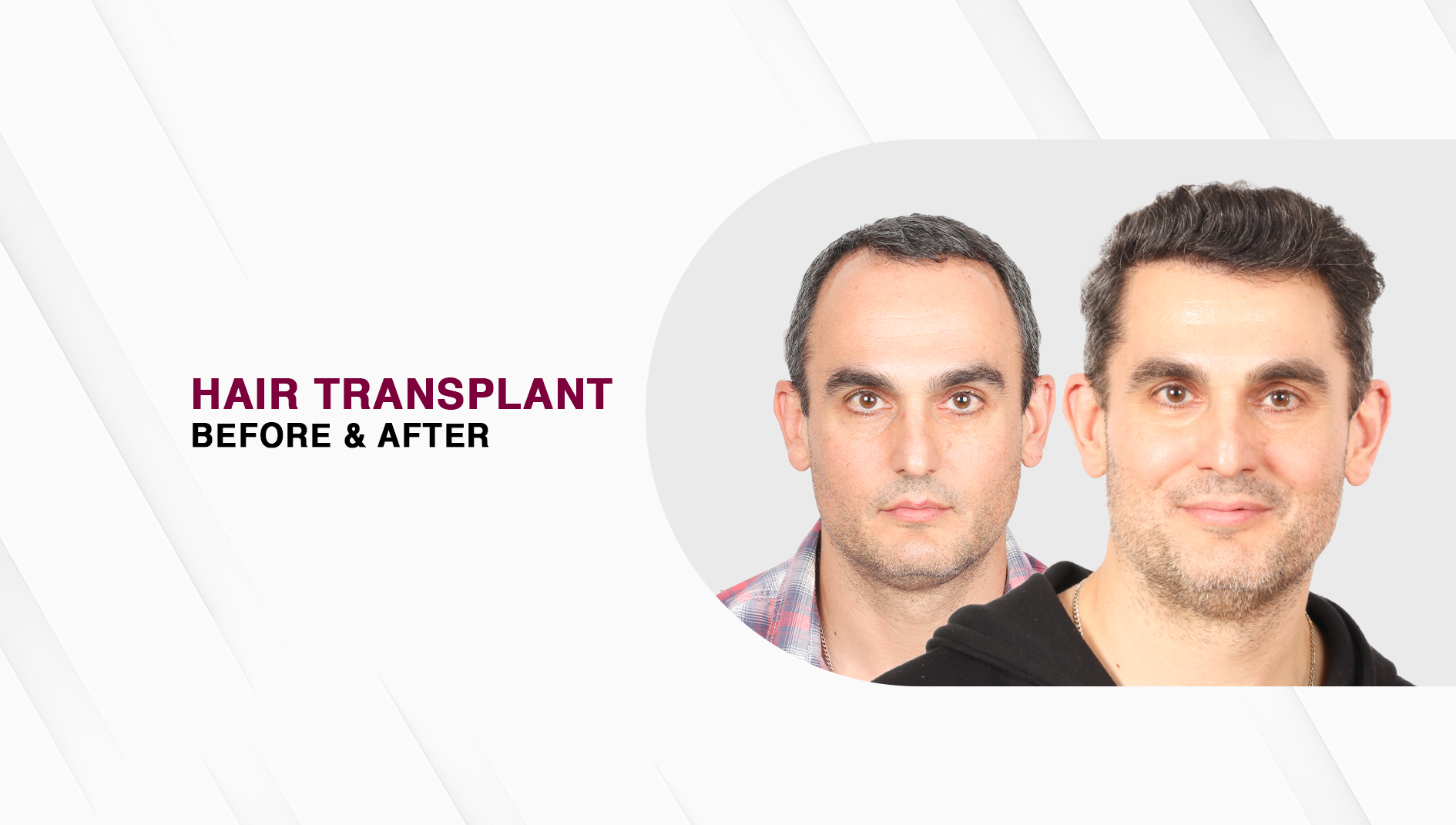
For anyone considering a hair transplant procedure, before and after photos are usually the first thing they look at. Those hair transplant images promise transformation, restored confidence, and a return to a fuller hairline. But what they actually show, and what they leave out, is something every patient deserves to understand before booking a hair transplant.
A hair transplant is a permanent solution to baldness for most men suffering from progressive hair loss with a stable donor zone of grafts. The right outcome depends on honest documentation, realistic expectations, and a clear understanding of how transplanted grafts behave after the procedure. This guide covers what real before and after photos show about hair transplant results, the timeline of a hair transplant, the factors that shape your final outcome, the difference between FUE hair transplant and DHT advanced techniques, and how to read transformation photos without being misled.
What Hair Transplant Before and After Photos Actually Show
A genuine hair transplant before and after photo set documents the same patient, in the same lighting, from the same angles, photographed at clearly stated time intervals. The minimum standard most ethical clinics follow is a pre procedure baseline, an immediate post procedure image, and follow up shots at Month 6, Month 10 to 12, and Month 14 to 15.
What an honest hair transplant set will not do:
– Use AI generated or digitally altered images. Eugenix Hair Sciences strongly opposes the use of AI generated hair transplant photos.
– Show only the most flattering angle of the patient’s hairline, or hide the donor area where grafts were extracted.
– Use heavy filters or unstated styling between shots.
– Skip the shedding phase between Month 1 and Month 3.
When you evaluate any clinic’s hair transplant gallery, look for the messy middle. The shedding, the regrowth at Month 4, and the gradual fill in as the transplanted grafts mature into a fuller hairline.
The Real Timeline of Hair Transplant Results
The journey from the day of surgery to the final hair transplant results spans more than a year. Here is what happens in the course of a normal hair transplant recovery.
Day 1 to Day 7: The Healing Phase
The donor and recipient areas heal during the first week. Mild swelling, scab formation, and pinkness around each implanted graft are normal. By Day 7, the first head wash takes place and most scabs come off within two to three washes.
Weeks 1 to 12: Initial Growth and the Shedding Phase
Through the first month after the hair transplant, the transplanted hair shafts stay and even grow slightly in length. The treated zone looks dense and many patients feel optimistic. Between Weeks 4 and 12 the shedding phase begins, and 30 to 90 percent of the transplanted hair shafts shed. This is the most misunderstood phase in the timeline. The shaft falls, but the root, which is what the surgeon transplanted, stays securely intact inside the scalp. The grafts remain intact even as the visible hair is lost. Every patient experiences this. It is not a sign of failure, and it is not the same as shock loss, which is loss of native hair around the treated zone.
Months 4 to 15: Active Hair Growth, Full Results, and Anagen Desynchronization
Hair growth restarts around Month 4, when the transplanted grafts produce roughly 30 to 40 percent visible coverage. Coverage rises to roughly 50 percent at Month 5, around 60 percent at Month 6, and around 70 percent by Month 7. Full hair transplant results in the hairline and mid scalp zones land at Month 10 to 12, when the transplanted grafts have reached anagen synchronization, with every implanted graft in the same growth phase. The crown area catches up between Month 12 and Month 15 because crown hair grows more slowly. By Month 14 to 15, the transplanted hair re enters its natural cycle. Approximately 18 to 20 percent of the hair shifts into the resting phase, and patients see a roughly 20 percent reduction in fullness compared to the synchronization peak. This is the permanent, stable, long term outcome. The result does not return to the 100 percent peak. Any clinic that does not explain this stage up front is omitting something important.
Factors That Affect Your Hair Transplant Outcome
No two hair transplant patients have identical before and after photos. The variables that shape your hair transplant outcome include:
Donor density: The hair on the back and sides of your head is the source of every graft. Stronger donor capacity means more grafts available for any future hair transplant procedure.
Hair characteristics: Coarse, dark hair against fair scalp creates more visual coverage per graft than fine, light hair. Curl and wave also boost the appearance of fullness.
Existing pattern and future progression: A Norwood Grade 3 receding hairline result looks different from a Norwood Grade 6 advanced hair loss case. Surgical planning at Eugenix accounts for current loss and projected balding at age 60 and beyond, which is why hairline placement is conservative rather than aggressive.
Surgical technique: At Eugenix, the Direct Hair Transplant or DHT technique is used exclusively. DHT keeps the out of body time for grafts under 30 minutes, compared to 3 to 4 hours in standard FUE. This dramatically improves graft survival and natural looking results. Slit creation follows the ADDD principle: Angle, Depth, Density, and Direction or Design.
Surgeon experience: Hairline design, slit angulation, and graft handling are technique-dependent skills. Our panel of experienced surgeons, personally handpicked and trained by our Co-Founders, brings this expertise to every procedure, supported by our lead surgeon. Discuss your specific hair loss pattern during your initial consultation, where the surgeon assesses your donor capacity and helps you decide whether to proceed with hair transplant surgery.
Post procedure care: Patients who follow surgeon advice and continue Finasteride 1 mg as prescribed protect both their grafts and their existing hair from further loss. Consistent care helps achieve and maintain best results.
How Many Grafts Will You Need? Graft Counts by Norwood Grade
The number of grafts needed for a hair transplant procedure depends on three things: how much area needs coverage, the target graft count per square centimetre, and how much donor reserve the patient has available. A rough framework helps you decide what to expect before your hair transplant consultation.
Receding Hairline and Norwood Grade 2 to 3
Patients with a thinning hairline or Norwood Grade 2 to 3 hair loss typically need approximately 1,500 to 2,500 grafts to restore a fuller hairline. The hairline zone is implanted at 35 to 45 grafts per cm², with single hair grafts placed in the front rows and double or triple grafts behind to create natural visual depth. Most receding hairline cases are completed in a single sitting and the patient can return to work within a week.
Frontal Plus Mid Scalp at Norwood Grade 3 to 5
Patients in the Norwood Grade 3 to 5 range typically need 2,500 to 4,500 grafts depending on the extent of mid scalp and crown thinning. Mid scalp and crown areas are implanted at 25 to 35 grafts per cm². Treating frontal plus mid scalp loss in one hair transplant procedure helps maintain a balanced look and avoids visible patchwork from staged surgery.
Advanced Hair Loss at Norwood Grade 6 to 7
Patients with advanced hair loss in the Norwood Grade 6 to 7 range may need 4,500 to 7,500 grafts and sometimes more. These cases are often planned across two sittings to protect the donor area. The hairline in Grade 6 and 7 cases is implanted at 40 to 45 grafts per cm², with the area behind it at 20 to 25 grafts per cm². For advanced balding, beard or chest grafts may be combined with scalp grafts to restore crown coverage. Beard donor capacity over a lifetime is approximately 3,000 to 5,000 grafts, and chest grafts achieve full results around 15 months after the procedure. Eyebrow restoration uses a separate plan with a much smaller number of grafts. Hair thinning in the temple zones is also addressed with reduced graft counts, and thinning hair at the crown often needs additional crown grafts depending on the case. Temple density at Eugenix is set at 70 to 80 percent naturalness only.
The right number of grafts is decided at consultation, where donor density is assessed under magnification and a hair transplant plan is built around current loss, projected future loss, and durable donor reserve. The cost of a hair transplant procedure depends on the graft count, technique, and clinic, and is shared transparently after consultation. A receding hairline patient who plans to wear their hair long benefits from the front density target of 35 to 45 grafts per cm².
FUE vs DHT: Why the Technique Behind Your Hair Transplant Matters
Most before and after photos online come from clinics performing Follicular Unit Extraction or FUE hair transplant procedures. FUE is the global industry standard for surgical hair restoration, and most patients globally undergo a variant of FUE.
What FUE Hair Transplant Is and How It Works
In a standard FUE hair transplant procedure, hair follicles are extracted one at a time from the donor area using a micro punch. The follicles are stored outside the body for 3 to 4 hours while slits are made in the recipient area. The grafts are then placed into these slits. FUE leaves tiny pinpoint scars at each extraction site, which are not visible at typical hair lengths. Standard FUE hair transplant procedures are offered at the vast majority of clinics globally.
How Eugenix Direct Hair Transplant Improves on FUE
The Eugenix DHT hair transplant procedure performs extraction and implantation in parallel rather than sequentially. The out of body time for grafts is kept under 30 minutes, compared to 3 to 4 hours in a standard FUE hair transplant. Hair follicles are healthier when the grafts spend less time outside the body, which directly improves graft survival and the final hair density visible in hair transplant results. DHT was first published in a 2013 PubMed indexed paper titled “Direct hair transplantation: a modified follicular unit extraction technique.” A separate 2019 PubMed indexed paper documents the use of implanters in pre made sites. Very few clinics globally use this parallel hair transplant workflow.
Setting Realistic Expectations: What Photos Cannot Promise
Even the best hair transplant photos have limits. Hair density at Eugenix is approximately 50 percent of the patient’s natural original hair count. Natural hair has a gap of around 0.5 mm between strands, while transplanted hair has a gap of approximately 1.5 mm. The result looks full and natural on camera and in person, but it is not biologically identical to the fullness a patient had at age 20.
By zone, the planned graft count at Eugenix is:
– Hairline: 35 to 45 grafts per cm²
– Mid scalp and crown: 25 to 35 grafts per cm²
– Grade 6 and Grade 7 hairline: 40 to 45 grafts per cm² in the hairline, 20 to 25 per cm² behind it
– Temple zones: 70 to 80 percent naturalness, never 100 percent
Coverage is bounded by donor capacity. Patients with extensive hair loss are planned around the safe donor reserve of grafts, not the maximum graft count in a single hair transplant sitting. Hair loss does not stop on the day of surgery, so existing hair around the treated zone may continue to thin if not protected with medication, even when the transplanted grafts are doing well.
Celebrity Hair Transplants: What Real Public Transformations Show
Hair transplant procedures have become common among professionals whose appearance is part of their work. Eugenix has performed hair transplant surgery on several public figures over the past 15 years, with many choosing to share their journey publicly. For celebrity patients dealing with public-facing baldness, the visible boost to self esteem after restoring a full head of hair is often the headline of the story.
Documented Eugenix celebrity patients who have shared their hair transplant transformation include cricketer Mohammed Asaduddin, Indian film actor Surendra Pal, Wizcraft co founder Andre Timmins, and filmmaker Rakeysh Omprakash Mehra. Each shared their hair transplant results, including graft counts and clinic experience, through public statements, social media, or video interviews. For prospective patients, celebrity images are useful as proof of concept, but the real benchmark is what a hair transplant clinic delivers across thousands of patients treated, where the same number of grafts and the same clinic protocol must hold up across every case.
Why Eugenix Hair Sciences Documents Hair Transplant Results Honestly
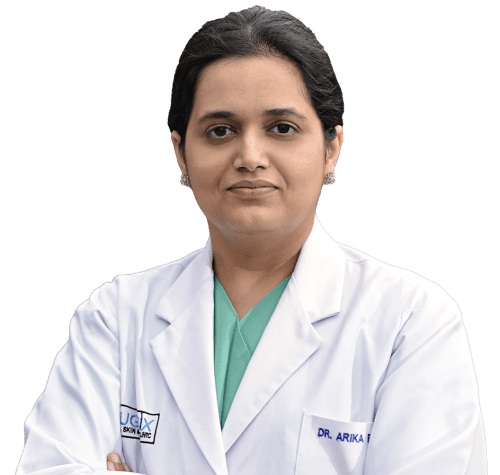
Eugenix Hair Sciences was founded by Dr. Pradeep Sethi and Dr. Arika Bansal, both Fellows of ISHRS. Dr. Sethi is alumni of AIIMS, New Delhi, with MBBS and MD Dermatology. Dr. Bansal is an MBBS Gold Medalist from Lady Hardinge Medical College and MD Dermatology, alumni of AIIMS, New Delhi. Each founder has 15 plus years of exclusive experience in surgical hair restoration. Eugenix chose not to patent DHT so the wider community could benefit.
The Eugenix Gurgaon clinic is NABH accredited under Certificate No. DE-2026-0004, valid from 12 March 2026 to 11 March 2030. Eugenix has performed more than 22,000 hair transplant procedures across its four clinics in Gurgaon, Mumbai, Hyderabad, and Bhubaneswar, with patients from over 90 countries.
Frequently Asked Hair Transplant Questions
How soon will I see a noticeable change after a hair transplant procedure?
Initial hair growth begins around Month 4. Visible fullness becomes obvious between Month 6 and Month 8. Full hairline and mid scalp hair transplant results land at 10 to 12 months, with crown results taking 12 to 15 months.
Will my hair transplant results match the density I had before hair loss?
No. The realistic expectation after a hair transplant is approximately 50 percent of your natural original hair count. The result looks full because of how slit angulation, graft selection, and direction are planned, not because biological fullness is restored on a one to one basis.
How long do hair transplants last?
Hair transplant results are generally permanent because the grafts are taken from the donor zone at the back and sides of the head, which is genetically resistant to the hormones that cause male pattern baldness. The transplanted grafts retain this resistance for life. Native hair around the transplanted grafts can continue to thin if not protected with Finasteride 1 mg.
What happens 20 years after a hair transplant?
Twenty years after a properly performed hair transplant procedure, the grafts continue to grow and remain in place. The visible result depends on what has happened to the surrounding native hair in the hairline and crown. Patients who maintained Finasteride and adhered to surgeon advice typically retain a fuller hairline and natural looking results well into their later decades.
How much will 3,000 grafts cover?
Approximately 3,000 grafts cover a receding hairline plus light to moderate mid scalp thinning, typical of Norwood Grade 3 to early Grade 4 hair loss. At a hairline target of 35 to 45 grafts per cm² and a mid scalp target of 25 to 35 grafts per cm², 3,000 grafts cover roughly 80 to 100 cm² of recipient area. For crown coverage in addition, the graft count usually rises to between 3,500 and 4,500 grafts.
How can I tell if a clinic’s before and after photos are honest?
Look for matched lighting and angles, documented time intervals, donor area shots, the shedding phase shown rather than skipped, and an absence of AI generated images.
Conclusion
A hair transplant before and after photo is a snapshot of a long, gradual, biological process. The patients who feel happiest with their hair transplant results are the ones who knew what to expect before they began. Realistic expectations, the shedding phase, anagen desynchronization at Month 14 to 15, and the limits of donor capacity are all part of the honest picture. A full head of hair is achievable for many patients, but only with realistic planning.
To restore your hairline, restore lost volume in the crown, and restore confidence with a hair transplant procedure performed by senior surgeons trained in DHT, contact us to book a consultation at any of the Eugenix Hair Sciences clinics in Gurgaon, Mumbai, Hyderabad, or Bhubaneswar.
Dr. Arika Bansal
One of only a few female surgeons specializing in hair transplant surgery in India, Dr. Arika Bansal has been voted one of the best doctors in the world. She maintains an active fellowship in the ISHRS and regularly submits research papers to medical journals. 15+ years down the line, 22,000+ surgeries are accomplished under Dr. Bansal’s supervision. She specializes in female hair transplant, density improvement, corrective hair transplantation and hairline design.