

No. Do not cut, trim or shave your scalp hair for at least 30 days before a hair transplant. Leave it as it is. If trimming is part of your plan, it is done at the clinic on the day of the procedure, after the doctor has marked your hairline and the recipient and donor areas. Shaving at home is not needed, and a very short cut in the weeks before can make planning harder.
This guide from Eugenix Hair Sciences explains why your hair is left alone before surgery, how trimming works on the day, what happens in a non-trim procedure, and what to do about your beard, hair colour, wigs and washing.
Why should you not cut your hair before a hair transplant?
Your existing hair is part of the planning. On the day of the procedure, the doctor plans and marks your hairline, the areas to be treated and the donor area before anything is trimmed. With your hair at its usual length, the doctor can see how it grows and where your native hair is thinning, and you can see the plan in a familiar look. Cutting or shaving the hair yourself takes this away and gains nothing, because any trimming needed is done at the clinic.
For the same reason, avoid wearing a toupee, wig or hair patch for at least 30 days before your hair transplant.
Who trims the hair, and when?
Trimming is done by the clinic team on the day of the procedure. The usual order is:
- Photographs are taken and your vitals are checked.
- Planning & Designing: the lead surgeon marks your hairline and the full recipient and donor areas, and explains the plan to you.
- You confirm the markings, and then you are taken for trimming.
- Photographs are taken again after trimming, and the scalp is cleaned before local anaesthesia.
In a standard procedure, the hair in the areas to be treated and the donor area is trimmed short. This makes each hair easy to see, so grafts can be taken and placed at the right angle and direction.
Can a hair transplant be done without cutting your hair?
Yes, in some cases. In a non-trim procedure, also called an unshaven hair transplant, the hair in the recipient area is not trimmed, and the grafts are placed through and between your existing long hair. It suits people with limited hair loss who want to keep their length, and it is often preferred for women.
There are limits. A non-trim procedure allows about 1,500 to 2,000 grafts, so it does not suit advanced hair loss. The donor area is still trimmed, usually in a small window, and the hair around it should be at least 5 to 7 cm long to cover the trimmed patch. Whether a trim or non-trim procedure suits you is decided at consultation. Read more in our guide to a hair transplant without shaving the head.
If you are planning a non-trim procedure, it is even more important not to cut your hair short in the weeks before, so that your own hair can cover the treated and donor areas afterwards.
What about your beard and body hair?
If beard grafts are part of your plan, do not shave or trim your beard for at least 3 days before the procedure. The team needs to see some beard length to choose the right hairs for extraction.
If chest hair is part of your plan, the instructions are different: shave the chest hair at least 10 days before the procedure date. Body hair is used only as a filler, not as the main donor.
Can you colour or wash your hair before a hair transplant?
Yes. There is no restriction on hair colour before a hair transplant; you can colour your hair before the procedure, even on the same day. Keep washing your hair regularly with shampoo in the days before hair transplant surgery. Also avoid smoking and alcohol for at least 1 week before the procedure.
On the day of the procedure, do not apply hair oil. Wear a front-open shirt rather than a t-shirt that you pull over your head, so nothing brushes your scalp afterwards. Tell the team about any dandruff or scalp condition before your date, because some need treatment first.
At Eugenix, every hair transplant is done with Direct Hair Transplant (DHT). Direct Hair Transplant (DHT) is a modified FUE technique described by Eugenix Hair Sciences’ Co-Founders in their 2013 research paper. The procedure is performed under local anaesthesia. The lead surgeon performs the extraction and sets every technical parameter. The Eugenix medical team assists and carries out implantation under the lead surgeon’s parameters and supervision, using the SAVA Implanter, a no-root-touch instrument.
For the full 30-day checklist, including tests, medicines, alcohol and smoking, read how to prepare for hair transplant surgery.
When can you cut your hair after a hair transplant?
You can have a haircut or trim after 15 days. Hair colour, gel and serum can be used after 30 days. The donor area is nearly healed by Day 5 for most people, and as the trimmed hair grows back over the following weeks, it covers the small extraction points.
If you like to keep your hair very short, tell the team at consultation. Donor area thinning can show with very short hair, so keeping the hair at the back at least 1 to 1.5 cm long is recommended. Read more in our guides on a haircut after a hair transplant and what happens to the donor area.
Eugenix Hair Sciences has worked only in hair restoration since 2009, with centres in Gurugram, Mumbai, Hyderabad, Bhubaneswar and Bengaluru. It was founded by Dermatologists, alumni of AIIMS, New Delhi, and Fellows of ISHRS.
Key points
- Do not cut, trim or shave your scalp hair for at least 30 days before a hair transplant.
- Any trimming is done at the clinic on the day, after your plan is marked.
- A non-trim procedure keeps your length, but allows about 1,500 to 2,000 grafts.
- Do not trim your beard for 3 days before if beard grafts are planned.
- Hair colour is allowed before surgery; no hair oil on the day.
Know more about preparing for your hair transplant by speaking to our team.
Frequently asked questions
Should I cut my hair before a hair transplant?
No. Leave your scalp hair as it is, and do not cut, trim or shave it for at least 30 days before the procedure. If trimming is part of your plan, the clinic team does it on the day, after the doctor has marked your hairline and the recipient and donor areas. Cutting it yourself gains nothing and can make the planning harder.
Do I have to shave my head for a hair transplant?
Not fully, and never at home. In a standard procedure, the areas to be treated and the donor area are trimmed short at the clinic on the day. In a non-trim procedure, the recipient area is not trimmed and only a small window of the donor area is. The doctor explains at consultation which one suits your hair loss and the number of grafts you need.
Will the clinic trim my hair on the day of the hair transplant?
Yes, if your plan needs it. The lead surgeon first marks your hairline and the recipient and donor areas and explains the plan. After you confirm the markings, you are taken for trimming, photographs are taken again, and your scalp is cleaned before local anaesthesia is given. You do not need to bring anything for this or arrive with your hair cut.
Can I have a hair transplant without cutting my hair?
In some cases, yes. A non-trim procedure places grafts between your existing hair without trimming the recipient area. It allows about 1,500 to 2,000 grafts, so it suits limited hair loss rather than advanced hair loss, and the donor area is still trimmed in a small window. Hair around the donor area at least 5 to 7 cm long helps cover it.
Can I dye my hair before a hair transplant?
Yes. There is no restriction on hair colour before a hair transplant, and colour can be applied even on the same day. After the procedure, wait 30 days before colouring your hair again. Keep washing your hair regularly with shampoo in the days before surgery, and do not apply hair oil on the day of the procedure.
Should I shave my beard before a hair transplant?
If beard grafts are part of your plan, do not shave or trim your beard for at least 3 days before the procedure, so the team can see enough length to choose the right hairs. If your beard is not being used as a donor, there is no beard rule. After the procedure, the beard donor area can be shaved after 7 days.
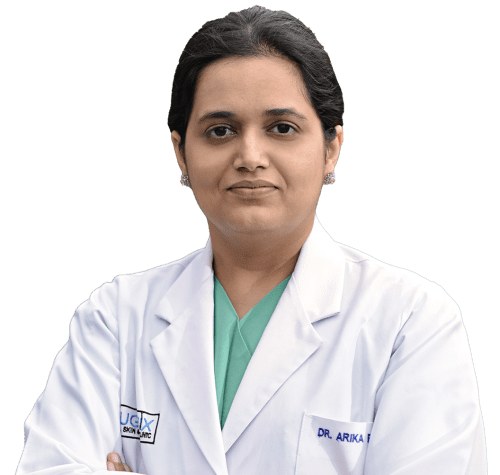
Medically reviewed by Dr. Arika Bansal, Co-Founder, Eugenix Hair Sciences; MBBS, MD Dermatology, Fellow of ISHRS; Reg. No. HN-34095 (Haryana Medical Council).
Dr. Arika Bansal
Dr. Arika Bansal, Co-Founder, Eugenix Hair Sciences. MBBS (Gold Medallist, Lady Hardinge Medical College), MD Dermatology, alumni of AIIMS, New Delhi. Fellow of ISHRS. Reg. No. HN-34095 (Haryana Medical Council).
