

Yes, a hair transplant can be planned during Ramadan, and the Eugenix team plans your medicine timings, care and follow-up around the fast. Your post-operative medicines can usually be scheduled at Sehri and Iftar, with food. Drink about 2 to 2.5 litres of water, slowly, between Iftar and Sehri, and limit tea and coffee. Tell the team before the procedure that you will be fasting, and tell them early if you have diabetes. For other fasts, the same rule applies: tell the team early.
This guide from Eugenix Hair Sciences explains how fasting after a hair transplant is planned, what changes during Ramadan, and what to share with the team before your procedure date. Eugenix does not give religious rulings; for questions about the fast itself, please speak to your own religious scholar.
Can you fast after a hair transplant?
For most patients, fasting and a hair transplant can go together when the plan is made in advance. The first 7 days after the procedure follow a fixed routine: a short course of medicines, the saline spray on the transplanted area during the day, donor area care, and your first head wash on Day 7. Fasting does not change that routine; it changes when you take the medicines and when you eat and drink.
That is why the most important step is simple: tell the team before the procedure that you plan to fast, and for how long. Medicine department clearance is mandatory for all patients, so your health and medicines are reviewed before any date is fixed.
Can I have a hair transplant during Ramadan?
Yes. A transplant can be planned during Ramadan. The team plans medicine timings, care and follow-up around the fast, so you do not have to choose between your procedure and your fast. Share your plans when you first speak to your Hair Advisor, so the date and the first week can be planned with you.
Some patients prefer to plan the procedure just before or just after Ramadan. Both are possible; the choice is yours, and the team will explain what the first week looks like for each date.
How are medicines taken while fasting?
After the procedure, a short course of medicines is given, such as an antibiotic, a pain reliever, a probiotic, a stomach protector and an ointment for the donor area, explained in person by the Eugenix team. During Ramadan, the medicines can usually be scheduled at Sehri and Iftar, with food.
Tell the team before the procedure that you will be fasting. The doctor then sets the timings for your own course. Do not change the timings or skip a dose on your own. If you are unsure about any medicine, call the team.
What if I have diabetes and want to fast?
If you have diabetes, tell the team early. Before surgery, the medical team reviews your medicines and blood sugar monitoring, and plans them around your fast. Do not change your diabetes medicines on your own to fit the procedure date or the fast.
The standard blood tests before a hair transplant include tests for blood sugar, and the results are reviewed before the procedure. Share every medicine you take, for diabetes, blood pressure or any other condition, on your medical history form.
How much water should I drink during Ramadan after a hair transplant?
Drink about 2 to 2.5 litres of water, slowly, between Iftar and Sehri. Spreading it across the evening and night is easier than drinking a large amount at once. Limit tea and coffee during Ramadan.
Eat a proper meal at both Sehri and Iftar, so that your medicines are taken with food. Avoid alcohol and smoking for 7 days after surgery, as for every patient.
What about other fasts, such as Navratri, Karva Chauth or intermittent fasting?
Many patients keep other fasts too, such as Navratri, Karva Chauth, a weekly fast, or an intermittent fasting routine with a set eating window. The approach is the same: tell the team before the procedure, say what kind of fast you keep and for how many days, and let the doctor plan your medicine timings and meals with you. Do not start a new fasting routine in the first week after surgery without asking the team.
What else should you plan for the first week?
Fasting is only one part of the first week. A few other points help:
- Keep the saline spray going. Spray the transplanted area every 30 minutes to 1 hour during the day for 7 days, as shown to you.
- Head covering. In the first 7 days, wear only the surgical cap given by Eugenix when you go out. Our page on religious questions about a hair transplant covers head covering and other concerns.
- Rest and sleep. Sleep on your back with your head raised, never face down.
- Your first head wash on Day 7, and a video consultation with your operating doctor on Day 8.
If you are travelling to India from the Middle East for your procedure, our guide for patients from Saudi Arabia explains how to plan the trip. For patients who need a medical visa, Eugenix can issue a medical invitation letter.
When should you call the Eugenix team?
Call the team if you feel faint or unusually weak while fasting, cannot keep your medicines or water down, or notice fever, pus, increasing pain or swelling that keeps increasing after Day 4. Your health and the healing of your scalp come first, and the doctor will advise you on what to do.
How is the procedure done at Eugenix?
Every hair transplant at Eugenix is done with Direct Hair Transplant (DHT). Direct Hair Transplant (DHT) is a modified FUE technique described by Eugenix Hair Sciences’ Co-Founders in their 2013 research paper. The procedure is performed under local anaesthesia. Grafts stay outside the body for under 30 minutes with Direct Hair Transplant, compared to 3 to 6 hours with conventional FUE.
The lead surgeon performs the extraction and sets every technical parameter. The Eugenix medical team assists and carries out implantation under the lead surgeon’s parameters and supervision, using the SAVA Implanter, a no-root-touch instrument.
Recovery usually takes about 7 days. New hair growth starts from Month 4, and full results take 10 to 12 months. Results vary from person to person.
Key points
- A hair transplant can be planned during Ramadan; the team plans medicines, care and follow-up around the fast.
- Medicines can usually be scheduled at Sehri and Iftar, with food.
- Drink about 2 to 2.5 litres of water, slowly, between Iftar and Sehri, and limit tea and coffee.
- With diabetes, tell the team early; the medical team reviews your medicines and blood sugar monitoring.
- For any other fast, tell the team before the procedure.
Eugenix Hair Sciences has worked only in hair restoration since 2009, with centres in Gurugram, Mumbai, Hyderabad, Bhubaneswar and Bengaluru. It was founded by Dermatologists, alumni of AIIMS, New Delhi, and Fellows of ISHRS.
Know more: rest and recovery in the first week after a hair transplant.
Frequently asked questions
Can I fast after a hair transplant?
For most patients, yes, when it is planned in advance. Tell the Eugenix team before the procedure that you will be fasting and for how long. The doctor then plans your medicine timings and meals with you. The first-week routine of medicines, saline spray during the day and your first head wash on Day 7 stays the same; only the timings change.
Can I have a hair transplant during Ramadan?
Yes. A hair transplant can be planned during Ramadan. The Eugenix team plans your medicine timings, care and follow-up around the fast. Share your plans when you first speak to your Hair Advisor, so the date and the first week can be planned with you. For questions about the fast itself, please speak to your own religious scholar.
How do I take my medicines during Ramadan after a hair transplant?
The post-operative medicines can usually be scheduled at Sehri and Iftar, with food. Tell the team before the procedure that you will be fasting, so the doctor can set the timings for your own course. Do not change the timings or skip a dose on your own, and call the team if you are unsure about any medicine.
How much water should I drink while fasting after a hair transplant?
During Ramadan, drink about 2 to 2.5 litres of water, slowly, between Iftar and Sehri, spread across the evening and night rather than all at once. Limit tea and coffee. Eat a proper meal at both Sehri and Iftar so that your medicines are taken with food, and avoid alcohol and smoking for 7 days after surgery.
I have diabetes. Can I fast after a hair transplant?
Tell the Eugenix team early. Before surgery, the medical team reviews your medicines and blood sugar monitoring and plans them around your fast. Do not change your diabetes medicines on your own to fit the procedure date or the fast. Share every medicine you take on your medical history form, as medicine department clearance is mandatory for all patients.
Can I keep a Navratri or Karva Chauth fast after a hair transplant?
Tell the team before the procedure which fast you keep and for how many days. The doctor will plan your medicine timings and meals with you, as for any other fast. The same applies to intermittent fasting with a set eating window. Do not start a new fasting routine in the first week after surgery without asking the team first.
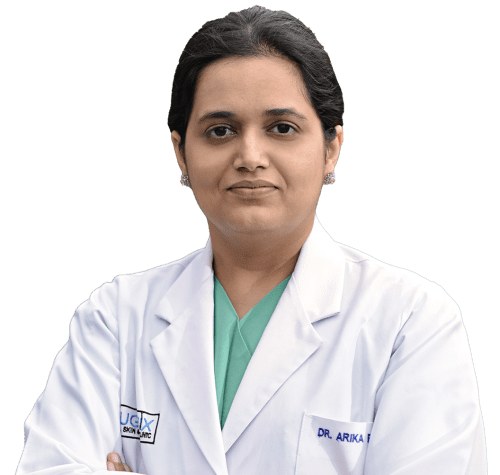
Medically reviewed by Dr. Arika Bansal, Co-Founder, Eugenix Hair Sciences; MBBS, MD Dermatology, Fellow of ISHRS; Reg. No. HN-34095 (Haryana Medical Council).
Dr. Arika Bansal
Dr. Arika Bansal, Co-Founder, Eugenix Hair Sciences. MBBS (Gold Medallist, Lady Hardinge Medical College), MD Dermatology, alumni of AIIMS, New Delhi. Fellow of ISHRS. Reg. No. HN-34095 (Haryana Medical Council).
