

There are some people the public does not just watch. They grow up with them.
Rahul Vaidya is one of those people.
A lot has changed since audiences first saw him as a young singer on Indian Idol. The industry has changed. Television has changed. Fame itself has changed. But Rahul has remained strangely consistent in the possible way. He still feels like someone people know. Not in the literal sense, of course, but in that rarer public way. He feels familiar. Warm. Unforced. He has never had that heavily constructed quality some public figures develop after years in the spotlight. People have stayed with him because he seems to remain himself wherever they meet him: in music, on television, in interviews, in the little glimpses of personal life he has shared over the years.
That matters more than it sounds.
Because when someone has built a career on being believable, every choice tied to appearance becomes more delicate. The public may not analyse it in those words, but they feel it immediately. If something looks too manufactured, too sharp, too cosmetic, it creates distance. And Rahul has never really been a distance kind of personality. His appeal has always come from closeness. From emotional openness. From the feeling that what you are seeing is, more or less, the real person.
So if he was ever going to do something about hair loss, it had to be done in a way that respected that.
It could not look like a makeover. It could not look like vanity on steroids. It could not look like someone had tried to redesign him. It had to feel like Rahul, just less interrupted. A little more restored. A little more at ease in his own frame again.
That is the part of hair restoration people outside the experience often miss.
They think it is about hair. It is, obviously. But it is also about recognition. About the strange, quiet discomfort of seeing your own face begin to shift in ways you did not invite and cannot really control. It does not usually arrive as one dramatic moment. It happens slowly. You notice more scalp in a photograph. A harsher line in the mirror. A style that no longer sits the same way. You start adjusting angles. Lighting. Haircuts. Then one day you realise you have been negotiating with it for much longer than you admitted.
For public figures, that negotiation happens under far brighter light. Cameras are cruel in their own unemotional way. HD is cruel. Stage lighting is cruel. Public memory is cruel. People may not know exactly what has changed, but they know when something feels off. For someone like Rahul, whose face is already fixed in the minds of millions, even a subtle shift can carry emotional weight.
And that is why trust becomes so important.
In our experience, most men do not make this decision because of a slick ad or a dramatic before-and-after reel with swelling background music. They decide because something finally clicks. Often it is another man’s result. Someone they know. Someone they have seen up close. Someone who does not look “done,” just better. More like himself. That is the moment the whole thing stops feeling like a secretive cosmetic act and starts feeling like a legitimate, sensible option.
That seems to be what happened here too. Rahul’s comfort with the idea reportedly deepened after seeing results that felt real in the only way that really counts: not on a brochure, not under suspiciously flattering clinic lighting, but in actual life. And that matters. One honest result can collapse years of hesitation.
At Eugenix, that has always been a big part of the philosophy, even when we do not say it out loud in so many words. The work has to hold up in real life. Not just in the operating room. Not just on the day the patient is photographed. In ordinary daylight. In motion. On a phone camera. In a studio. At a wedding. In conversation. In silence. The person has to go back into life looking like himself, not like a procedure.
That sounds simple. It is not.
A good hair transplant is not just about taking grafts from one place and putting them somewhere else. Anyone can make it sound mechanical. It is not mechanical when done properly. It is deeply interpretive work. You are reading a face. You are thinking about age, expression, donor strength, hair texture, hair calibre, skin contrast, likely future loss, and the life the person actually lives. A singer on television is not the same as a corporate executive, and neither is the same as a 28-year-old who only wants to wear his hair forward and forget the whole thing happened.
Then there is the hairline, which is where so much of the illusion either succeeds or falls apart.
A natural hairline is a funny thing. Most people only notice it when it is bad. When it is too straight, too dense, too abrupt, too neat, too strange. Real hairlines are not tidy in that way. They have softness. Little inconsistencies. Slight irregularity. They belong to a face the way a voice belongs to a person. Get it wrong and the whole thing can look uncanny. Get it right and people simply think the person looks good.
That has long been part of the thinking at Eugenix. Dr. Pradeep Sethi and Dr. Arika Bansal built the institution around the idea that hair restoration should be medically sound, yes, but also visually intelligent. Over the years, the clinic has handled thousands of procedures, including a very large number of advanced baldness cases. The numbers are significant, but numbers alone do not explain why people place trust in a team. What explains it better is consistency. The ability to produce work that feels calm, credible, and personalised rather than templated.
Eugenix is also closely associated with DHT, or Direct Hair Transplant, a technique designed to reduce the amount of time grafts remain outside the body before implantation. There is good medical reasoning behind that. But anyone who works honestly in this field knows a technique is only one part of the story. A method is not magic. Results still come down to planning, handling, discipline, and aesthetic judgment. There is no instrument in the world that can compensate for poor taste.
For Rahul, then, the choice makes emotional sense as much as medical sense.
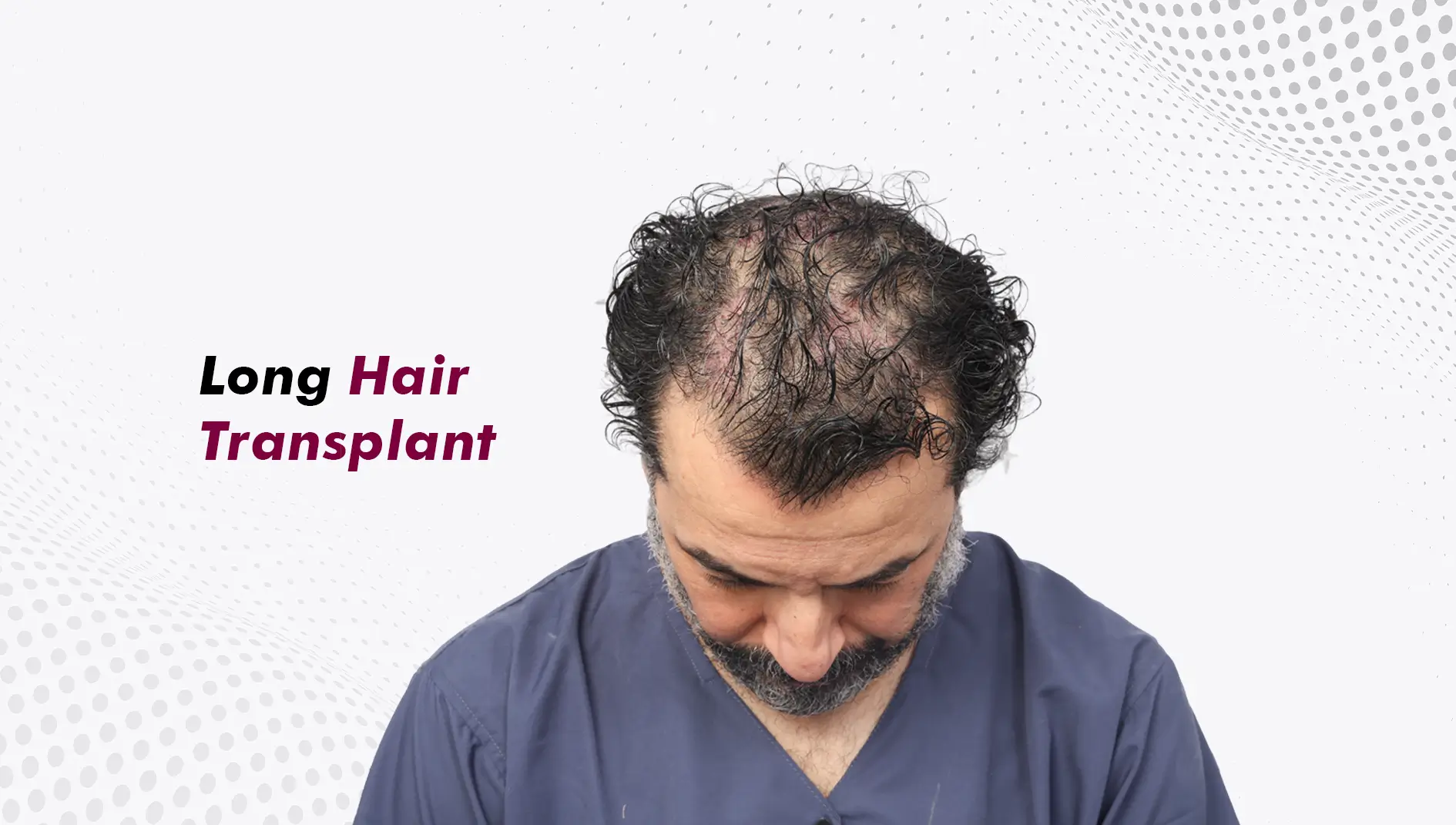
What he appears to have wanted was not transformation. It was continuity. Not a louder version of himself. Just a more settled one. His procedure involved 1,516 grafts and was performed at the Eugenix’s Mumbai center, with planning shaped around his facial structure, hair characteristics, and the simple fact that he lives a very visible life.
And yet, even that is not really the heart of the story.
The heart of the story is the moment before any of those details. Before graft counts. Before design discussions. Before the decision is spoken aloud. It is the private stretch of thought that so many men know well: the delay, the rationalising, the maybe-later, the it-is-not-that-bad, the let-me-wait-a-bit-more. Until eventually something shifts and the thought becomes simpler.
I want to deal with this properly.
That moment is not superficial. It is often emotional. Quietly emotional, but emotional all the same.
At Eugenix, that is the part we try to respect most. Not just the visible problem, but the invisible hesitation that came before it. People arrive after months or years of thinking. Sometimes after disappointment. Sometimes after embarrassment. Sometimes after pretending it does not matter when it clearly does. By the time they sit down with us, the decision has already lived a full life inside them.
What they need then is not hype. They need clarity. Good judgment. Honest planning. And work that does not insult their face.
If the result is successful, the outcome is not simply that they have more hair.
It is that they stop thinking about it all the time.
They look in the mirror and feel less interrupted. They move through the world with one less private irritation. They look like themselves again, and because the change feels believable, other people read it that way too. They do not see “procedure.” They see ease. Freshness. Relief, sometimes without even having the language for it.
That is usually the real victory.
And in Rahul’s case, that was always the only result worth chasing. Not something flashy. Not something attention-seeking. Just something honest enough to belong to him.
That is the kind of restoration we believe in.
The kind that does not announce itself.
The kind that simply lets a person return to his own face.
Call or book a discreet Contact Us at Eugenix Hair Sciences today and discover how to write the perfect second innings for your image.
Dr. Arika Bansal
Dr. Arika Bansal, Co-Founder, Eugenix Hair Sciences. MBBS (Gold Medallist, Lady Hardinge Medical College), MD Dermatology, alumni of AIIMS, New Delhi. Fellow of ISHRS. Reg. No. HN-34095 (Haryana Medical Council).