
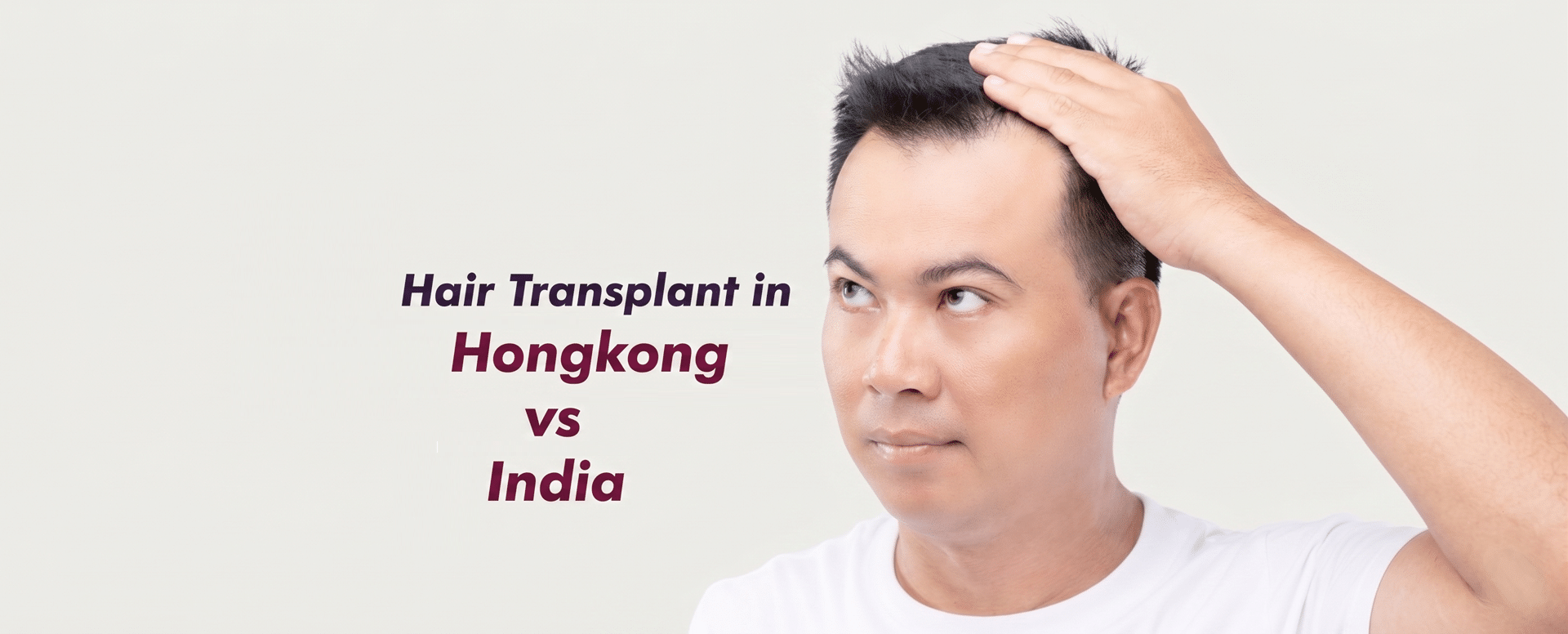
For residents of Hong Kong considering a hair transplant, India is one of the options that comes up in research for hair restoration and medical tourism, and it is a relatively short journey from the city. Whichever destination you consider, the questions that shape your result are the same: how your donor area is assessed, how your hair type is planned for, who performs each step of the surgery, and how your recovery and follow-up are managed once you are back home.
This guide from Eugenix Hair Sciences explains what a hair transplant in India for Hong Kong patients involves: what can be done online before you travel, why Asian hair characteristics matter in planning, what happens on the procedure day, how long to plan to stay, and how post treatment care continues after you fly back.
Can Hong Kong patients plan a hair transplant in India online?
Yes, most of the planning can be done before you travel. You share photographs of your scalp and your medical history, a doctor reviews your grade of hair loss, the graft count needed and your donor area, and a video consultation with a doctor can be arranged. Blood tests can be done in Hong Kong and the reports shared with our team. You travel once your treatment plan is clear, and the in person consultation on arrival confirms it.
Why Asian hair matters in hair transplant planning
Most patients from Hong Kong have East Asian hair, and its characteristics change how a hair transplant is planned. Asian hair is generally straight, round in cross-section, the thickest in calibre of the major hair types and the darkest in colour, so each hair stands out against the scalp.
Thick hair, high contrast
A thicker diameter means each graft gives more visible coverage. At the same time, dark hair against a lighter scalp creates high contrast, which can make hair density look lower than it is, because every gap between dark hairs shows. Explaining this contrast before the procedure is part of counselling, so that a good result is not misread under bright light.
Donor hair availability
Grafts are taken from the donor site at the back and sides of the scalp. Asian hair usually has fewer hairs per square centimetre than Caucasian hair, each of them thicker. For Indian and Asian patients, about 3,000 to 4,500 grafts can usually be taken in one sitting, and about 5,000 to 8,000 over a lifetime. Your own capacity depends on your donor density, hair diameter and scalp laxity, all assessed by the doctor at consultation. Hair loss is progressive, so part of the donor area is kept for future hair loss. Body hair can be used as a filler in selected cases, not as a primary donor.
Angle, direction and hairline
Thick, straight hair shows any error in angle, because each hair is visible on its own. Slit making follows the ADDD principle: Angle, Depth, Density and Direction. Single-hair grafts are placed in the first 4 to 6 rows of the hairline for a soft front, and each graft is placed at the angle and direction in which your own hair grows. For a fuller comparison of hair types, read our guide to Asian hair vs Caucasian hair (https://eugenixhairsciences.com/blog/asian-hair-vs-caucasian-hair-how-hair-characteristics-change-hair-transplant-planning/).
The hair transplant process, step by step
1. Photo evaluation and video consultation
Send clear photographs of your scalp from the front, top, sides and back, with your medical history. A doctor records your grade of hair loss on the Norwood scale (or the Ludwig scale for women), the recommended graft count, the donor area and the areas to be covered. If surgery is not the right step yet, medical treatment may be suggested first. A video consultation then lets you discuss your treatment plan with a doctor before you arrange travel, including who your hair transplant surgeon will be.
2. Tests before surgery
The standard tests are haemogram, PT INR, aPTT, RBS, HbA1c, HIV 1 and 2 antibody test (Anti-HIV), HBsAg and Anti HCV. Patients aged 40 and above also need an ECG reported by a physician or cardiologist, and a blood pressure check is done for everyone. Female patients need additional hormonal tests. Clearance from the medicine department is required for all patients.
3. Visa, travel and accommodation
Visa requirements depend on your passport, so check the current rules, including any medical visa category, on the official Government of India visa website before you travel. For patients who need a medical visa, Eugenix can issue a medical invitation letter. Our team can help you arrange accommodation near the centre, and airport pick-up can be coordinated through the hotel.
4. The procedure day
The procedure day usually runs 8 to 12 hours, including preparation. The procedure is performed under local anaesthesia. It starts with Planning & Designing, when the lead surgeon marks your hairline and the full recipient and donor areas with you, so you see the plan before any graft is taken.
5. The first week
You spray saline on the scalp every 30 minutes to 1 hour during the day for 7 days, with no spraying at night. If your crown is treated, you sleep at the edge of the bed so the crown is suspended, with a large neck pillow under the nape, most importantly on the first 2 to 3 nights and for all 7 days. Avoid direct sun on the transplanted area for 1 week, and avoid alcohol and smoking for 1 week. A short course of medicines is given, such as an antibiotic, a pain reliever, a probiotic, a stomach protector and an ointment for the donor area, explained in person by the Eugenix team. Your first head wash is on Day 7, and the operating doctor holds a short video call with you on Day 8.
Post treatment care after you return to Hong Kong
Post treatment care continues once you are home. The Eugenix E-Care team calls you every day for the first 7 days. You then send photographs on Day 13, Day 21, Day 30 and every month until the end of the first year, and each set is reviewed with feedback. The operating doctor speaks with you again by video at Month 1. After the first year, photo reviews continue every 6 months, with check-ins up to Year 5. A video consultation can be arranged whenever you have a concern.
How many days should you plan to stay in India?
There is no single number for every patient, and our team helps you plan your dates around your treatment plan. Three dates help: the procedure day, the first head wash on Day 7, and the video call with the operating doctor on Day 8. Gym, yoga, heavy exercise and contact sports wait until after 7 days. Ask the Eugenix team before you fix your return flight.
Clinic facilities and where the centres are
Eugenix Hair Sciences has centres in Gurugram, Mumbai, Hyderabad, Bhubaneswar and Bengaluru. The Gurugram (Gurgaon) centre is close to Delhi’s international airport, and Mumbai, Hyderabad and Bengaluru also have international airports. The Gurugram centre is NABH-accredited (Certificate No. DE-2026-0004). Instruments include Carl Zeiss loupes (Germany) and Cole Punches (Atlanta, USA). For international patients, the E-Care team coordinates arrival, accommodation and the procedure day. Ask about infection control and patient safety measures at whichever centre you choose.
Eugenix offers male and female hair transplant treatment, beard, moustache and eyebrow transplant, and medical treatment for hair loss and hair thinning, so all treatment options can be discussed in one consultation.
What is DHT, the hair transplant technique Eugenix performs?
Direct Hair Transplant (DHT) is a modified FUE technique described by Eugenix Hair Sciences’ Co-Founders in their 2013 research paper, “Direct hair transplantation: a modified follicular unit extraction technique”, published in the Journal of Cutaneous and Aesthetic Surgery (https://pmc.ncbi.nlm.nih.gov/articles/PMC3764754/).
Follicular unit extraction (FUE) takes individual hair follicles one by one from the donor area. Eugenix performs DHT only, and does not perform follicular unit transplantation (FUT), the older strip method.
The sequence of steps
- Planning & Designing by the lead surgeon, including marking of the complete recipient and donor area.
- All the slits made by the lead surgeon.
- Extraction by the lead surgeon, assisted by the Eugenix medical team.
- Implantation by the Eugenix medical team at the same time, into the slits already made, using the SAVA Implanter, a no-root-touch instrument. The graft stays visible throughout and is placed into the slit that is already made.
Grafts stay outside the body for under 30 minutes with Direct Hair Transplant, compared to 3 to 6 hours with conventional FUE. Direct hair implantation (DHI) is a different technique. DHT is different from DHI: in DHT the slits are made first and grafts are placed into them, rather than an implanter pen making the opening and placing the graft in one step.
Who does what
The lead surgeon performs the extraction and sets every technical parameter. The Eugenix medical team assists and carries out implantation under the lead surgeon’s parameters and supervision, using the SAVA Implanter, a no-root-touch instrument. The lead surgeon supervises your procedure throughout, taking rounds between active steps and remaining available at all times during your surgery.
Hair transplant cost for Hong Kong patients
The cost depends on the number of grafts planned for your case, which is decided after your scalp and donor area are assessed. Our team explains the costs in full at consultation.
Costs differ between countries and between plans, so compare written plans rather than headline figures. When you budget for a hair transplant in India, include flights, accommodation and the days you plan to stay, and ask for a written breakdown of what is included.
When will you see results?
Transplanted hair sheds between Day 30 and Day 90, which is expected. New growth begins from Month 4, results become visible from Months 6 to 8, and full results take 10 to 12 months, or 12 to 15 months for the crown. You will follow most of this hair growth at home, with photo reviews from the Eugenix team.
Transplanted density is about 50% of natural density, with a slight see-through look under direct sunlight, in flash photography or with wet or oiled hair; with black hair on a lighter scalp, this is more noticeable. Our aim is a natural-looking result. Results vary from person to person. Native hair around the transplant can keep thinning, so for men Finasteride is often part of the plan: it slows the progression of male pattern hair loss, is not a cure, and is taken under medical supervision.
Frequently asked questions
Can I plan my hair transplant in India from Hong Kong?
Yes. You share photographs of your scalp and your medical history for a photo evaluation, and a doctor reviews your grade of hair loss, graft count and donor area. A video consultation with a doctor can then be arranged, and blood tests can be done in Hong Kong with the reports shared with our team. You travel once your treatment plan is clear.
How many days should I plan for the trip?
Plan around three dates: the procedure day, the first head wash on Day 7 and the operating doctor’s video call on Day 8. Gym, yoga and contact sports wait until after 7 days. The exact length of your stay depends on your treatment plan, so ask the Eugenix team before you fix your return flight. Our team can help you arrange accommodation near the centre.
Does Asian hair need a different hair transplant plan?
The surgery is the same, but the planning takes Asian hair characteristics into account. Thick, dark, straight hair gives strong coverage per graft but shows high contrast against the scalp, which can make density look lower in bright light. It also shows any error in angle. Donor capacity per sitting, hairline design and density are planned around your own hair at consultation.
What follow-up will I get after I return to Hong Kong?
The Eugenix E-Care team calls you every day for the first 7 days. You then send photographs on Day 13, Day 21, Day 30 and every month until the end of the first year, and each set is reviewed. The operating doctor speaks with you by video on Day 8 and at Month 1. Photo reviews continue every 6 months after the first year.
When will I see the results of my hair transplant?
Transplanted hair sheds between Day 30 and Day 90, which is expected. New growth begins from Month 4, results become visible from Months 6 to 8, and full results take 10 to 12 months, or 12 to 15 months for the crown. Transplanted density is about 50% of natural density. Results vary from person to person, and your photo reviews track your progress.
How much does a hair transplant in India cost for Hong Kong patients?
The cost depends on the number of grafts planned for your case, which is decided after your scalp and donor area are assessed. Our team explains the costs in full at consultation. When you compare options, include flights, accommodation and the days you plan to stay, and ask any clinic for a written breakdown of what its quoted cost covers.
Key takeaways
- Most planning, including the photo evaluation, video consultation and blood tests, can be done from Hong Kong.
- Asian hair gives strong coverage per graft, but high scalp contrast can make density look lower in bright light.
- In DHT, the slits are made first and grafts stay outside the body for under 30 minutes.
- Plan your stay around the procedure day, the first head wash on Day 7 and the doctor’s video call on Day 8.
- Post treatment care continues at home through daily calls, photo reviews and video calls.
Eugenix Hair Sciences has worked only in hair restoration since 2009, with centres in Gurugram, Mumbai, Hyderabad, Bhubaneswar and Bengaluru. It was founded by Dermatologists, alumni of AIIMS, New Delhi, and Fellows of ISHRS.
Read more.
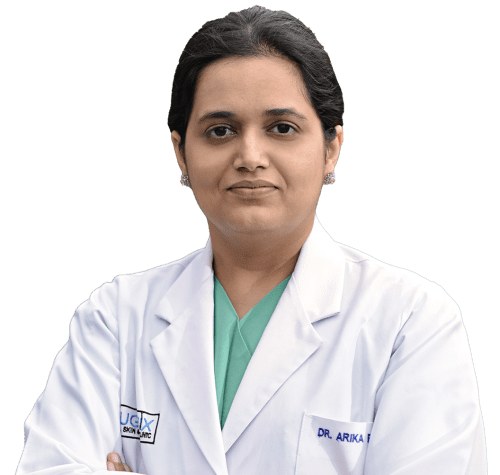
Medically reviewed by Dr. Arika Bansal, Co-Founder, Eugenix Hair Sciences; MBBS, MD Dermatology, Fellow of ISHRS; Reg. No. HN-34095 (Haryana Medical Council).
Dr. Arika Bansal
Dr. Arika Bansal, Co-Founder, Eugenix Hair Sciences. MBBS (Gold Medallist, Lady Hardinge Medical College), MD Dermatology, alumni of AIIMS, New Delhi. Fellow of ISHRS. Reg. No. HN-34095 (Haryana Medical Council).
