
If you’re a first-time patient considering a hair transplant, by now you’ve likely spent hours poring over glossy photos of successful transformations. But after a while, a different question emerges: what about the side effects? What happens after the procedure? What will my scalp look and feel like?
It’s an entirely valid concern. While modern hair transplantation is a remarkably safe and routine procedure, it is still a minor surgical intervention. As with any surgery, the body’s natural response to healing will lead to a number of side effects. The key to a smooth recovery and a successful outcome lies in knowing the difference between what is a normal, temporary part of the process and what is a sign that something is not right.
To guide you through this, I have compiled a comprehensive guide to what you should expect during your recovery, based on the expertise and protocols followed at clinics like Eugenix.
These are the side effects that are almost universally experienced by patients and are a positive sign that your body is mending itself. They are temporary and manageable, and with proper care, they will soon fade away.
- Swelling (Oedema): This is perhaps the most common side effect. You will likely experience swelling in the forehead and around the eyes, which can sometimes give you what looks like a “black eye” a day or two after the procedure. This is caused by the anaesthetic fluid and the body’s natural inflammatory response. It is harmless, peaks around day 2-3, and generally subsides completely within a week. Keeping your head elevated, especially while sleeping, can help reduce it.
- Scabbing and Crusting: The small incisions made to implant the grafts will form tiny scabs, which are a mix of dried blood and tissue fluid. This is an essential part of the healing process and is a sign that your new grafts are settling in. These crusts should be left to fall off naturally during your post-operative hair washes, which will typically be guided by your clinic. Never pick at them, as this can dislodge a new graft. They will generally clear up within 10 to 14 days.
- Itching: As your scalp heals, the nerve endings regenerate, and the scabs begin to shed, you will almost certainly experience itching. It can be intense, but it is a normal and healthy sign of recovery. It is absolutely crucial to resist the urge to scratch, as this can dislodge and damage the new grafts. Your surgeon may provide a special saline spray or a mild shampoo to help soothe the sensation.
- Pain and Discomfort: For the first few days, you may feel some mild pain or a sensation of tightness in the donor and recipient areas. This is often described as a dull ache or soreness, similar to a minor abrasion. Most patients find that this is easily managed with over-the-counter pain medication and subsides within the first week.
- Numbness: The local anesthesia and the minor trauma to the scalp’s superficial nerves can lead to temporary numbness or a loss of sensation. This is a normal phenomenon and will gradually resolve on its own over the course of a few weeks or, in some cases, a few months.
- Shock Loss: This is a post-operative side effect that often causes a great deal of anxiety. About 2-3 weeks after the procedure, you may notice that some of the newly transplanted hairs, and even some of your native hairs, begin to shed. This “shock loss” is a temporary, normal reaction to the stress of the procedure. The transplanted follicles remain safely in place beneath the skin and will begin to produce new, permanent hair within a few months.
What’s Not Normal: When to Be Concerned
While the side effects above are expected, certain symptoms can be red flags. They are rare, especially in a professional clinical environment, but it is vital to know the signs.
1. Signs of Infection: This is the most serious concern. While minor redness is normal, an infection will present with worsening symptoms. Look out for:
- Increasing redness that spreads beyond the surgical area.
- Severe, throbbing pain that doesn’t respond to medication.
- Excessive swelling that worsens after the first few days.
- A hot or burning sensation on the scalp.
- The presence of pus-filled bumps or a yellowish discharge.
- A persistent fever or chills.
- If you notice any of these signs, contact your Eugenix Care Helpline immediately.
2. Excessive Bleeding: A small amount of oozing in the first 24 hours is normal. However, if you experience persistent or heavy bleeding that does not stop with light pressure, it could be a sign of a more serious issue.
3. Severe and Persistent Pain or Numbness: While mild pain is normal, severe pain that does not go away or worsens over time can be a sign of a deeper problem, such as nerve damage. Similarly, numbness that persists for many months or is accompanied by other symptoms should be brought to your surgeon’s attention.
At Eugenix, we believe that the best way to handle side effects is to prevent them from becoming problems in the first place. This is why our patient-centric approach is built on a foundation of safety, from the very first consultation to your final follow-up.
Immediately after your procedure, the Eugenix Care Team takes over, and this is a critical phase. This dedicated team of experts is trained to guide you through every step of your recovery, from your first hair wash to the application of post-operative medications. Their instructions are meticulously crafted to ensure the safety and survival of every graft. They will teach you how to handle your scalp with the utmost care, what to eat, and how to sleep to prevent any accidental damage. Your adherence to their guidance is not just a suggestion; it is a vital part of the success of your transplant. Listening to them and following their instructions carefully is your most important job in the days and weeks following the surgery.
The expertise of our surgeons, Dr. Pradeep Sethi and Dr. Arika Bansal, and the precision of our Direct Hair Transplant (DHT) technique are specifically designed to minimize trauma to the scalp, which in turn reduces swelling, pain, and the risk of complications.
We equip you with a detailed aftercare guide, a full kit and are always available for any questions or concerns. Come to us as many times as you need. Do not panic. In a world of misinformation, a hair transplant is a safe, transformative procedure when you place your trust in experienced hands.
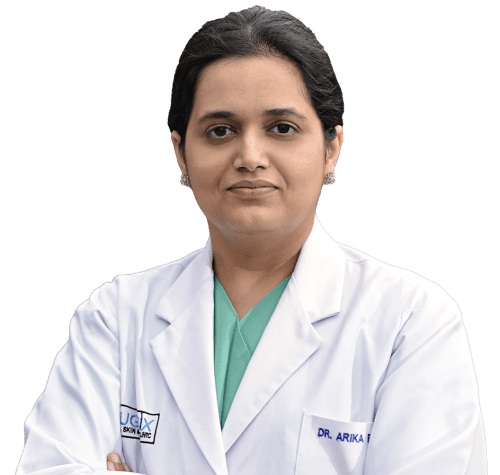
Dr. Arika Bansal
One of only a few female surgeons specializing in hair transplant surgery in India, Dr. Arika Bansal has been voted one of the best doctors in the world. She maintains an active fellowship in the ISHRS and regularly submits research papers to medical journals. 15+ years down the line, 20,000+ surgeries are accomplished under Dr. Bansal’s supervision. She specializes in female hair transplant, density improvement, corrective hair transplantation and hairline design.