
In restorative aesthetics, the difference between a “nice result” and a life-changing one usually isn’t something you can spot from across the room. It lives in the quiet, unglamorous moments-the way a graft is held, how quickly it’s hydrated, how carefully it’s sorted, and whether the team can stay sharp six hours into a procedure.
At Eugenix Hair Sciences, we’ve always said the same thing: a hair transplant isn’t just surgery. It’s medicine + design + discipline. You’re not simply moving follicles from Point A to Point B. You’re rebuilding a frame around someone’s face, and for many patients, that frame is tied to confidence, identity, and the way they show up in the world.
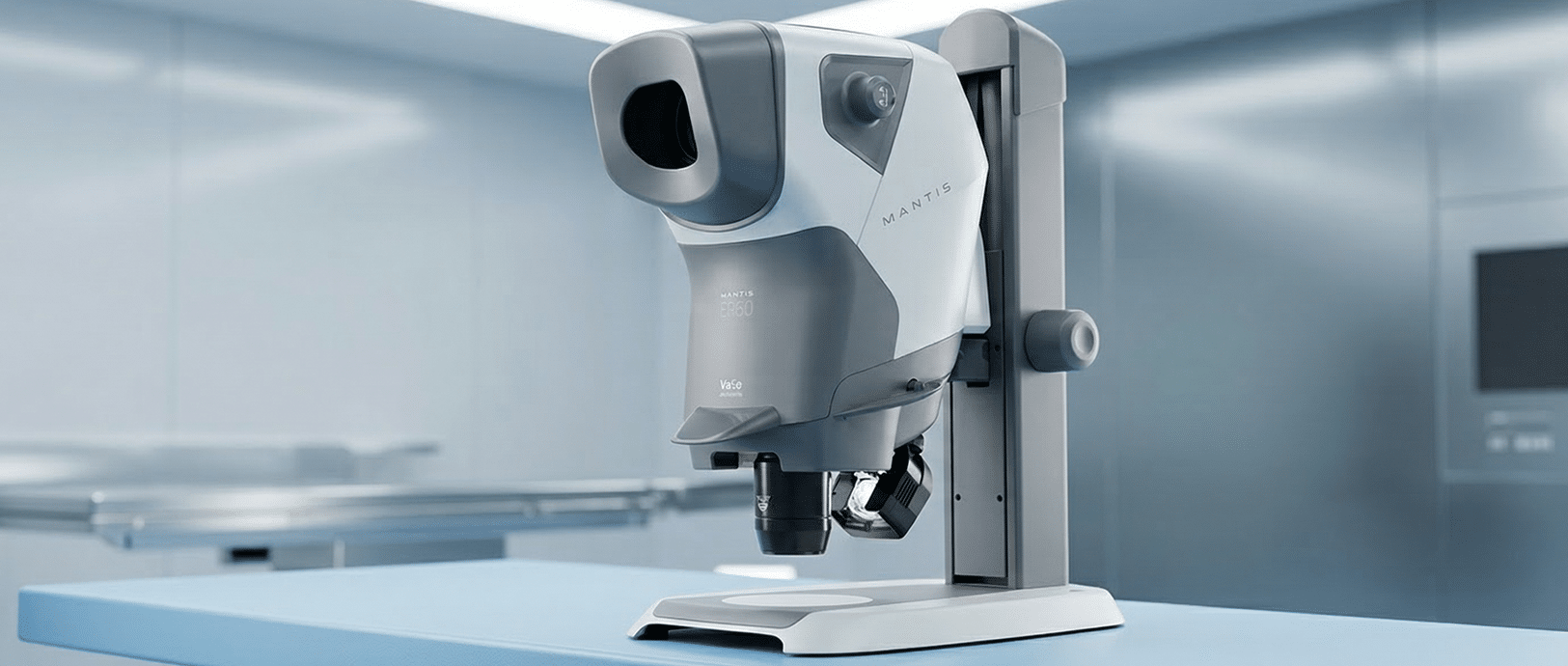
That’s exactly why we invest in tools that most people will never notice, but will absolutely feel in the outcome. One of those tools is the Mantis microscope, a piece of technology that has quietly raised the bar for how grafts are handled and how consistently natural results can be delivered.
The story of a great hairline begins before implantation. It begins with the donor area, the follicles we harvest and preserve like something precious, because they are.
Every graft is living tissue. It can be damaged by rough handling, drying, fatigue-driven mistakes, or simply being out of the body for too long. So our approach is built around a simple principle:
Protect the graft. Respect the process. Don’t compromise.
Many clinics work with basic magnifying loupes or standard digital screens. Those can be “good enough” in a brochure. But in real life-under long procedure hours, with delicate structures under 1mm, “good enough” is where small errors begin.
That’s where Mantis microscopy comes in.
The Mantis is an eyepieceless stereo microscope. In plain language: it gives our Hair Experts a crisp, three-dimensional view of grafts without forcing them to hunch over tiny lenses for hours.
That might sound like a comfort upgrade. It is, but it’s also a precision upgrade.
Because comfort directly affects focus.
And focus directly affects results.
1) You can’t protect what you can’t clearly see
Hair follicles are delicate. When a graft is being cleaned, prepared, and sorted, the tiniest trauma can affect how well it survives and grows later.
The Mantis offers high-definition 3D depth perception, which is a different experience than working off flat, 2D visuals. That depth matters when you’re trying to preserve the vital parts of a follicular unit-tissue that keeps it alive and thriving after it’s implanted.
In other words: it helps our team treat each graft with the carefulness it deserves, not just the confidence of routine.
2) Faster handling, less drying, better survival
One of the silent enemies of transplantation is time.
Grafts don’t like being out of the body. The longer they’re outside, the greater the risk of desiccation-drying out-and the more you gamble with survival.
Clear optics mean less guesswork. Less guesswork means smoother workflow. And smoother workflow means the graft spends less time “waiting” to be placed.
It’s not dramatic. It’s not cinematic.
It’s just the kind of detail that quietly improves consistency-case after case.
3) Ergonomics isn’t a luxury
A transplant session is long. And it demands the same level of care in hour one as it does in hour six.
Traditional microscopes can create eye strain, neck fatigue, and the kind of physical discomfort that chips away at concentration. The Mantis keeps the Hair Expert in a more natural posture, upright, stable, and less strained.
And that matters, because precision is a marathon.
When the team is physically supported, they can keep delivering the kind of meticulous work patients are trusting us for.
Here’s the part we never pretend otherwise about:
Technology doesn’t replace skill. It amplifies it.
At Eugenix, the Mantis isn’t just a fancy microscope sitting in the room to look impressive. We treat it like a quality-control station-a place where every graft is checked, categorized, and prepared with intention.
During sorting, follicles are organized based on:
- Singles, doubles, triples
- Thickness
- Quality and integrity
That sorting is not “extra.” It’s how you build a hairline that looks like it grew there naturally, soft at the front, denser as it moves back, and designed to suit the patient’s face and long-term goals.
This is how the Eugenix hairline becomes what patients often describe in the simplest, most satisfying way:
“It doesn’t look transplanted.”
Most patients won’t walk in asking, “Do you use an eyepieceless stereo microscope?”
They’ll ask the real questions:
- “Will this look natural?”
- “Will the grafts survive?”
- “Will my donor area be protected?”
- “Am I in a place that does this properly?”
High-end graft-handling tools like the Mantis offer something very real: reassurance through systems.
Because when you choose Eugenix, you aren’t just choosing a procedure. You’re choosing an entire workflow designed to protect your donor, maximize graft survival, and deliver a result that holds up not just in photos-but in life.
Our use of Mantis microscopy supports:
- Higher yield: better graft survival and stronger growth potential
- More natural aesthetics: better sorting = better placement strategy
- Lower trauma: careful handling supports donor and scalp health
The Mantis microscope is a perfect example of what we mean when we say “Patient First.” It’s not flashy marketing. It’s not a gimmick. It’s the kind of investment clinics make when they’re serious about consistency, when they understand that your hair isn’t just hair.
It’s how you recognize yourself in the mirror. It’s how you stop adjusting the lighting. It’s how you stop overthinking every photo and every angle.
At Eugenix Hair Sciences, we don’t chase shortcuts. We chase outcomes, and outcomes come from details. In the hands of our Hair Experts, the Mantis microscope isn’t just a lens.
It’s one of the quiet reasons the result can feel like you didn’t “get a transplant” at all. It can feel like you simply got yourself back.
Dr. Arika Bansal
Dr. Arika Bansal, Co-Founder, Eugenix Hair Sciences. MBBS (Gold Medallist, Lady Hardinge Medical College), MD Dermatology, alumni of AIIMS, New Delhi. Fellow of ISHRS. Reg. No. HN-34095 (Haryana Medical Council).