
Low level laser therapy, commonly referred to as LLLT, cold laser therapy, or red light therapy, has become one of the most frequently asked-about adjuvant treatments in hair restoration. Laser caps, laser combs, and in-clinic LLLT devices are widely marketed to hair transplant patients as ways to support healing and stimulate hair growth. The claims range from measured to extravagant, and it can be difficult for a patient in the middle of recovery to sort through what is genuinely useful.
This guide explains what LLLT is, how the therapy works at a cellular level, what the evidence actually supports, when it can safely be started after hair transplant procedures, and what Eugenix’s clinical position is on whether patients should use it.
What Is Low Level Laser Therapy?
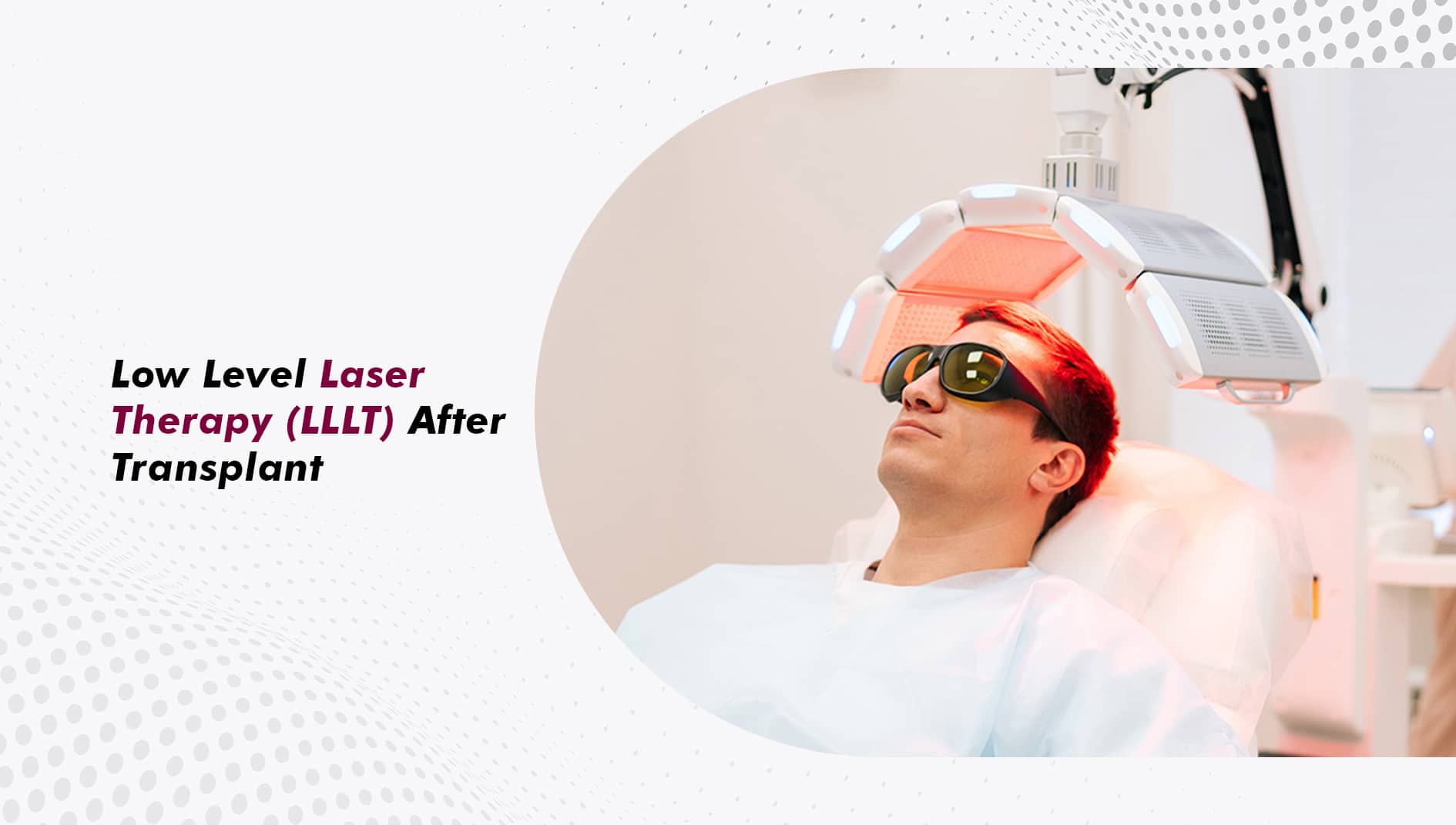
Low level laser therapy is a non-invasive treatment that uses low-intensity laser light, typically in the red or near-infrared range, to target the scalp. Because the therapy uses non-thermal light and does not cause heat or tissue damage, LLLT is considered a safe, performed under local anaesthesia treatment when used at appropriate doses.
LLLT is delivered in two main formats:
In-Clinic Laser Therapy
A practitioner uses a panel-mounted device during scheduled LLLT sessions, typically 15 to 30 minutes at a time, once or twice a week. These clinic-based laser devices are usually more powerful and better calibrated than home devices.
At-Home Laser Devices
Laser caps, laser combs, and headband devices that the patient uses independently. Typical protocols are 20 to 30 minutes per session, three to four times a week.
How LLLT Works: The Mechanism Explained
Understanding how low level laser therapy works at the cellular level helps explain both its potential and its limits.
Photobiomodulation at the Cellular Level
Photobiomodulation is a treatment that uses specific light to help cells function better and heal faster.
LLLT uses specific wavelengths of light energy, typically in the range of 630 to 670 nanometers, to stimulate hair follicles. When the laser light is absorbed by molecules within hair follicle cells, it triggers photobiological reactions that enhance cellular activity.LLLT works by energising the mitochondria within hair follicle cells, which leads to increased ATP production. This process stimulates cytochrome c oxidase (a key enzyme
in mitochondria that enables cells to produce energy using oxygen), which enhances cellular metabolism and provides the energy needed for faster tissue repair The improved cellular activity supports follicle function and, in some patients, contributes to stronger hair growth.
Improved Blood Flow and Follicle Activity
LLLT improves blood flow to the scalp. Better circulation means more oxygen and nutrients reach the hair follicles, which supports follicle activity and overall scalp health. For native hair affected by pattern hair loss, this can help support existing hair.
The Arndt-Schulz Principle
An important clinical point: LLLT follows the Arndt-Schulz law. Low doses stimulate healing, but excessively high doses can inhibit cellular activity or cause harm. More is not better. This is why session duration and frequency matter, and why excessive use can lead to increased oxidative stress in scalp tissues, which may reverse the benefits of the treatment. Moderation and adherence to manufacturer guidelines are important.
Does LLLT Actually Work? What the Evidence Shows
This is the question every patient wants a clear answer to. The honest answer is that evidence is emerging but limited.
What Clinical Studies Suggest
Some clinical studies have reported improvements in hair density and hair thickness in patients with early to moderate androgenetic alopecia, with noticeable changes often reported after four to six months of consistent use. Some specific LLLT devices from particular manufacturers have received USFDA clearance for the treatment of pattern hair loss, which is a meaningful regulatory signal that requires demonstration of safety and a reasonable level of efficacy.
What the Evidence Does Not Support
At the same time, results vary depending on the patient, stage of hair loss, device, and consistency of use. Effect sizes in published studies are generally modest compared with established medical therapies. Long-term data is limited, and much of the available evidence comes from studies funded by device manufacturers.
The practical summary: LLLT may help some patients, the effect when present is modest, and it is not a substitute for established treatments with stronger evidence.
How LLLT Compares with Other Medical Therapies
Oral Finasteride 1 mg is effective in male pattern baldness. It has decades of USFDA-approved use, long-term safety data, and a clear mechanism of action. Topical Minoxidil is USFDA-approved for both male and female pattern hair loss, with lower but established efficacy.
LLLT sits in a different category. It is a potential adjunct to other therapies for some patients with thinning hair, not a primary therapy, and should be thought of as one option within a comprehensive hair restoration plan.
Key Benefits of LLLT in the Context of Hair Restoration
For patients considering integrating LLLT into their hair restoration journey after a transplant, the key benefits to understand are:
– Non-invasive treatment with no downtime or disruption to daily routines
– Painless treatment with no surgical intervention required
– No systemic side effects as the therapy is localised to the scalp
– Potential support for native hair affected by pattern hair loss
– Potential contribution to scalp health through improved blood flow
– Complementary to other treatments such as Finasteride and PRP
One of the biggest advantages of LLLT is its safety profile. Unlike systemic medications, LLLT does not produce systemic side effects. Mild scalp redness or warmth may occur during initial sessions, but these reactions are typically temporary.
LLLT After a Hair Transplant: What It Can and Cannot Offer
Supporting Transplanted Follicles
The theoretical case for using LLLT after a hair transplant is that improved blood flow and cellular stimulation may support transplanted follicles as they establish. In practice, direct evidence for this specific benefit is limited. Transplanted follicles, once they have survived implantation, follow their natural growth cycle, and LLLT has not been robustly shown to accelerate this timeline.
Supporting Existing Hair Around the Transplant
The stronger case for LLLT post-transplant is for existing hair in and around the transplanted area. Native hair remains subject to ongoing pattern hair loss. Maintaining native hair is important for a long-term result, because thinning of native hair affects overall density even when the transplanted hair is doing well. For this purpose, LLLT sits alongside Finasteride, topical treatments, and multivitamins as a potential support.
When Can LLLT Be Started After Hair Transplant Surgery?
For patients who have decided to pursue LLLT, timing matters.
First Seven Days: No LLLT
During the first seven days after hair transplant surgery, no laser cap, laser comb, or other LLLT device should be used. The transplanted area is at its most vulnerable in this window.
Non-Transplanted Area: After One Month
For the non-transplanted area, including the donor region, LLLT can generally be started from around one month post-procedure once healing is complete.
Transplanted Area: After Three Months
For the transplanted area specifically, avoiding device-based therapy for at least the first three months post-procedure is advisable. This covers the shedding phase and initial growth. From around the three-month mark onwards, LLLT can reasonably be considered if the device is appropriate. Always confirm timing with the Eugenix E-Care team before beginning LLLT on the transplanted area.
Eugenix’s Position on LLLT and Home Laser Devices
Eugenix does not actively recommend home LLLT devices, including widely marketed laser caps and laser combs. The reasoning:
– Clinical evidence for home devices is not strong enough for a universal recommendation
– Device quality varies significantly across the market
– Compliance over the four to six months required to see any effect is demanding
– Many devices claim benefits their specifications do not support
Eugenix does not prescribe or endorse specific LLLT devices. Patients who wish to integrate LLLT as an adjunct are free to do so, but the decision rests with the patient rather than as part of the Eugenix protocol. No specific outcome expectations are set around LLLT because the evidence does not support doing so.
For patients committed to trying laser therapy, the recommendation is to choose a device that:
– Has FDA clearance for androgenetic alopecia
– Comes from an established manufacturer with published clinical data
– Specifies wavelength (typically 630 to 670 nm), power output, and session duration
– Has credible independent reviews, not just marketing claims
What LLLT Costs in India
The cost of low level laser therapy sessions in India typically ranges from Rs. 2,000 to Rs. 5,000 per session, depending on the clinic location, the laser devices used, and the treatment plan. Pricing is usually determined after a clinical scalp assessment that considers hair density, the pattern of thinning, and overall scalp health.
Home laser caps are a separate category, typically purchased as a one-off investment ranging from approximately Rs. 25,000 upwards for an FDA-cleared device. LLLT sessions are not part of the Eugenix service offering. Patients who wish to pursue in-clinic LLLT would need to arrange this independently.
What Eugenix Actively Recommends for Post-Transplant Hair Maintenance
To put LLLT in context, here is what Eugenix recommends as the evidence-based foundation for post-transplant hair maintenance:
Oral Finasteride 1 mg
For appropriate male patients, Finasteride 1 mg is the cornerstone of ongoing pattern hair loss management. USFDA-approved, effective for male pattern hair loss, prescribed until approximately age 55 to 60. Only 2 to 3% of patients experience side effects.
HAIRFACT Multivitamins
Taken as a 6-month cyclical course post-procedure. Supports overall hair health and is part of the standard Eugenix post-transplant protocol.
PRP and GFC
PRP (Platelet Rich Plasma) and GFC (Growth Factor Concentrate) are in-clinic treatments derived from the patient’s own blood. Intraoperative PRP is included at the time of procedure to support healing and minimise shock loss risk.
Balanced Diet and Adequate Protein
A balanced diet with adequate protein and hydration supports healthy hair growth during recovery, particularly relevant for women and for patients working to protect native hair.
Against this foundation, integrating LLLT is an optional further layer for patients who want to explore adjunctive therapies. It does not replace any of the above and is not a prerequisite for a strong transplant result.
Practical Considerations Before Starting LLLT
Realistic Expectations
LLLT should not be used alone with the expectation of reversing significant hair loss. Most realistic outcomes are modest improvements in density for patients with early to moderate hair loss, if the treatment works for them.
Consistency Matters
If LLLT is going to produce a visible effect, it typically takes four to six months of consistent use at the manufacturer’s recommended frequency. Short trials of a few weeks are not informative.
Safety Precautions
Avoid direct exposure of the eyes to laser light. If you are on any photosensitising medication, consult your doctor before starting LLLT. If you have an active scalp condition such as folliculitis or seborrheic dermatitis, address this before beginning any laser therapy.
Combining LLLT with Other Treatments
Most patients who combine LLLT with other treatments, including Finasteride, Minoxidil, and PRP, can do so safely. Allow appropriate gaps between topical applications and laser sessions. Discuss any specific combination plan with your doctor.
Frequently Asked Questions
Is LLLT safe to use after hair transplant surgery?
Yes, low level laser therapy is a safe, non-invasive treatment with minimal risk when used correctly. It should not be used on the recipient area during the first three months post-procedure, and not at all during the first seven days. Confirm timing with Eugenix E-Care.
Will LLLT improve my transplanted follicles?
Direct evidence that LLLT meaningfully improves transplanted follicles is limited. Transplanted hair follows its natural growth cycle: shedding through Day 90, initial growth from Month 4, full results at 10 to 12 months. LLLT is unlikely to materially shorten this.
Does Eugenix recommend a specific LLLT device?
No. Eugenix does not endorse specific LLLT devices. Patients should choose an FDA-cleared device from an established manufacturer and confirm timing with the E-Care team.
Is LLLT a replacement for Finasteride?
No. Oral Finasteride remains the primary medical therapy for male pattern hair loss. LLLT is an optional adjunct.
How long before I see results from LLLT?
Four to six months of consistent use is the typical window before any visible change. Shorter trials will not yield meaningful assessment.
Can LLLT help with female pattern hair loss?
LLLT is one of the options for female pattern hair loss, particularly in early to moderate cases. Consult with a hair specialist to determine if it is appropriate for your specific pattern and stage of hair loss.
Are in-clinic LLLT sessions better than home laser caps?
In-clinic sessions generally use more powerful equipment and are supervised by trained staff, which supports consistency. Home devices offer convenience and lower long-term cost. The right choice depends on individual circumstances.
Can LLLT be combined with PRP or GFC?
Yes, LLLT can generally be combined safely with PRP or GFC at Eugenix, as these are scheduled in-clinic treatments with clear timing relative to the procedure. Discuss the specific schedule with your doctor.
Making a Decision About LLLT After Your Hair Transplant
The decision to incorporate low level laser therapy into your hair restoration journey should be an informed one made without pressure. The honest picture:
– Evidence suggests LLLT may help some patients, with modest effect sizes
– Some devices are FDA-cleared; many home products are not
– Consistency over four to six months is required before assessment
– LLLT is not a replacement for Finasteride or other established medical therapies
For patients with the budget, discipline for consistent use, and realistic expectations, LLLT is a reasonable adjunct to explore. For patients already following a comprehensive post-transplant plan of Finasteride, multivitamins, PRP, and good daily care, LLLT is not a missing piece that will dramatically change outcomes.
At Eugenix, the priority is surgical technique (DHT with out-of-body time under 30 minutes), hairline and donor planning governed by the ADDD principle, and evidence-based post-transplant medical therapy. These drive your 10 to 12 month result. LLLT, if you choose to pursue it, is a small potential supplement, not a core component.
To understand what your specific hair transplant plan should look like, book a Contact Us with the Eugenix team today. Consultations are conducted by experienced panel surgeons, personally trained by founders Dr. Pradeep Sethi and Dr. Arika Bansal, Fellows of ISHRS and alumni of AIIMS, New Delhi, with over 30+ combined years in hair restoration.
For questions about LLLT timing, combinations with other treatments, or what is appropriate for your individual recovery, the Eugenix E-Care team is available seven days a week to advise.
Dr. Arika Bansal
Dr. Arika Bansal, Co-Founder, Eugenix Hair Sciences. MBBS (Gold Medallist, Lady Hardinge Medical College), MD Dermatology, alumni of AIIMS, New Delhi. Fellow of ISHRS. Reg. No. HN-34095 (Haryana Medical Council).