

Before a hair transplant, every patient has a standard set of blood tests: haemogram, PT INR, aPTT, random blood sugar (RBS), HbA1c, HIV 1 and 2 antibody test (Anti-HIV), HBsAg and Anti HCV. Patients aged 40 and above also need an ECG reported by a physician or cardiologist, and a blood pressure check is done for everyone. Women need additional hormonal tests, and every patient needs clearance from the medicine department before the date is confirmed.
This guide from Eugenix Hair Sciences explains what each blood test before hair transplant surgery looks at, when to do the tests, what women need in addition, and what happens if a result needs attention.
Why are blood tests needed before a hair transplant?
A hair transplant is a surgical procedure, even though it is performed under local anaesthesia. The tests confirm that you are healthy enough to undergo the procedure and help the doctor plan it safely. Together with your medical history, they show how your blood clots, whether your blood sugar is controlled, and whether any infection needs to be known about before surgery. This helps the team plan the hair transplant procedure, healing and post operative care around your health.
The tests do not decide how many grafts you need or what result to expect. Those depend on your scalp, your donor area and your hair loss pattern, which are assessed at your initial consultation. Read more about what happens at a hair transplant consultation.
Which blood tests are done before a hair transplant?
These are the standard tests for every patient:
- Haemogram: haemoglobin, total and differential white cell count, and platelet count.
- Prothrombin Time INR (PT INR): how long the blood takes to clot.
- aPTT (Activated Partial Thromboplastin Time): another measure of blood clotting.
- Random Blood Sugar (RBS): your blood sugar at the time of the test.
- HbA1c: your average blood sugar over the past few months.
- HIV 1 and 2 antibody test (Anti-HIV).
- HBsAg: a test for Hepatitis B.
- Anti HCV: a test for Hepatitis C.
The clotting tests matter because grafts are taken and placed through many tiny openings in the skin. The blood sugar tests matter because sugar control affects healing. The infection tests are part of standard screening before any surgical procedure.
ECG and blood pressure
If you are 40 or older, you also need an ECG with a report from a physician or cardiologist. A blood pressure check is done for every patient. On the day of the procedure, your vitals, including blood pressure, oxygen level and pulse rate, are checked again before anything else begins.
Medicine department clearance
Medicine department clearance is mandatory for every patient before a hair transplant, whether you are fully healthy or have a long-standing condition. It means a doctor reviews your test results and medical history and confirms that the procedure can go ahead.
When should the tests be done?
The blood tests must be completed at least 15 days before your procedure date. Reports are accepted if they were done within 3 months of the procedure date, so you do not need to repeat recent tests that fall inside this window. Share your reports with your Hair Advisor as soon as they are ready, so the medical review is not rushed close to your date.
The charges for blood tests are separate from the hair transplant cost. Our team explains the costs in full at consultation.
What extra tests do women need?
For women, the standard panel is not the complete requirement. After the initial consultation, female patients need additional hormonal and blood tests:
- Before menopause: complete blood count (CBC), T3, T4 and TSH, serum ferritin, serum prolactin, serum testosterone, 17 OH progesterone, FSH and LH, serum DHEA and DHEAS, and serum AMH. These tests are done between Day 3 and Day 5 of the menstrual cycle.
- After menopause: CBC, T3, T4 and TSH, serum ferritin, serum prolactin, and serum testosterone.
The results are reviewed by the doctor before any further decision is made about a hair transplant or other treatment.
What if you have a health condition or take regular medicines?
A health condition does not automatically rule out a hair transplant. Tell the team about every condition you have and every medicine you take, including supplements, when you fill in your medical history form. The test results and your history are then reviewed together. Certain medications may need a change before surgery, but only on the doctor’s advice.
If you have had heart surgery in the past 6 months and take Aspirin as part of your heart care, written clearance from your cardiologist is needed first. No procedure is planned until that clearance is received. Never stop a heart medicine on your own. If you have diabetes, thyroid disease or high blood pressure, read our guide on a hair transplant with diabetes, thyroid or high blood pressure.
What happens if a test result is not normal?
The doctor reviews the result with your medical history. Depending on what it shows, you may be asked for a repeat test, a further check, or a specialist’s opinion, or a condition may need to be better controlled before a date is set. A result outside the normal range does not always mean you cannot have a hair transplant; it means the plan is made with it in mind.
What else is checked before your hair transplant?
On the day of the procedure, a nurse does a local anaesthesia sensitivity test on your forearm, and you sign a consent form. Planning & Designing is then done by the lead surgeon, who marks your hairline and the recipient and donor areas and explains the plan to you before any graft is taken.
At Eugenix, every hair transplant is done with Direct Hair Transplant (DHT). Direct Hair Transplant (DHT) is a modified FUE technique described by Eugenix Hair Sciences’ Co-Founders in their 2013 research paper. The lead surgeon performs the extraction and sets every technical parameter. The Eugenix medical team assists and carries out implantation under the lead surgeon’s parameters and supervision, using the SAVA Implanter, a no-root-touch instrument.
For the full 30-day checklist, including alcohol, smoking and what to wear on the day, read how to prepare for hair transplant surgery.
Eugenix Hair Sciences has worked only in hair restoration since 2009, with centres in Gurugram, Mumbai, Hyderabad, Bhubaneswar and Bengaluru. It was founded by Dermatologists, alumni of AIIMS, New Delhi, and Fellows of ISHRS.
Key points
- Standard tests: haemogram, PT INR, aPTT, RBS, HbA1c, Anti-HIV, HBsAg and Anti HCV.
- An ECG reported by a physician or cardiologist is needed from age 40; blood pressure is checked for everyone.
- Do the tests at least 15 days before surgery; reports within 3 months of the procedure date are accepted.
- Women need additional hormonal tests, and every patient needs medicine department clearance.
Know more about preparing for your hair transplant by speaking to our team.
Frequently asked questions
What blood tests are needed before a hair transplant?
The standard tests are haemogram, PT INR, aPTT, random blood sugar (RBS), HbA1c, HIV 1 and 2 antibody test (Anti-HIV), HBsAg and Anti HCV. Patients aged 40 and above also need an ECG reported by a physician or cardiologist, and blood pressure is checked for everyone. Women need additional hormonal tests, and medicine department clearance is required for every patient.
How many days before a hair transplant should I do my blood tests?
Complete your blood tests at least 15 days before your procedure date, so there is time for the medical review and any further checks. Reports done within 3 months of the procedure date are accepted, so recent tests inside that window usually do not need to be repeated. Share the reports with your Hair Advisor as soon as they are ready.
Do I need an ECG before a hair transplant?
An ECG is needed if you are 40 or older, and it must be reported by a physician or cardiologist. Below 40, it is not part of the standard tests unless the doctor asks for it after reviewing your medical history. A blood pressure check is done for every patient, and your vitals are checked again on the day of the procedure.
What extra tests do women need before a hair transplant?
The standard panel is not the complete requirement for women. Women need additional hormonal and blood tests after the initial consultation. Before menopause, these include thyroid tests, serum ferritin, prolactin, testosterone and other hormones, done between Day 3 and Day 5 of the menstrual cycle. After menopause, a shorter set is needed. The doctor reviews the results before any decision.
Can I have a hair transplant if I have diabetes or high blood pressure?
Often, yes. A health condition does not automatically rule out a hair transplant. Your HbA1c, blood sugar and blood pressure are checked, your medical history is reviewed, and medicine department clearance is required before the date is confirmed. If a condition is not well controlled, the doctor may ask for it to be managed first, so healing is not affected.
Are blood test charges included in the hair transplant cost?
No. The charges for the blood tests are separate from the hair transplant cost. The cost depends on the number of grafts planned for your case, which is decided after your scalp and donor area are assessed. Our team explains the costs in full at consultation, including which tests you need and when to do them.
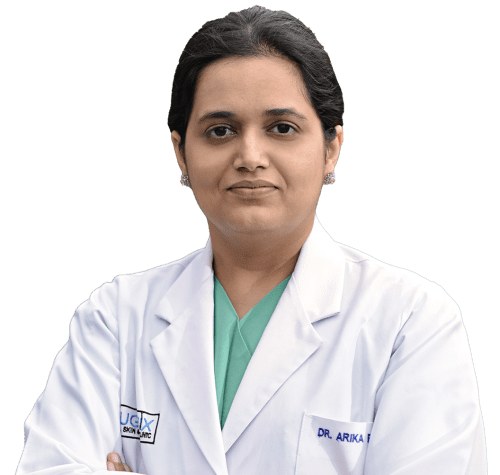
Medically reviewed by Dr. Arika Bansal, Co-Founder, Eugenix Hair Sciences; MBBS, MD Dermatology, Fellow of ISHRS; Reg. No. HN-34095 (Haryana Medical Council).
Dr. Arika Bansal
Dr. Arika Bansal, Co-Founder, Eugenix Hair Sciences. MBBS (Gold Medallist, Lady Hardinge Medical College), MD Dermatology, alumni of AIIMS, New Delhi. Fellow of ISHRS. Reg. No. HN-34095 (Haryana Medical Council).
