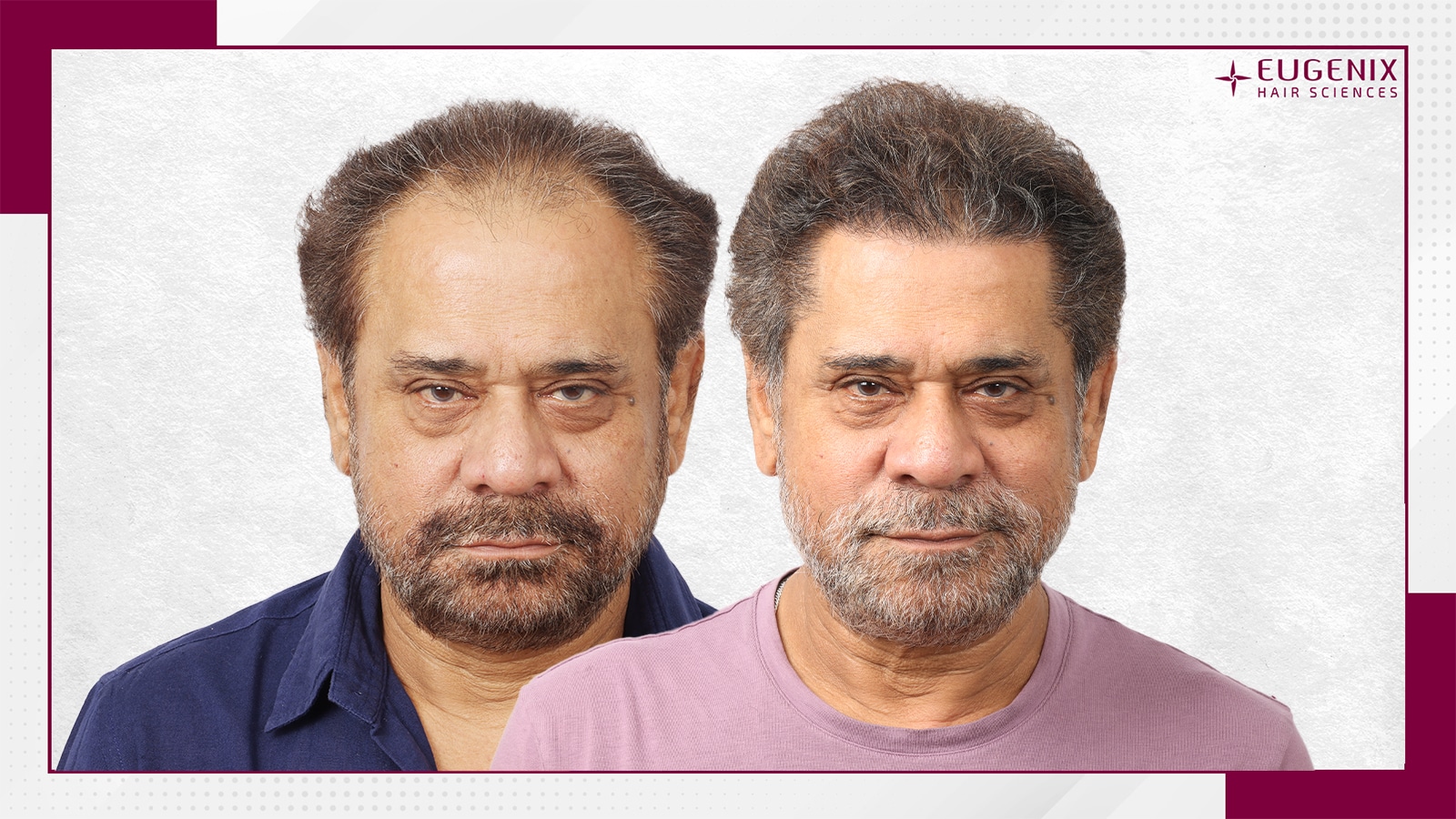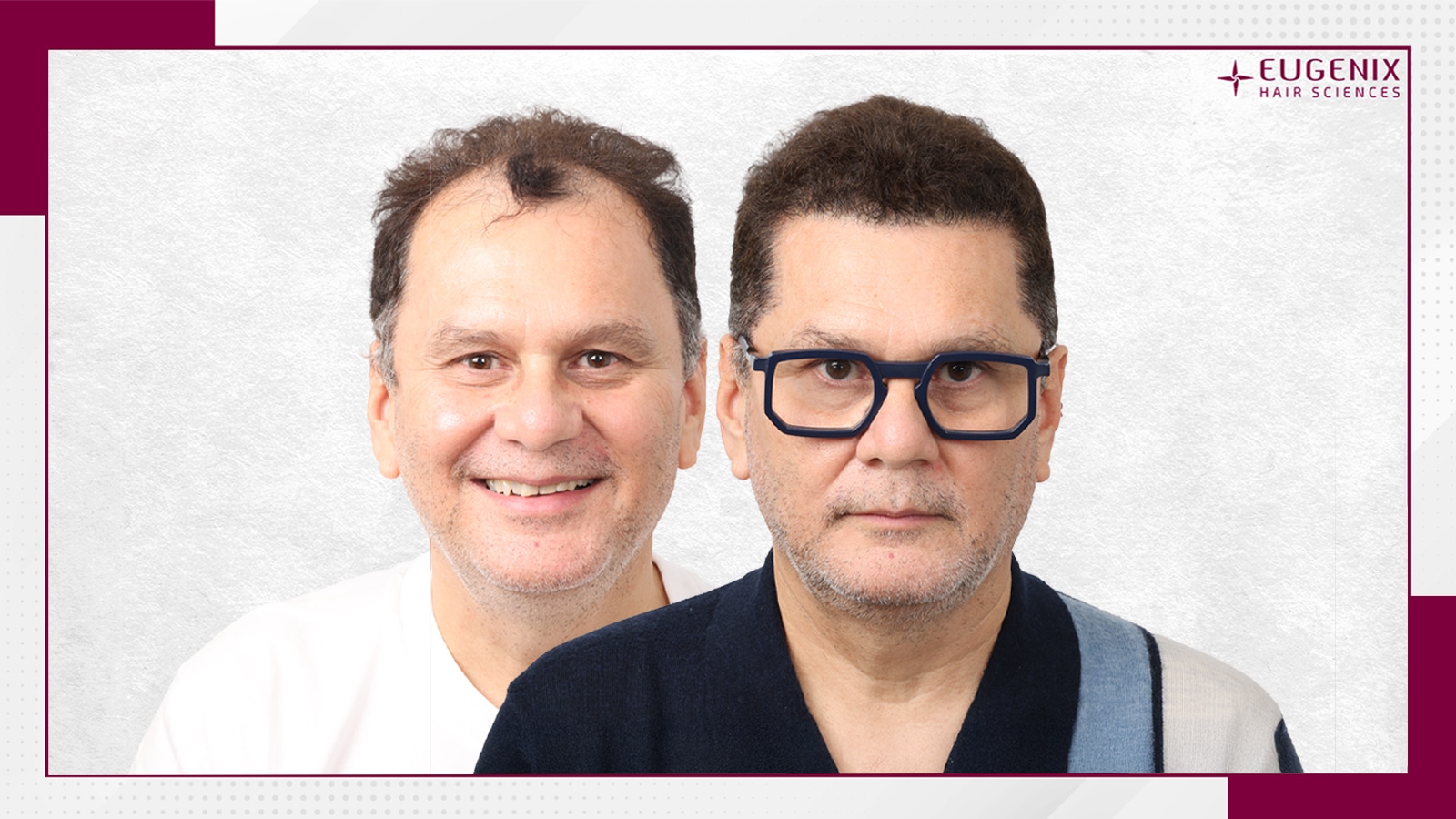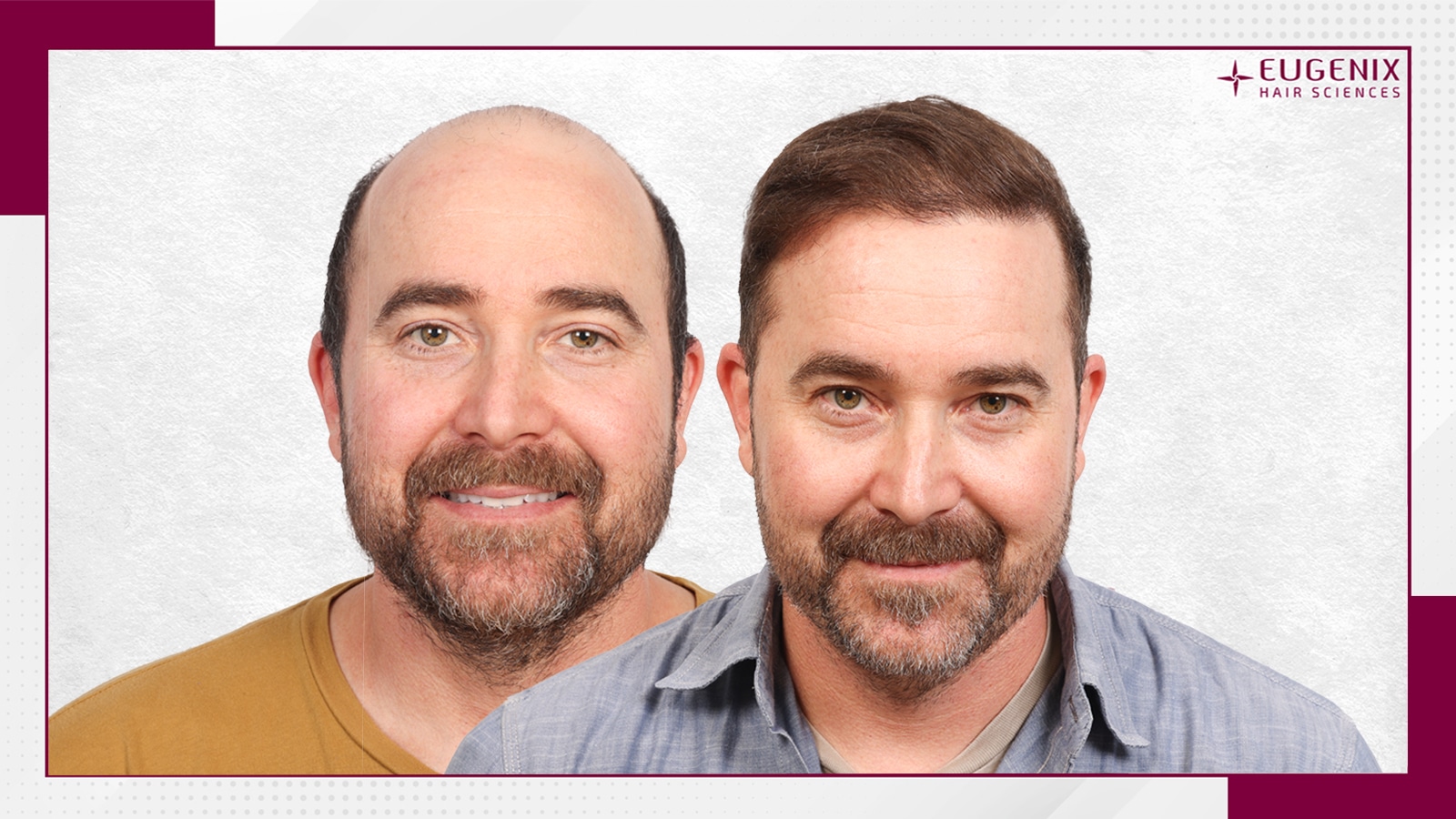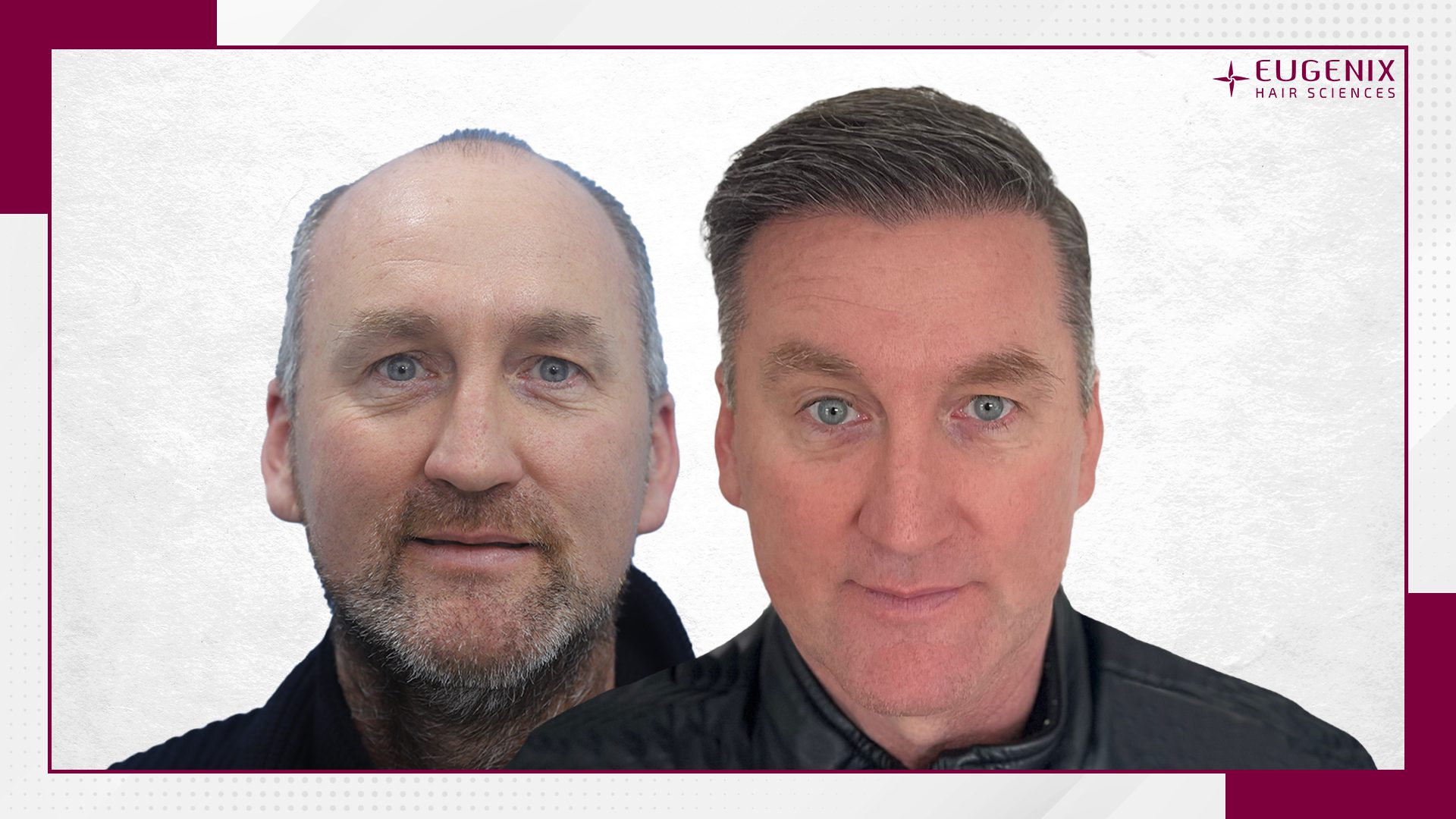

FUE vs FUT vs DHT: the short answer
FUT, FUE and DHT are three hair transplant techniques. Each hair transplant method moves your own hair follicles from the donor area at the back and sides of the scalp to the thinning areas. They differ in how the grafts are taken out, in the order of the steps, and in how long the grafts stay outside the body. FUT removes a strip of scalp. FUE takes out single follicular units one at a time. DHT is a modified FUE technique in which the slits are made first.
Eugenix Hair Sciences has worked only in hair restoration since 2009, with centres in Gurugram, Mumbai, Hyderabad, Bhubaneswar and Bengaluru. Eugenix does not perform FUT. Eugenix performs Direct Hair Transplant (DHT) only. This page explains all three, so you can follow the terms you will hear when you read about hair transplant techniques or speak to any clinic.
What is a FUT hair transplant (Follicular Unit Transplantation)?
FUT, also called the strip method, is the older of the three techniques. A thin strip of skin carrying hair follicles is removed from the donor scalp at the back of the head. The wound is closed with stitches, which leaves a linear scar across the back of the scalp. The strip is then cut into follicular units, the small natural groups of 1 to 4 hairs in which hair grows, and these grafts are placed into the thinning area.
The linear scar is usually covered when the surrounding hair is kept longer, and it can show with very short hair. The FUT technique has been used to move a large number of grafts in one session. Stitches in the donor area are removed after healing. Eugenix does not perform FUT; it is described here only so that you can compare the techniques.
What is a FUE hair transplant (Follicular Unit Extraction)?
In Follicular Unit Extraction (FUE), also called follicular unit excision, individual follicular units are taken out of the donor area one at a time with a fine punch. No strip of skin is removed and no stitches are needed in the donor area. Each extraction leaves a tiny dot-like mark, and because the marks are spread across the donor area, they are usually not easy to see once the hair grows back.
In conventional FUE, the grafts are first extracted and stored, the slits in the recipient area are made afterwards, and the grafts are then placed. Grafts can stay outside the body for several hours while this happens.
What is DHT (Direct Hair Transplant)?
Direct Hair Transplant (DHT) is a modified FUE technique described by Eugenix Hair Sciences’ Co-Founders in their 2013 research paper, “Direct hair transplantation: a modified follicular unit extraction technique”, published in the Journal of Cutaneous and Aesthetic Surgery.
DHT changes the order of the steps. The slits in the recipient area are made first. Grafts are then extracted and placed into the slits that are already made, so that each graft spends less time outside the body.
DHT is also a common short form for dihydrotestosterone, the hormone linked to pattern hair loss. On this page, DHT always means Direct Hair Transplant.
Grafts stay outside the body for under 30 minutes with Direct Hair Transplant, compared to 3 to 6 hours with conventional FUE.
DHT is different from DHI: in DHT the slits are made first and grafts are placed into them, rather than an implanter pen making the opening and placing the graft in one step.
The DHT steps at Eugenix
- Planning & Designing: the lead surgeon plans and marks the complete recipient and donor area, including your hairline.
- Slits: the lead surgeon makes all the slits in the recipient area, setting the angle and direction in which your own hair grows.
- Extraction: the lead surgeon carries out the extraction, assisted by the Eugenix medical team.
- Implantation: at the same time, the Eugenix medical team places each graft into a slit that is already made, using the SAVA Implanter, a no-root-touch instrument. The graft stays visible throughout and is placed into the slit that is already made.
The lead surgeon performs the extraction and sets every technical parameter. The Eugenix medical team assists and carries out implantation under the lead surgeon’s parameters and supervision, using the SAVA Implanter, a no-root-touch instrument.
The lead surgeon supervises your procedure throughout, taking rounds between active steps and remaining available at all times during your surgery.
Read more about the technique on our Direct Hair Transplant page.
FUT vs FUE vs DHT: the main differences
How the grafts are taken
- FUT: a strip of skin is removed and cut into follicular units.
- FUE: single follicular units are extracted one at a time with a fine punch.
- DHT: single follicular units are extracted one at a time, as in FUE.
When the slits are made
- FUT: after the strip is removed and the grafts are prepared.
- FUE (conventional): after the grafts have been extracted and stored.
- DHT: first, before the grafts are extracted.
Time outside the body
Grafts stay outside the body for under 30 minutes with Direct Hair Transplant, compared to 3 to 6 hours with conventional FUE.
Donor area and scarring
- FUT: a linear scar across the back of the scalp, with stitches.
- FUE and DHT: tiny dot-like marks spread across the donor area, with no stitches. The donor area is nearly healed by Day 5.
Anaesthesia and recovery
All three are performed under local anaesthesia. After DHT, recovery usually takes about 7 days. The first head wash is done on Day 7, as advised by our team, and most people resume their normal activities after about 7 days.
Which hair transplant technique is right for you?
No single technique suits every person, and a result cannot be promised in advance. At Eugenix, the plan is made after your scalp and donor area are assessed at consultation. The points that matter most are:
- Your hair loss pattern, your grade of hair loss and how it may progress. Your hairline is planned keeping in mind how your hair loss may progress.
- Your donor area: how much hair it carries and how many grafts can be taken safely. Donor hair is limited, so the plan considers future needs too.
- The number of grafts needed. For Indian hair, 3,000 to 4,500 grafts are usually placed in a single session, and 5,000 to 8,000 over a lifetime. Advanced hair loss (Grade 6 and 7) needs 7,000 to 9,000 grafts.
- Your hair type, your scalp condition and whether you prefer shorter hairstyles.
Your treatment plan is explained to you before any hair transplantation is planned.
You can get a first idea of your graft count with our graft calculator.
What happens after a DHT hair transplant?
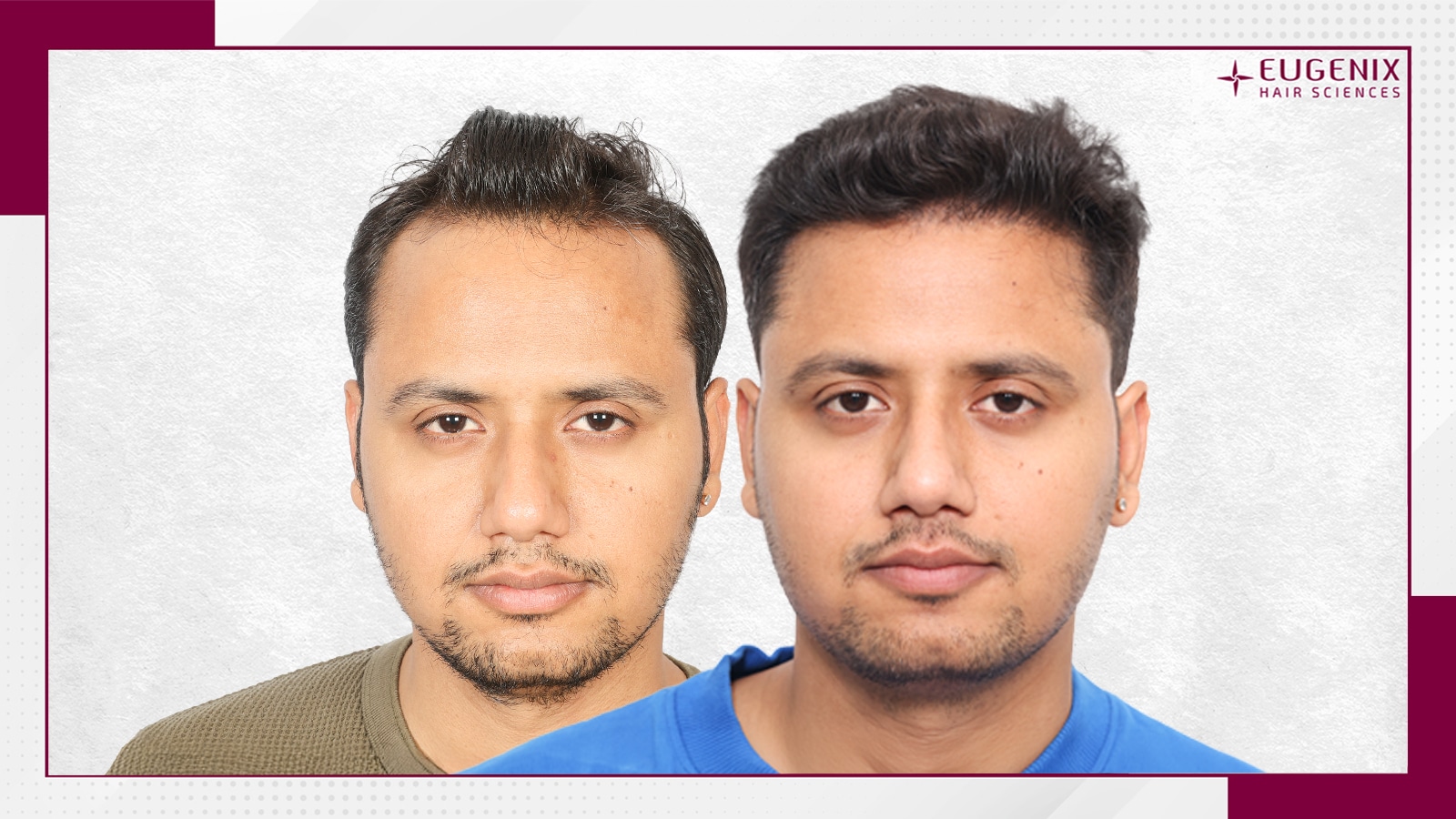
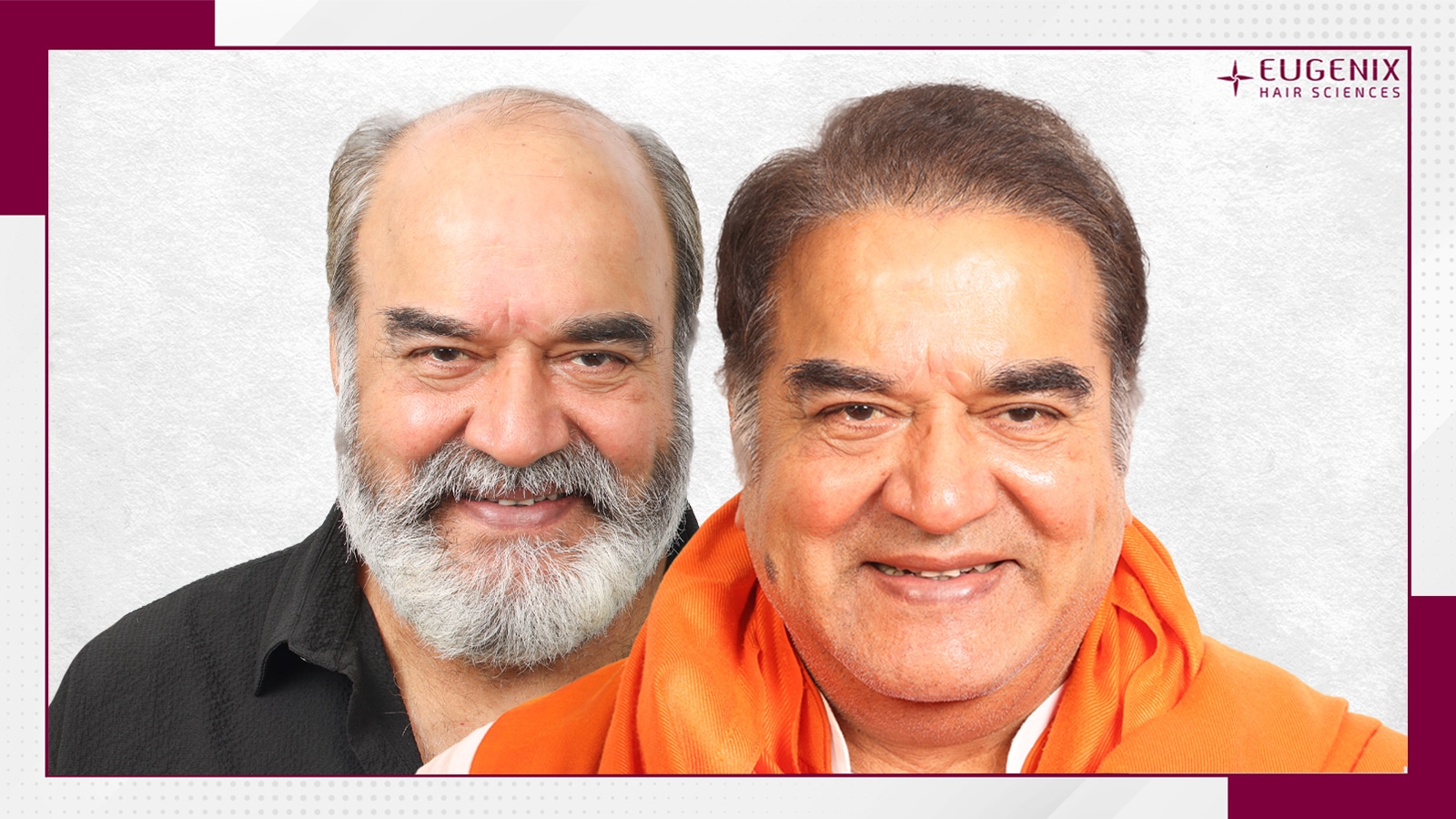
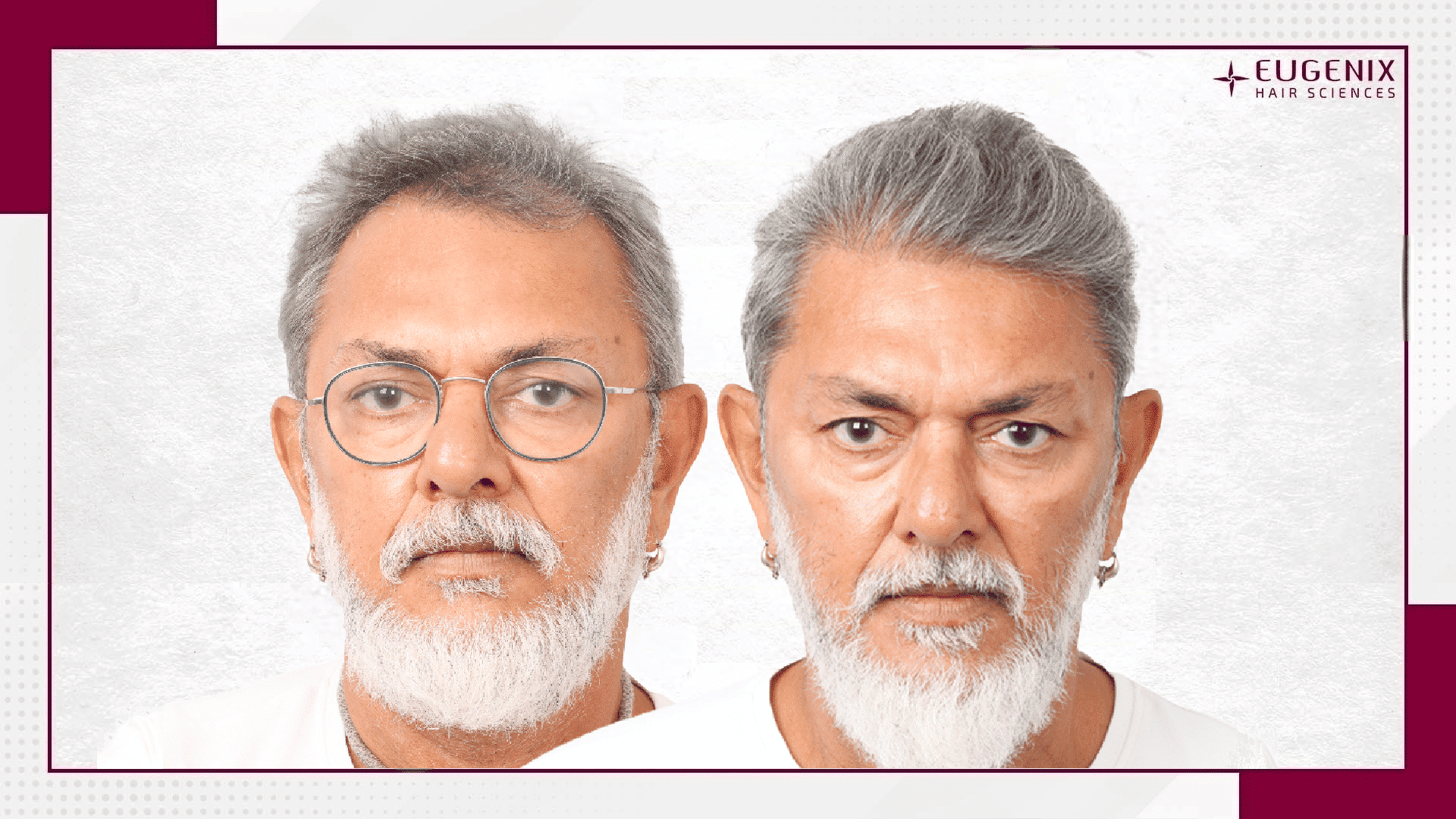
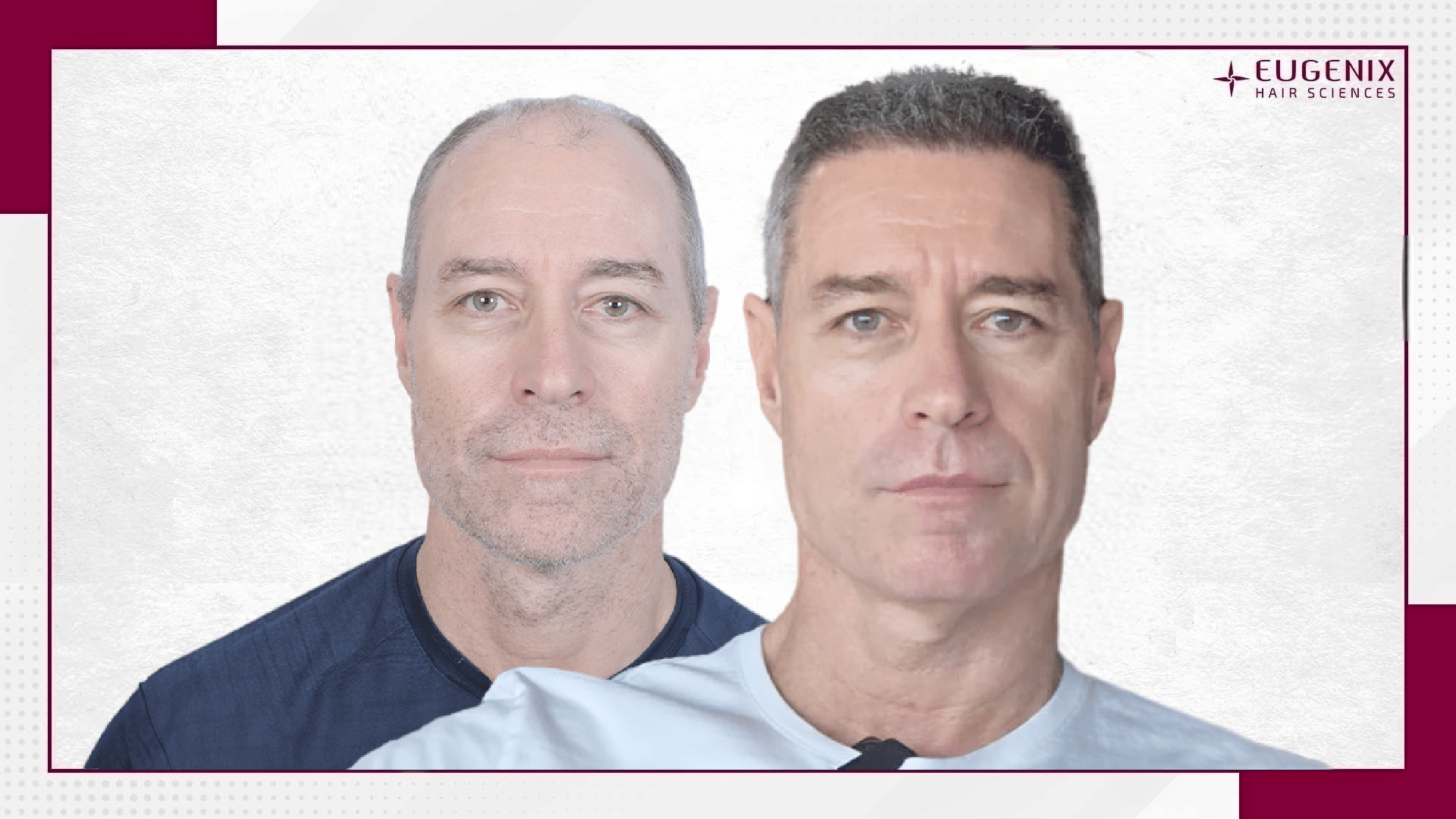
Recovery after a hair transplant usually takes about 7 days. The first head wash is done as advised by our team, and most people resume their normal activities after about 7 days. Shedding of the transplanted hairs is normal between 30 and 90 days. Hair growth follows: transplanted hair usually starts to grow from Month 4. Full results take 10 to 12 months. The transplanted hair is your own natural hair, and it can be washed, cut and styled like the rest of your hair. Results vary from person to person.
Does the technique change the cost?
The cost depends on the number of grafts planned for your case, which is decided after your scalp and donor area are assessed. Our team explains the costs in full at consultation.
No Cost EMI for up to 12 months. A processing fee applies, charged by the finance provider.
Who performs DHT at Eugenix?
Founded by Dermatologists, alumni of AIIMS, New Delhi, and Fellows of ISHRS. At Eugenix, procedures are performed by our panel of experienced surgeons, personally handpicked and trained by our Co-Founders, at all five centres: Gurugram, Mumbai, Hyderabad, Bhubaneswar and Bengaluru.
Related reading
- DHI vs DHT hair transplant: what is the difference?
- Branded hair transplant technique names explained (Bio-FUE, Sapphire, DHI)
- FUE hair transplant
If you would like to know which technique suits your hair loss, speak to our team.
Medically reviewed by Dr. Arika Bansal, Co-Founder, Eugenix Hair Sciences; MBBS, MD Dermatology, Fellow of ISHRS; Reg. No. HN-34095 (Haryana Medical Council).