

A couple of decades ago, the very idea of a hair transplant was considered a last resort. It was something people did when all else failed, often with questionable results. Images of ‘hair plugs’ and unnatural-looking hairlines dominated the conversation, instilling a deep-seated fear in many who were experiencing hair loss. Today, however, we stand on the precipice of a new era. With groundbreaking advancements, like the Direct Hair Transplant (DHT) technique pioneered by Eugenix, the procedure has been refined into an art form.
But despite these innovations, the old myths persist, casting long shadows over the hopes of those who could benefit most. In an exclusive for our internal Eugenix website, we sat down with our co-founders, the world-renowned Dr. Pradeep Sethi and Dr. Arika Bansal, to address the ten most common misconceptions that might be holding you back from the hair restoration journey of a lifetime.
Myth 1: Hair Transplants are Extremely Painful
Dr. Sethi: This is perhaps the most common misconception we encounter. The idea of a surgical procedure on your head naturally makes people uneasy. But the truth is, a hair transplant is a a procedure that is performed under local anesthesia. We ensure the patient is comfortable throughout the entire process. You might feel a slight pressure or a few pinpricks from the anesthesia, but the procedure itself is virtually painless. Most of our patients spend their time listening to music, watching movies, or even taking a nap.
Myth 2: The Results Look Unnatural
Dr. Arika: This myth is a relic of outdated ‘hair plug’ technology. Modern techniques like FUE and our very own Direct Hair Transplant (DHT) method have completely changed the game. We don’t just transplant hair; we meticulously design a hairline that is a natural extension of your unique facial structure. Our surgeons implant each follicle with precision, considering the angle, direction, and density to ensure the final result is indistinguishable from natural hair. Our aim is for your friends and family to say, “You look great,” not, “Did you get a hair transplant?”
Myth 3: Hair Transplants are Only for Men
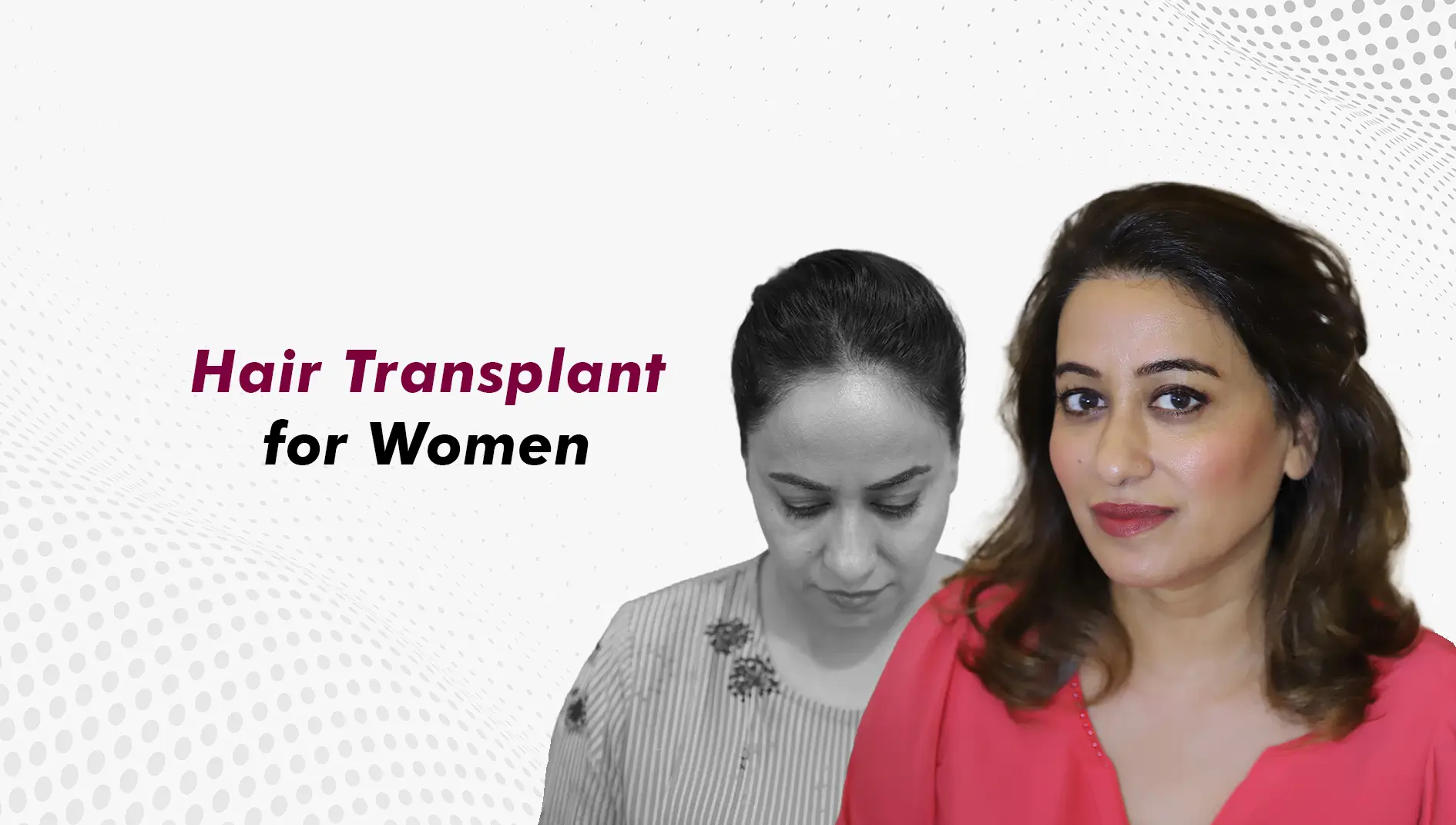
Dr. Sethi: While male pattern baldness is the most common reason for hair transplants, this procedure is absolutely not limited to men. Female hair loss, which often presents as diffuse thinning or a widening part line, can be addressed with equally successful results. A significant number of our patients are women looking to restore density and rebuild their hairlines.
Myth 4: The Transplanted Hair is Not Permanent
Dr. Arika: This is a crucial point. The hair follicles used for transplantation are taken from the ‘safe donor area’ at the back of the scalp. The hair in this region is genetically resistant to the effects of the hormone DHT, which is the primary cause of pattern baldness. When these DHT-resistant follicles are transplanted to the balding areas, they retain this resistance. This means the transplanted hair will grow naturally and permanently, and will not fall out. This is why a hair transplant is considered a long-term, permanent solution.
Myth 5: Hair Transplants Give Instant Results
Dr. Sethi: I have to smile at this one. Patience is the most important virtue for any hair transplant patient. The journey from the procedure to the final result is a process. Immediately after the transplant, the newly implanted hairs will shed. This is a normal part of the process, a physiological shock to the follicles that have been moved. New hair growth begins to appear around the 3-4 month mark, with significant growth at 6-9 months, and the final, dense results visible at around 12-18 months.
Myth 6: The Procedure Leaves Unsightly Scars
Dr. Arika: With older methods like FUT, a linear scar was left at the donor site. Our state-of-the-art DHT technique, which is an advanced form of FUE, involves the extraction of individual follicular units, leaving behind only tiny, pinprick scars that are virtually invisible to the naked eye. In fact, many of our patients can wear their hair short without any visible signs of the procedure.
Myth 7: A Hair Transplant can Affect Your Brain
Dr. Sethi: This is a myth born of pure fear. A hair transplant is a superficial procedure that only involves the top layers of the scalp skin. The depth of the extraction and implantation is a mere few millimeters. It in no way, shape, or form penetrates the skull or comes into contact with the brain. It is an incredibly safe procedure when performed by a qualified and experienced surgeon.
Myth 8: You have to be Young to get a Hair Transplant
Dr. Arika: There is no upper age limit for a hair transplant. What matters is a stable hair loss pattern, a healthy donor area, and good overall health, not age alone. We do advise caution for patients under 25, whose hair loss pattern is still settling. We have successfully performed procedures on patients from their mid-20s to their late 60s. What matters is the health of the patient and the quality and quantity of the donor area. For younger patients, we often advise a conservative approach to account for future hair loss. The best age for a transplant is when you have a stable hair loss pattern and a good donor area.
Myth 9: A Hair Transplant is Unaffordable
Dr. Sethi: People often mistakenly compare the one-time investment of a hair transplant to the ongoing costs of temporary solutions like wigs, patches, or topical medications. When you factor in the lifetime costs of these temporary fixes and their limitations, a permanent hair transplant proves to be a far more cost-effective and confidence-boosting solution. The cost depends on the number of grafts and the technique, but we work with patients to find a plan that works for them.
Myth 10: After a Transplant, I will never have hair loss again
Dr. Arika: While the transplanted hair is permanent and resistant to DHT, the rest of your native hair is not. The non-transplanted hair on your scalp may continue to thin over time due to genetic factors. This is why we often recommend a comprehensive approach, including medical management and follow-ups, to preserve your native hair and maintain the overall density and aesthetic. We are not just a clinic that performs a single procedure and sends you on your way. We partner with you for the long term.
It’s clear that the world of hair transplantation has evolved beyond recognition. The experts at Eugenix have not only refined the techniques but have also made it their mission to educate and empower people with the facts. If you’ve been holding back from the life-changing decision of a hair transplant because of any of these myths, it’s time to let them go. Your journey to a confident, fuller head of hair starts with a single step: a consultation with the experts.
Dr. Arika Bansal
One of only a few female surgeons specializing in hair transplant surgery in India, Dr. Arika Bansal has been voted one of the best doctors in the world. She maintains an active fellowship in the ISHRS and regularly submits research papers to medical journals. 15+ years down the line, 20,000+ surgeries are accomplished under Dr. Bansal’s supervision. She specializes in female hair transplant, density improvement, corrective hair transplantation and hairline design.