
For many men with advanced hair loss, the biggest worry is not the procedure itself. It is the donor supply. The back and sides of the scalp hold a finite number of permanent hair follicles, and in higher grades of baldness, that reserve alone may not cover the full area. This naturally leads to one of the most common questions we hear at consultation: can body hair be used for hair transplant?
The short answer is yes. A body hair transplant uses beard hair, chest hair, and other body hair as donor sources, and for patients with limited scalp donor hair, it often makes the difference between partial coverage and a complete, satisfying result. But body hair is not a like-for-like substitute for scalp hair. Body hair follicles behave differently, grow differently, and must be planned differently from scalp grafts.
In this guide, we explain when body hair transplantation is used, which body donor areas work best, what body hair transplant results you can realistically expect, and how Eugenix approaches combination grafting across more than 20,000 procedures and over 15 years of clinical practice in hair restoration.
Can Body Hair Be Used for Hair Transplant? The Short Answer
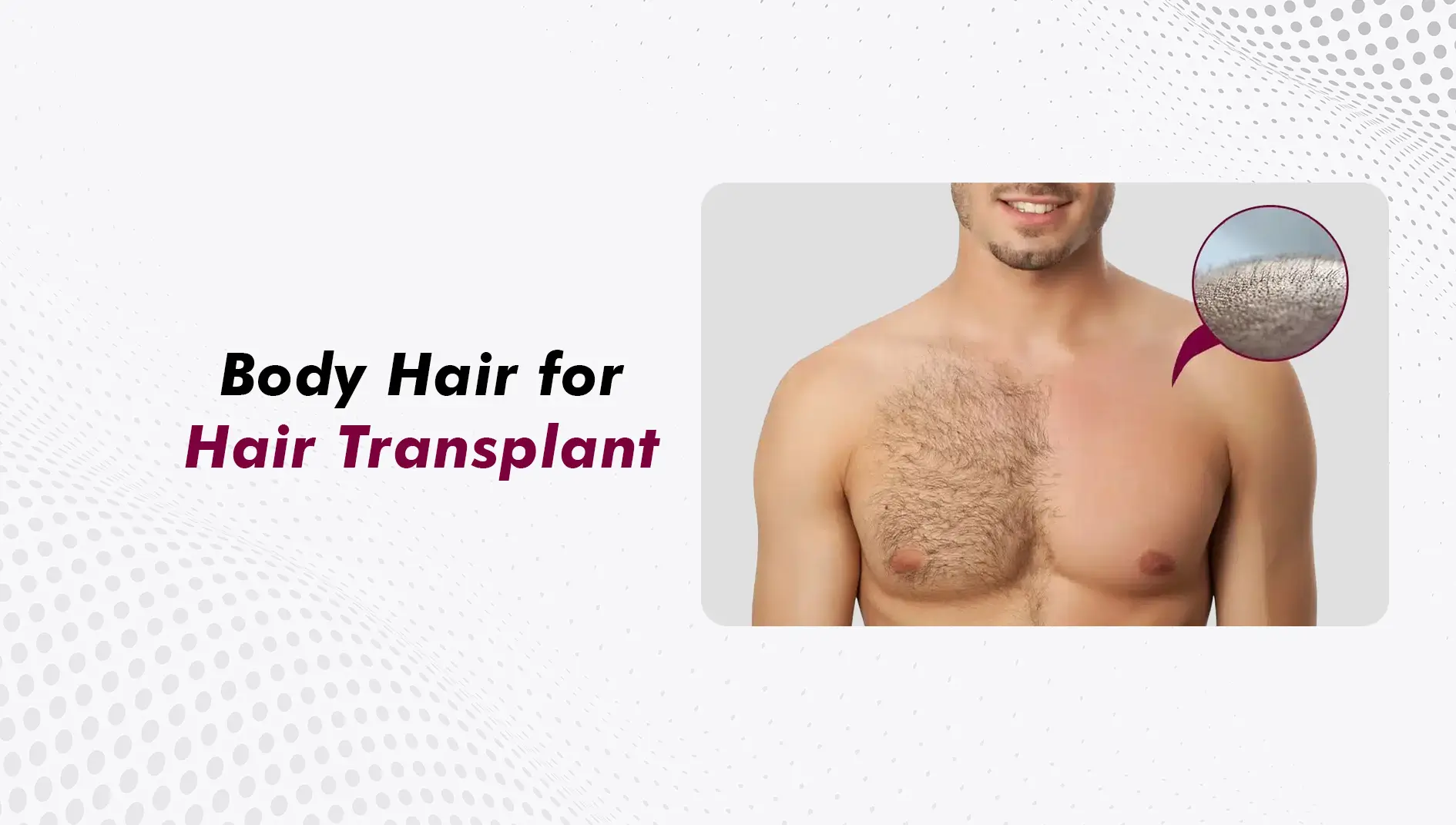
Yes, body hair can be used for a hair transplant, and it is a well-established part of modern hair restoration. The approach is known as body hair transplantation, or BHT. Individual hair follicles are extracted from body areas such as the beard, chest, and abdomen and implanted into the scalp, following the same fundamental principles as a standard scalp hair transplant. Each graft, technically called a follicular unit, is a naturally occurring group of one to four hair follicles that are moved together as a single unit.
There is an interesting biological reason why a body hair transplant works so well for men with advanced baldness. The same hormone that drives hair loss on the scalp, dihydrotestosterone, often stimulates stronger hair growth on the face and body. This means that the very patients who have the most limited scalp donor hair frequently have the most abundant beard and body hair available as a supplementary donor supply.
However, one principle governs everything else in body hair transplantation: body hair is used as a filler, not for primary reconstruction. The scalp donor area remains the foundation of every hair transplant procedure. Body hair supplements it. It does not replace it.
When Does a Body Hair Transplant Become Necessary?
A body hair transplant enters the plan in a few specific situations:
– Extensive baldness: Patients with Norwood Grade 6 or Grade 7 hair loss typically need 7,000 to 9,000 grafts for full coverage of the bald scalp. The scalp donor area alone often cannot supply as many grafts, so beard and body hair bridge the gap.
– Limited scalp donor hair: Some patients have naturally lower density in the scalp donor area, or donor hair weakened by previous procedures performed elsewhere.
– Donor conservation in younger patients: For younger patients whose hair loss may progress, preserving scalp donor hair for future sittings is a strategic priority. Body hair helps achieve today’s coverage without exhausting tomorrow’s options.
– Visual density plus long-term coverage: Patients who want satisfactory growth and density now, with headroom for the future, benefit from a combined donor strategy.
At Eugenix, this combined strategy follows a clear structure known as combination grafting: roughly 70 parts beard hair to 30 parts other body hair such as chest hair, always mixed with scalp grafts. The reason for that weighting becomes clear when you compare the body donor areas themselves.
Beard Hair: The Best Body Donor Source
Among all body hair sources, beard hair stands apart. Beard grafts show excellent graft survival in a healthy donor, the strongest performance of any body donor, which is why the beard carries the bulk of the load in any body hair transplant plan.
Beard grafts are harvested from below the chin and below the jawline, donor sites that stay hidden when the head is upright. A typical extraction yields 500 to 800 grafts without any visible effect on the appearance of the beard. Over a lifetime, a healthy beard can provide 3,000 to 5,000 grafts for transplantation, a substantial reserve that meaningfully extends what is possible for high-grade patients.
Beard hair also has growth characteristics that make it valuable on the scalp. It is thicker in calibre than scalp hair, which means each graft contributes real visual density. And beard follicles are naturally resistant to dihydrotestosterone, so once transplanted, they are not vulnerable to the hormone that caused the original hair loss.
Where Beard Grafts Can and Cannot Be Placed
Placement discipline is what separates a natural body hair transplant result from an obvious one. At Eugenix, beard grafts are always strategically mixed with scalp grafts rather than placed in isolation, and they are never implanted in three zones:
– The hairline zone
– The temple points
– The crown whorl
These are the areas where texture is most visible and where the wiry, curly growth pattern of beard hair would stand out against the surrounding hair. Instead, beard grafts are used as filler in the mid-scalp and the periphery of the crown and for density from around 2 cm behind the hairline, where they blend seamlessly among scalp grafts. Grey beard grafts are mixed carefully with darker scalp grafts to avoid any zoned or striped appearance, and larger beard extractions are only planned with informed consent, since they can cause visible thinning of the beard.
Chest Hair and Other Body Donor Areas
Chest hair is the secondary donor in body hair transplantation, used sparingly and only when the beard supply is insufficient for the plan. Body hair extraction from the chest heals well, with no visible scarring thanks to the fine punches used, provided the skin condition of the donor area is healthy. However, chest hair growth cycles deliver less visible density graft for graft, and its texture differs noticeably from scalp hair, so it is reserved for supporting roles deep within covered areas rather than anywhere prominent.
Not all body parts are equally suitable as donor sites. Arm hair and leg hair, for example, are generally too fine, too short, and too unreliable in their growth cycle for meaningful scalp restoration, and harvesting body hair from these areas is a slow, technically demanding procedure with a higher risk of graft damage. This is why experienced surgeons concentrate on the beard first and the chest second and treat every other body area as a marginal option at best.
Why Body Hair Behaves Differently From Scalp Hair
Understanding the hair growth cycle is the key to realistic expectations with a body hair transplant, and it comes down to how much of each hair type is actively growing at any moment.
Every hair follicle cycles between the anagen phase, when the hair is actively growing, and the telogen phase, when it rests. Scalp hair spends most of its life in the anagen phase. That is why, for every 1,000 scalp grafts implanted, roughly 700 to 800 are visibly growing at any given time. Beard hair has a shorter anagen phase and a shorter growth cycle overall: for every 1,000 beard grafts implanted, roughly 500 to 600 are visible at once, with the remainder resting. Chest hair rests even more, with roughly 200 to 300 visible per 1,000 implanted.
This is not graft failure. The transplanted hair is alive and body hair grows in its normal rhythm. It simply means that body hair, graft for graft, delivers less simultaneous visual density than scalp donor hair. An experienced surgical team accounts for this through careful planning at the design stage, which is exactly why body hair supplements the plan rather than leading it.
Texture matters too. Transplanted body hair generally retains its original hair characteristics, so beard hair on the scalp stays wiry and curly compared with the surrounding hair. Once transplanted, it benefits from regular grooming with a light gel or wax so that it blends smoothly. Most patients find this becomes a routine habit within weeks, and the payoff is a natural-looking result.
How Eugenix Approaches Body Hair Transplantation
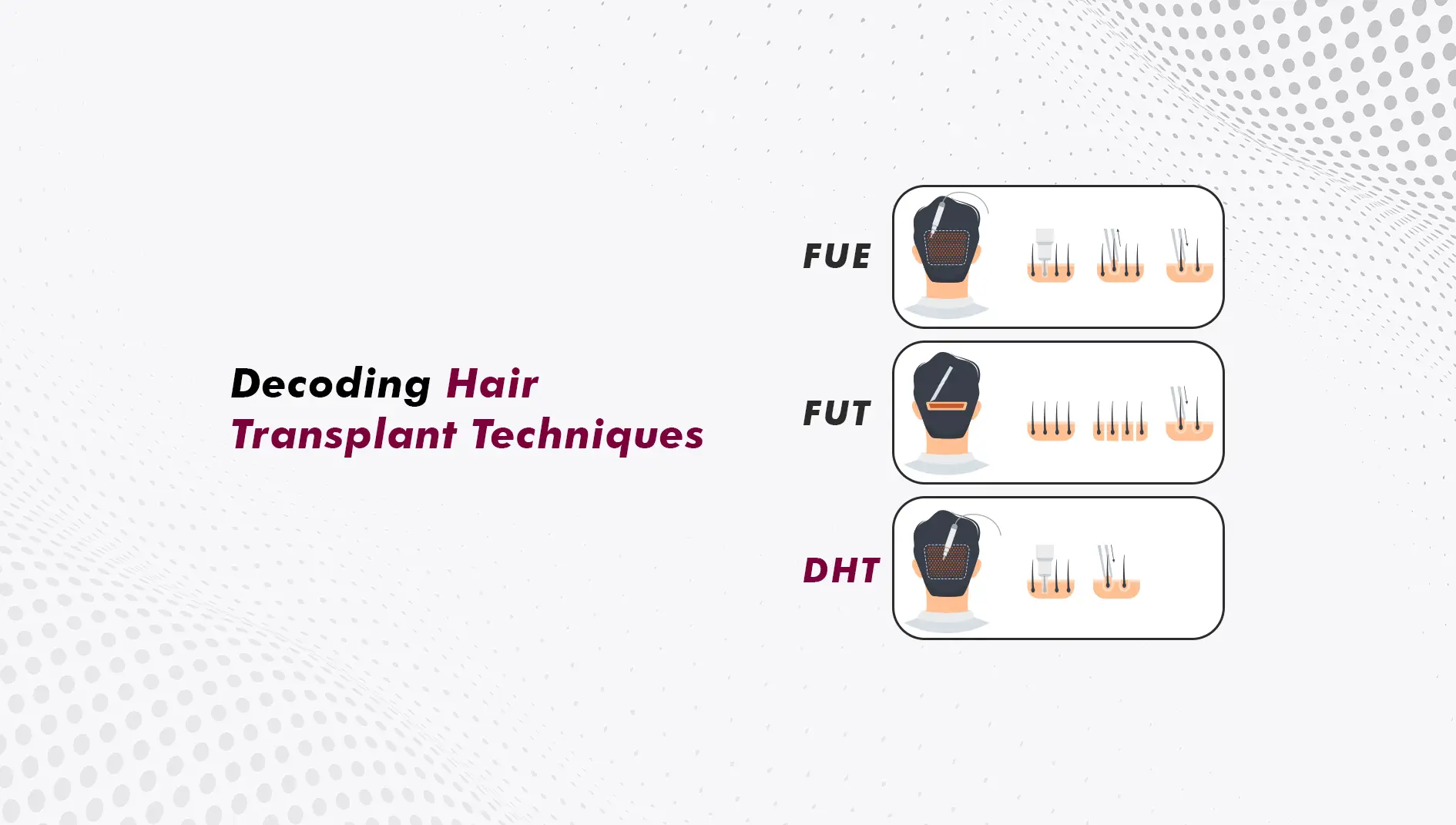
Eugenix performs DHT (Direct Hair Transplant), the technique developed by our Co-Founders, Dr. Pradeep Sethi and Dr. Arika Bansal, and published in their 2013 PubMed-indexed paper, “Direct hair transplantation: a modified follicular unit extraction technique.” DHT is a modified form of FUE in which extraction and implantation happen simultaneously, keeping each graft outside the body for under 30 minutes, compared with the 3 to 4 hours typical of the traditional FUE technique, where follicular unit extraction and implantation happen as separate stages.
That short out-of-body window matters even more in a body hair transplant than in a standard scalp procedure. Beard grafts carry less protective fat than scalp grafts and are more sensitive to drying and handling stress. A technique built around minimal out-of-body time gives these delicate hair follicles the best possible conditions.
Body hair extraction at Eugenix is performed under local anaesthesia and uses instruments matched to the donor type, including specialised sharp serrated punches for beard extraction, with punch sizes selected according to each patient’s beard characteristics. Your hairline is designed, the slits are created hands-on, and all technical parameters are set by the lead surgeon. Scoring, extraction, and implantation are performed by senior surgical assistants under the lead surgeon’s parameters and supervision, with the lead surgeon taking rounds between active steps and remaining available at all times during your surgery.
This combination grafting experience is central to how Eugenix approaches Grade 6 and Grade 7 restorations, where scalp, beard, and chest hair are planned together as a single strategy across our centres in Gurgaon, Mumbai, Hyderabad, and Bhubaneswar.
What Results Can You Expect From a Body Hair Transplant?
Body hair transplant results follow a slightly longer journey than scalp grafts:
– Beard grafts: Full results at around 12 to 13 months, slightly later than the 10 to 12 months typical for scalp grafts.
– Chest grafts: Full results at approximately 15 months.
Along the way, body hair grafts go through the same shedding phase as scalp grafts in the first 30 to 90 days, followed by initial hair growth from around Month 4. Because a smaller share of body hair is visibly growing at any one time, results build more gradually, and the final appearance depends on skilful blending across the recipient area.
When that blending is done well, with beard hair kept out of the hairline, temples, and crown whorl, and mixed thoughtfully through the mid-scalp, a body hair transplant achieves satisfactory growth and coverage that would simply not have been possible from scalp donor hair alone. In selected cases of very extensive hair loss, the surgical team may also discuss scalp micropigmentation as a complement for added visual density, timed appropriately after the hair transplant procedure.
Frequently Asked Questions
Can body hair completely replace scalp donor hair?
No. Body hair is a supplement, not a substitute. The scalp donor area provides the texture, density, and coverage that form the foundation of a natural result, and a full head of coverage is always built on scalp grafts first. Body hair transplantation extends what the scalp donor can achieve, particularly in extensive baldness, but it is always planned as a filler.
Does a body hair transplant look natural?
Yes, when placement rules are respected. Beard hair blends well in the mid-scalp when mixed among scalp grafts, and regular grooming helps the textures sit together for a natural appearance. The key is keeping body hair out of the most visible zones: the hairline, temple points, and crown whorl.
How many grafts can be taken from the beard?
A typical single extraction yields 500 to 800 grafts with no visible change to the beard’s appearance. Larger extractions are possible in a single sitting with informed consent, as they can cause visible thinning of the beard. Over a lifetime, a healthy beard can provide 3,000 to 5,000 grafts for transplantation.
Can I use arm, leg, armpit, or pubic hair for a hair transplant?
Technically, hair follicles from almost any body area can be extracted, but that does not make them good donor sources. Arm hair and leg hair are too fine and too short, and hair from the armpits or the pubic area has a growth pattern and texture poorly suited to the scalp. At Eugenix, body hair transplantation relies on the beard first and the chest second. Other body areas are not part of our combined donor approach.
Is body hair extraction painful or scarring?
Extraction is performed under local anesthesia, and the fine punches used leave no visible scarring once healed. Beard donor sites sit below the chin and jawline, where they are naturally concealed, and chest extraction sites also heal well without visible marks.
How much does a body hair transplant cost?
The cost of any hair transplant procedure depends on the total number of grafts planned, the donor sources involved, and the package you choose, so no honest clinic can quote a meaningful figure without assessing you first. Whether your plan needs 3,000 grafts or a larger combined approach, exact costs are shared transparently at your consultation, with 5% GST disclosed upfront on all hair transplant packages.
Who decides whether I need body hair grafts?
This is a clinical decision made during planning & designing, based on your grade of hair loss, the strength of your scalp donor hair, your beard and chest hair characteristics, and your long-term outlook. No graft plan, scalp or body, can be finalized without a proper consultation.
Conclusion: A Bigger Donor Bank, Planned the Right Way
So, can body hair be used for hair transplants? Absolutely, and for men with extensive baldness, a body hair transplant is often the strategic key that unlocks full coverage. Beard hair leads the way as the strongest body donor, chest hair plays a careful supporting role, and both must be planned and placed with discipline to keep the result natural.
At Eugenix, combination grafting is part of everyday clinical practice, refined across more than 20,000 procedures and over 15 years of hair restoration. If you have advanced hair loss and are wondering whether your donor supply is enough, the answer starts with a proper evaluation. Book a free consultation with an Eugenix Hair Science Advisor today, share your photos for evaluation, and find out exactly what your scalp, beard, and body hair can achieve together.
Dr. Arika Bansal
One of only a few female surgeons specializing in hair transplant surgery in India, Dr. Arika Bansal has been voted one of the best doctors in the world. She maintains an active fellowship in the ISHRS and regularly submits research papers to medical journals. 15+ years down the line, 20,000+ surgeries are accomplished under Dr. Bansal’s supervision. She specializes in female hair transplant, density improvement, corrective hair transplantation and hairline design.