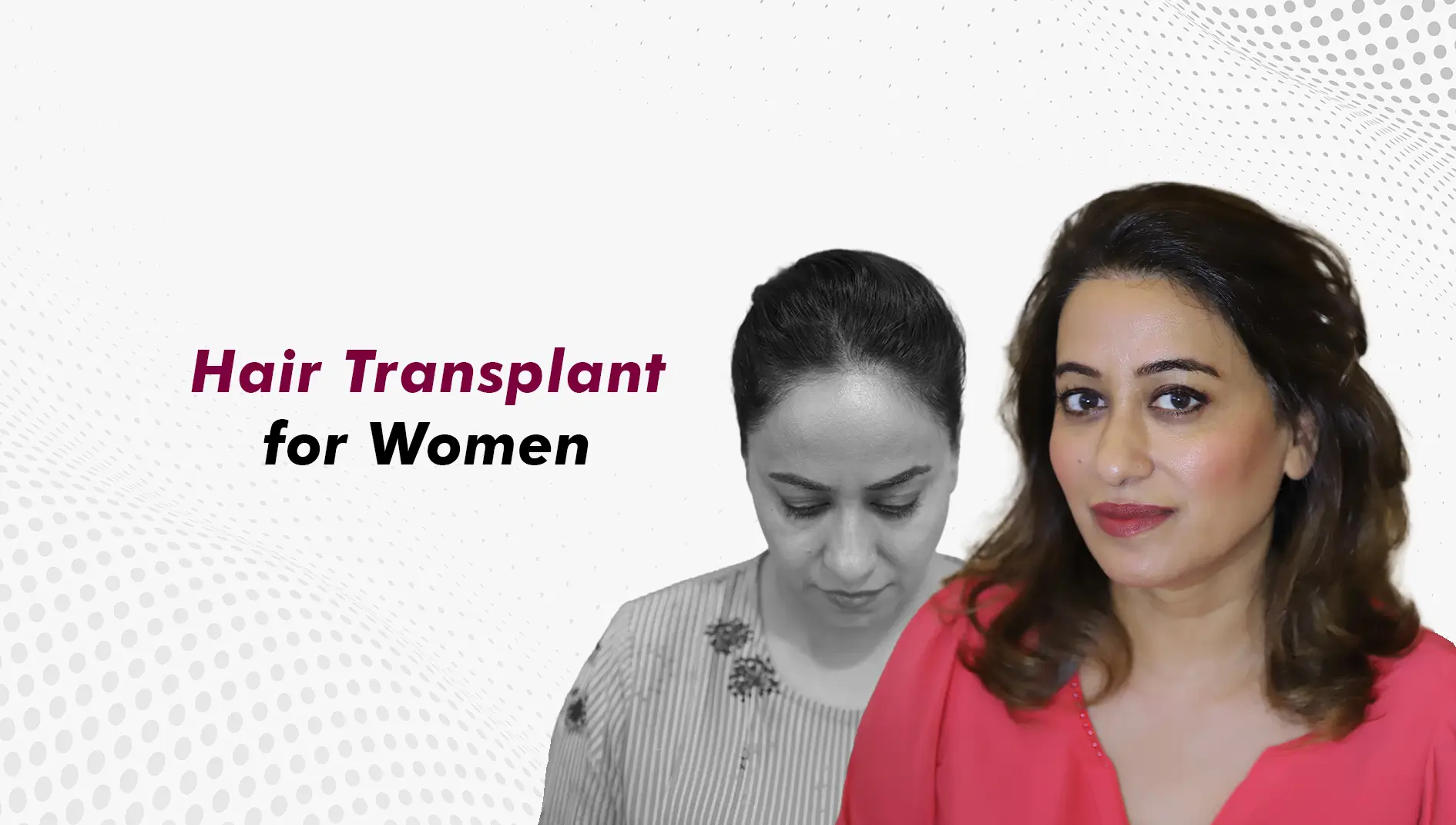

If you are one of the many women experiencing hair loss, you have probably wondered whether hair transplantation is an option for you or a treatment designed only for male patients. The reassuring answer is that women can absolutely undergo hair transplant surgery. But a female hair transplant is not simply a male procedure performed on a woman. Female hair loss follows a different pattern, the diagnosis stage is more thorough, the surgical technique demands greater precision, and results unfold on their own timeline. This article walks you through everything that makes hair transplantation different for women, so you can approach the decision with clear, realistic expectations.
Yes, Women Can Undergo Hair Transplant Surgery
Hair transplant surgery works for women, and women undergoing the procedure with the right preparation achieve natural looking results. What matters is not gender but candidacy. Hair loss in women has a wider range of possible causes than hair loss in men, and some of those causes must be identified and treated before surgery is even considered. This is why the evaluation stage for female patients is longer and more detailed. A suitable candidate, properly evaluated and prepared, can expect a genuine, lasting improvement in density.
At Eugenix, female hair transplantation is performed using our flagship DHT (Direct Hair Transplant) technique, a modified FUE approach in which extraction and implantation happen simultaneously, keeping each graft outside the body for under 30 minutes. For women, whose procedures demand implantation between surrounding hair, this precision matters even more.
How Female Hair Loss Differs from Hair Loss in Men
Male pattern hair loss typically follows a predictable route: a receding hairline, a thinning crown, and eventually large bald areas. Female pattern hair loss looks quite different.
– Unlike men, most women rarely go completely bald. Instead, hair thins diffusely: a gradual widening of the parting line and reduced overall density in women’s hair, particularly at the crown.
– The frontal hairline is usually preserved, even when the hair thinning behind it becomes significant.
– Female pattern hair loss, also called female pattern baldness or female androgenetic alopecia, is classified on the Ludwig Scale, which has three grades: Grade I (mild thinning at the crown, slightly wider parting), Grade II (moderate thinning, visibly wider parting), and Grade III (severe thinning with significant scalp show-through at the vertex).
This diffuse nature of women’s hair loss is the biggest reason a hair transplant for women is more complex than one for men. Instead of implanting grafts into clearly bald zones, the surgical team must place new follicular units between healthy hair, protecting every existing hair follicle along the way.
Why Diagnosis Comes First for Women
In men, the overwhelming majority of hair loss is androgenetic: genetic factors combined with the hormone dihydrotestosterone acting on sensitive hair follicles. In women, hair loss can stem from several underlying conditions, and a proper diagnosis is essential before any surgical decision.
Common contributors to female hair loss include:
– Genetics: a family history on either parent’s side increases risk.
– Hormonal changes: PCOS (Polycystic Ovary Syndrome) can thin women’s hair on the scalp while increasing facial and body hair. Hormonal stabilisation is required before hair transplant surgery can be recommended.
– Thyroid disorders: both an underactive and an overactive thyroid can drive hair loss, regardless of genetic predisposition.
– Menopause: the hormonal shifts of declining estrogen directly affect hair growth and density, often beginning years before menopause itself.
– Nutritional deficiencies: low ferritin (iron stores) is a major and frequently overlooked cause of hair loss in women.
– Telogen effluvium: stress-induced hair shedding triggered by illness, surgery, or major life events. It is generally reversible once the trigger resolves, which means surgery is often not the right answer at all.
– Traction alopecia: hair loss caused by tight hairstyles such as braids, extensions, and tight buns. Caught early, it can reverse once the tension is removed.
This is why a dermatologist evaluation is mandatory before female hair transplant eligibility is confirmed. Treating an underlying condition first can restore hair on its own, and it protects the long-term result of any hair restoration that follows.
Hair Transplant Techniques: FUT, FUE, and DHT
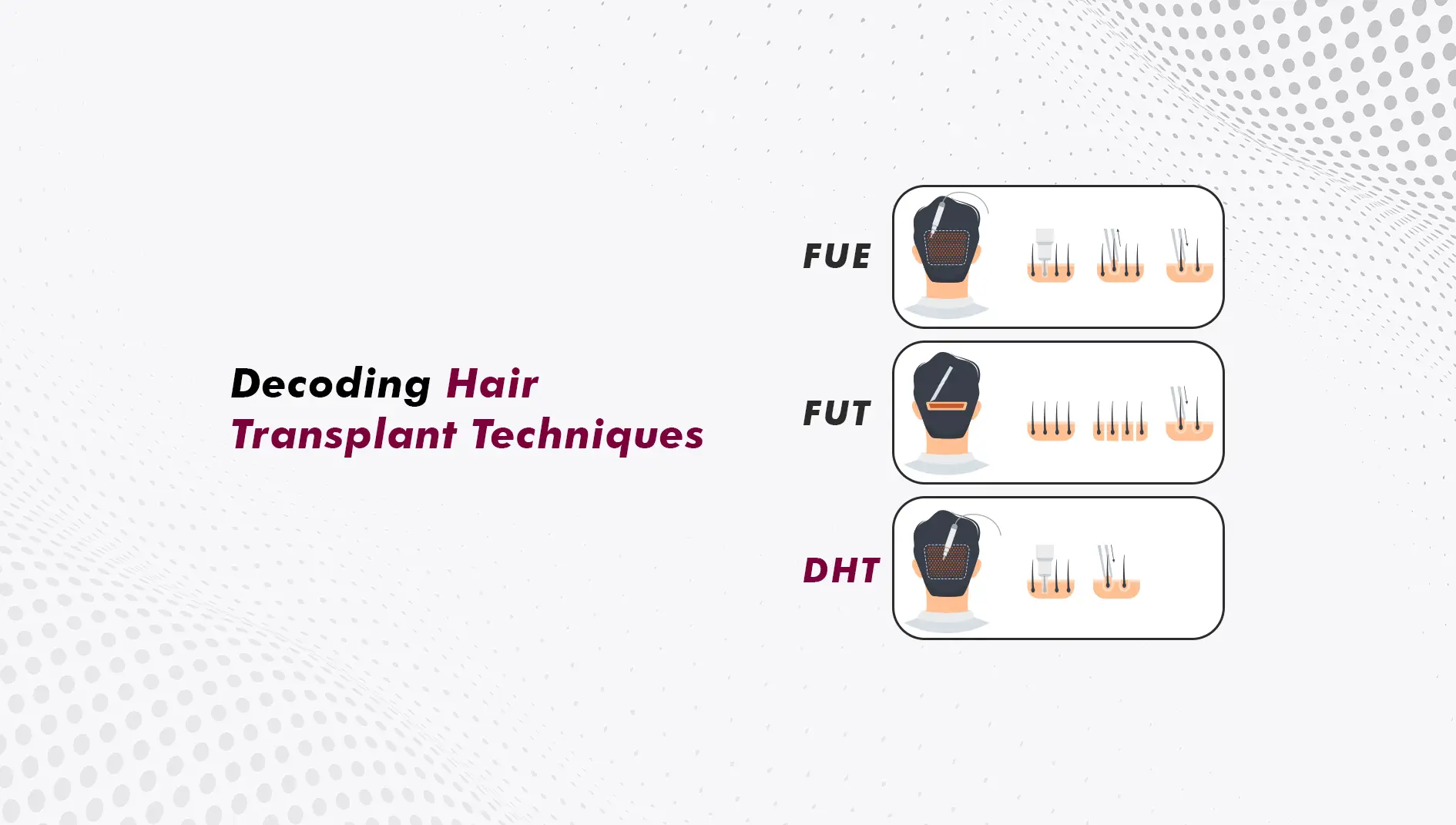
Reading about hair transplant techniques, you will encounter two traditional methods. Follicular unit transplantation (FUT) removes a strip of scalp, leaving a linear scar at the back of the head. Eugenix does not perform FUT; we mention it only so you understand the comparison, and because the linear scar is a key reason the field moved on. Follicular unit extraction (FUE) harvests individual follicular units directly from the donor area, but in traditional FUE the extracted follicles wait outside the body for 3 to 4 hours before implantation.
DHT, the technique pioneered by Eugenix’s Co-Founders and published in a 2013 PubMed-indexed paper, is the evolved modification of FUE: extraction and implantation happen simultaneously, so each graft is out of the body for under 30 minutes. For female hair transplantation, where every graft must be placed with precision between fine surrounding hair, this refinement is a meaningful advantage.
Who Is a Suitable Candidate
Candidates for hair transplantation among women must meet all three Eugenix eligibility criteria:
- Adequate nutrition: daily protein intake above 1 gram per kilogram of body weight, from quality sources such as eggs, paneer, non-vegetarian food, or protein supplements.
- Adequate micronutrient support: micronutrients taken consistently for 6 months to 1 year before surgery.
- A good donor area: a doctor’s evaluation must confirm adequate donor hair density and calibre at the back and sides of the scalp.
There are also situations where hair transplant procedures are not advised. Active alopecia areata, an autoimmune condition causing patchy loss, cannot be treated surgically. Diffuse unpatterned alopecia, where diffuse hair loss extends across the entire scalp including the donor area, generally rules out surgery because the donor hair itself is not stable. An honest hair transplant clinic will tell you when surgery is not in your interest, and at Eugenix that honesty is part of the evaluation.
The Blood Tests: Why Women Need Additional Investigations
Every hair transplant patient at Eugenix completes a standard pre-operative blood panel: haemogram, PT INR, aPTT, random blood sugar, HbA1c, HIV 1 and 2 antibody test (Anti-HIV), HBsAg, Anti HCV, and an ECG with physician reporting for patients aged 40 and above.
For female patients, this standard panel alone is never considered complete. Additional hormonal and investigative tests are mandatory, because they reveal the underlying causes discussed above.
Pre-menopausal women require the following tests, done between Day 3 and Day 5 of the menstrual cycle:
- CBC (Complete Blood Count)
- T3, T4, TSH (thyroid function)
- Serum Ferritin
- Serum Prolactin
- Serum Testosterone, Free and Total
- 17 OH Progesterone
- FSH and LH
- Serum DHEA and Serum DHEAS
- Serum AMH (Anti-Mullerian Hormone)
Post-menopausal women require: CBC, T3, T4, TSH, Serum Ferritin, Serum Prolactin, and Serum Testosterone (Free and Total).
The timing rule matters: pre-menopausal tests must fall between Day 3 and Day 5 of the cycle for the hormone readings to be meaningful. All results are reviewed by the medical team before any decision on eligibility. Medicine department clearance is mandatory for every patient before any surgical procedure, without exception.
How the Procedure Is Different for Women
Once candidacy is confirmed, here is how a female hair transplant surgery works and why it demands precision beyond a typical male case.
Implanting between existing hair
Because women’s hair loss is diffuse, grafts are placed between existing hair rather than into bald zones. The surgical team works under 8X to 20X magnification to avoid damaging even a single healthy follicle. Where the gap between existing hair follicles is under 3 millimetres, extreme precision is required for safe implantation.
A softer, natural female hairline
A natural female hairline is not a lowered male hairline; it calls for a softer design. It features subtle irregularities, is never perfectly symmetric, and often includes a natural cowlick at the front centre, known as the juvenile hairline pattern. For women, the mid-frontal point is planned 5 to 7 centimetres from the glabella, compared to 7 to 10 centimetres for men. Women considering hairline lowering should know that a restored hairline achieves 80 to 90 percent similarity to a natural one, and refinement sittings may be needed for truly natural looking outcomes.
Who does what during your surgery
At Eugenix, your hairline is designed, the recipient slits are created hands-on, and all technical parameters are set by the lead surgeon. Scoring, extraction, and implantation are performed by senior surgical assistants under the lead surgeon’s parameters and supervision. The lead surgeon supervises your procedure throughout, taking rounds between active steps and remaining available at all times during your surgery.
Shock Loss: What Every Woman Should Understand
Shock loss is the most important expectation-setting conversation in female hair transplant surgery, and Eugenix counsels every woman on it proactively. There are three types:
- Shedding of the new grafts: the implanted hairs fall out 4 to 6 weeks after the procedure. This is normal and unavoidable. The roots remain intact, and new hair growth resumes from the fourth month.
- Shock loss in the treated zone: native hair in the treated area can also shed 4 to 6 weeks after surgery, making it look temporarily thinner than before. Some women use a scarf or hair accessories during this phase. The hair recovers, but you should know about this in advance, not discover it afterwards.
- Shock loss in untreated zones: rare, but possible as part of the body’s response to the procedure.
Eugenix also uses intraoperative PRP (platelet rich plasma), prepared from your own blood during the procedure, which helps minimise shock loss risk. A clinic that does not discuss shock loss with a woman before surgery is not preparing her honestly.
Recovery, Results, and Post Treatment Care
Recovery for women follows the standard Eugenix protocol: gentle walking, office work, and household tasks resume the next day, the first head wash happens on Day 7, and return to work is typically within 7 days. As with any surgery there are risks, but at Eugenix, major complications are exceptionally rare, supported by over 20,000 procedures performed across more than 15 years of clinical practice.
The results milestones are: shedding between 30 and 90 days, growth beginning around Month 4, visible improvement by Months 6 to 8, and full hair transplant results at 10 to 12 months. For women there is one extra consideration: the new growth starts short while your surrounding hair is often long, so full blending can take 1.5 to 2 years, with hair bands or clips helping the transition. Post treatment care may also include Minoxidil under medical supervision to support hair growth and maintain hair density; consistency is what makes it work.
Why Women Choose Eugenix
Female hair transplantation rewards experience, and Eugenix brings depth that few can match: over 20,000 procedures across more than 15 years, with personalized treatments built around each woman’s diagnosis rather than a one-size approach. The clinic was co-founded by Dr. Arika Bansal and Dr. Pradeep Sethi, both Fellows of ISHRS and alumni of AIIMS, New Delhi, and every consultation is conducted by a panel of experienced surgeons personally handpicked and trained by the Co-Founders. Our Gurgaon centre is NABH accredited (Certificate No. DE-2026-0004), a recognition of clinical and safety standards from a body that is itself internationally accredited by ISQua.
A consultation for female patients is available at any of our four centres in Gurgaon, Mumbai, Hyderabad, and Bhubaneswar at INR 900 (GST inclusive), and a photo evaluation with a Hair Science Advisor is always free.
Frequently Asked Questions
Are hair transplants on women successful?
Yes, when candidacy is properly established. What makes a female hair transplant successful is the groundwork: identifying the true cause of hair loss, treating any underlying condition, confirming a stable donor area, and realistic expectations about density. Women who clear this evaluation achieve natural looking results.
How long do female hair transplants last?
Donor hair taken from the safe zone at the back and sides of the scalp is genetically resistant to the hormone dihydrotestosterone, which is why a hair transplant is considered a permanent solution. For women, the doctor’s evaluation specifically confirms the donor area is stable before proceeding.
Who cannot have a hair transplant?
Women with active alopecia areata, diffuse hair loss affecting the donor area, untreated hormonal changes such as unmanaged PCOS or thyroid imbalance, or hair loss that is still actively progressing are generally not candidates until the underlying issue is addressed. Hair restoration succeeds on stable ground.
What do hair transplant costs look like for women?
Every female case differs in graft requirement and preparation, so hair transplant costs are confirmed only after a consultation and doctor evaluation. Be cautious of any clinic quoting a fixed female hair transplant cost before examining you.
The Bottom Line
Women can undergo hair transplant procedures with excellent results, provided the journey starts with proper diagnosis rather than a sales pitch. The differences for women experiencing hair loss are real: more possible causes, mandatory hormonal investigations, a more demanding technique, and a longer blending period. Choose a hair transplant clinic that respects those differences.
If you are noticing hair thinning, begin with a free photo evaluation by a Eugenix Hair Science Advisor, or book a consultation at any of our centres in Gurgaon, Mumbai, Hyderabad, Bangalore or Bhubaneswar. Your evaluation will tell you honestly whether hair restoration is right for you, and if it is, exactly what to expect.
Dr. Arika Bansal
One of only a few female surgeons specializing in hair transplant surgery in India, Dr. Arika Bansal has been voted one of the best doctors in the world. She maintains an active fellowship in the ISHRS and regularly submits research papers to medical journals. 15+ years down the line, 20,000+ surgeries are accomplished under Dr. Bansal’s supervision. She specializes in female hair transplant, density improvement, corrective hair transplantation and hairline design.