
One of the most common questions patients ask after a hair transplant is simple: when will I see results? The answer is that hair transplant growth unfolds gradually over 12 to 15 months. This hair transplant growth chart breaks down exactly what happens to your transplanted hair from Day 1 through to final results and long-term stabilisation, so you are never caught off guard by what you see in the mirror.
Knowing your transplant growth chart also helps you interpret the post transplant process correctly. Patients who understand each phase of hair growth after a hair transplant are less likely to panic during the shedding phase, more consistent with their aftercare, and better prepared for realistic expectations about their long-term outcome.
What Is a Hair Transplant Growth Chart?
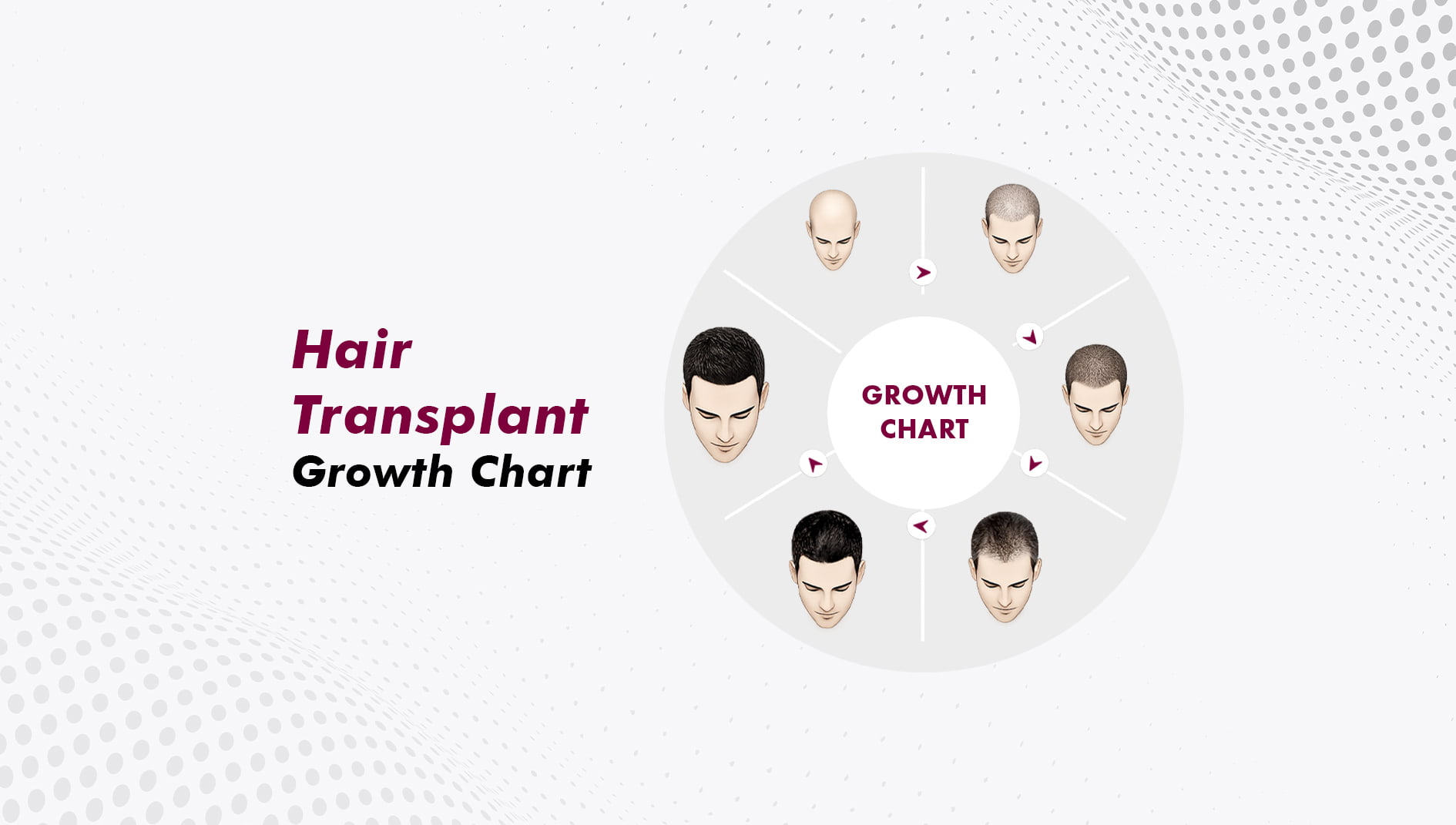
A hair transplant growth chart is a month-by-month timeline that maps out the phases of new hair growth after a hair transplant procedure, from initial healing through to final results. Because hair transplant growth does not happen in a straight line, this growth chart helps patients understand that temporary setbacks like the shedding phase are part of normal, healthy regrowth and not signs of failure. Every patient’s transplant growth chart follows the same broad phases, though the speed at which individuals move through them varies.
Understanding the Hair Growth Cycle After Transplantation
Before looking at the month-by-month transplant growth chart, it helps to understand the natural hair growth cycle that all hair follicles follow, both before and after a hair transplant surgery. The hair growth cycle consists of three main phases: the anagen phase (active growth), the catagen phase (transition), and the telogen phase (resting). Transplanted hair follicles go through exactly the same natural hair growth cycle as your existing hair follicles, which is why the growth timeline after a hair transplant is as predictable as it is.
The Anagen Phase: Active Hair Growth
The anagen phase is the active growth stage of the natural growth cycle. During the anagen phase, hair follicles actively produce new hair for two to six years. After a hair transplant, transplanted hair follicles gradually re-enter the anagen phase and begin producing new hair growth. The density you observe from Month 6 onwards reflects how many transplanted follicles have entered this active growth phase.
The Telogen Phase: Resting Phase
The telogen phase is the resting phase. During the telogen phase, hair strands shed naturally to make way for new hair. This resting phase lasts approximately three months. In the context of hair transplant recovery, the post-operative shedding of transplanted hair is a forced telogen phase and is completely normal.
Understanding this natural growth cycle explains why transplanted hair does not grow immediately after a hair transplant. Hair follicles need time to transition from the trauma of extraction and implantation into the active anagen phase before new hair growth begins.
The Complete Hair Transplant Growth Chart: Phase by Phase
Week 1: The Initial Healing Phase
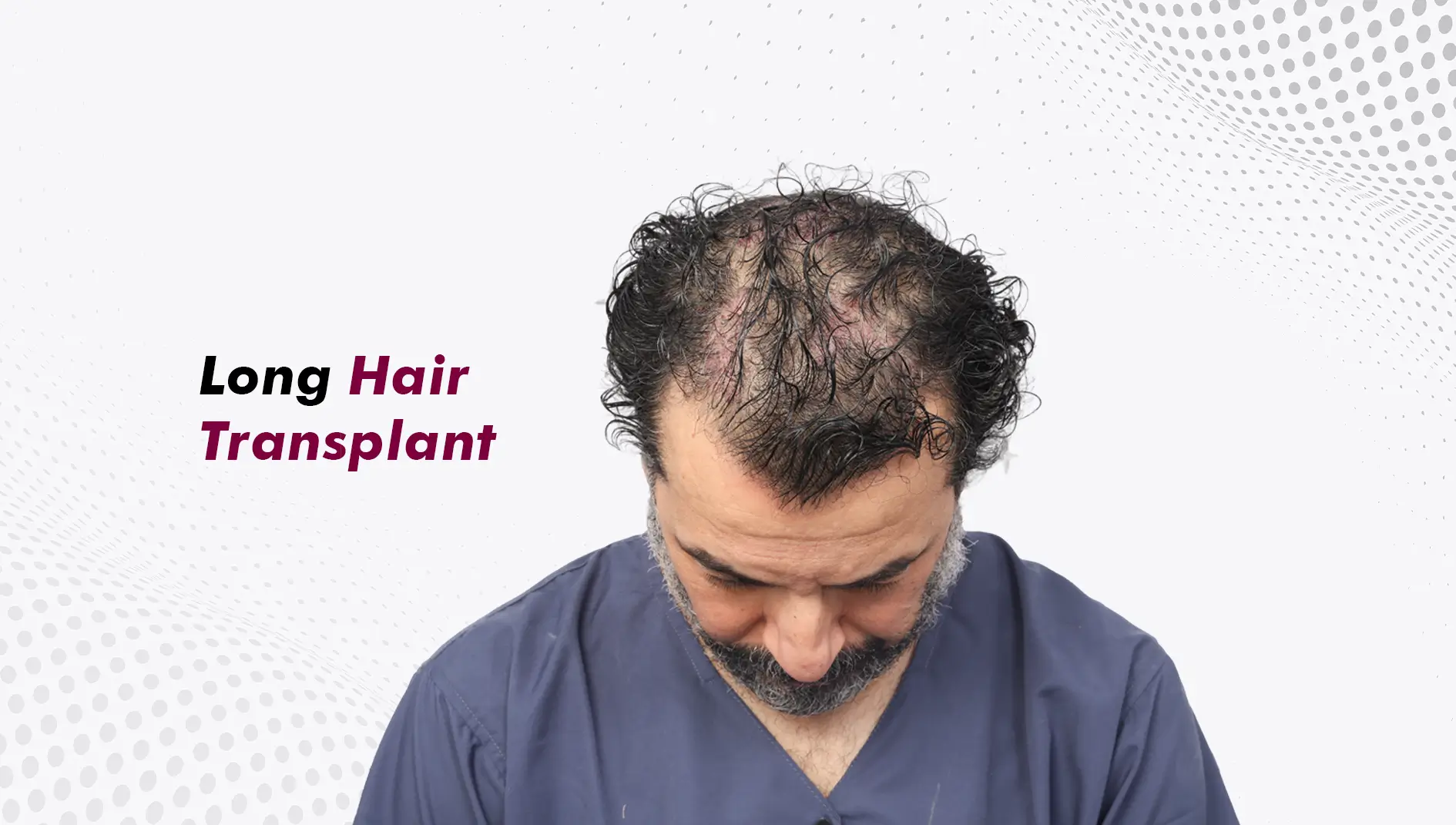
The first week after a hair transplant is focused entirely on proper healing. The transplanted hair follicles are anchoring into the scalp and establishing a blood supply. Patients may experience mild itching around the transplanted areas and light scab formation as the hair grafts settle in. Scabs begin to loosen naturally and the first head wash is performed on Day 7.
During this initial healing phase, transplanted grafts are at their most vulnerable. Following post-operative care instructions precisely during this window directly influences hair transplant recovery outcomes and graft survival.
Weeks 2 to 4: Grafts Continue to Settle
By the end of the first month, transplanted hair follicles are more firmly anchored. The scalp looks relatively dense and many patients feel encouraged by the early appearance. This density reflects transplanted hair shafts still in place, not yet the new hair that will grow in subsequent phases of the transplant growth chart.
Months 1 to 3: The Shedding Phase
Between 30 and 90 days after a hair transplant, the shedding phase begins. This is the phase that causes the most patient anxiety, and it is the most important part of any hair transplant growth chart to understand before your procedure.
During the shedding phase, transplanted hair strands shed in significant numbers. Between 30% and 90% of transplanted hair strands shed during this window. This is completely normal and happens in every patient without exception. Only the hair strands shed. The transplanted hair follicles remain fully intact beneath the scalp. The roots are secure. The transplanted hair falls because the follicles have entered a temporary resting phase as they recover from the procedure, and new hair growth will resume from those same follicles from Month 4 onwards.
It is also important to distinguish the shedding phase from shock loss. Shedding refers to the loss of the transplanted hair itself. Shock loss refers to the temporary loss of pre-existing native hair near the transplanted zone due to the trauma of the procedure. Shock loss does not occur in every patient and is a separate event from the standard shedding phase of newly transplanted hair.
Month 4: Initial Hair Growth Begins
Month 4 is when initial hair growth begins. Transplanted hair follicles re-enter the anagen phase and produce fine new hair strands. Approximately 30 to 40% density becomes visible during this phase. The texture is typically soft and lighter than the eventual permanent hair. This is the beginning of the visible progress phase of the hair transplant growth chart, and Month 4 photographs are usually the first comparison point showing meaningful new hair growth.
Month 5: Density Building
At Month 5, approximately 40 to 50% of transplanted hair is visible. New hair strands continue to thicken and the recipient area shows a more consistent pattern of coverage. Hair growth progress is now clearly measurable from one month to the next, with new hair filling in across the transplanted zone steadily.
Month 6: Noticeable Growth Begins
At the six-month mark, approximately 60% density is typically visible across the transplanted area. Visible hair growth is now noticeable to others. The hairline begins to take its intended shape and the overall hair growth result starts to feel real for most patients. Hair density continues to improve from here through the remaining phases of the transplant growth chart.
Months 7 to 9: Significant Thickening
Between Month 7 and Month 9, approximately 70% density is visible and transplanted hair begins to mature in both length and thickness. Significant thickening and density improvement characterise this phase. Hair strands shed in Months 1 to 3 are now replaced by thicker, more defined new hair, and the hair transplant results continue to develop steadily each month.
Months 10 to 12: Full Results for Frontal and Mid-Scalp Areas
Between Months 10 and 12, transplanted hair reaches Anagen Synchronization. At this point, virtually all transplanted hair follicles are in the active anagen phase simultaneously, producing the peak density the hair transplant is capable of delivering. This is when patients see the final results for frontal, mid-scalp, and temporal zones on their hair transplant growth chart.
Post-transplant density at this stage is approximately 50% of natural original pre-hair-loss density. A hair transplant redistributes existing donor hair to restore coverage and natural appearance. At Eugenix, hairline zones are planned at 35 to 45 grafts per cm², mid-scalp and crown at 25 to 35 grafts per cm², maximising natural coverage within what the donor area can sustainably provide.
Months 12 to 15: Crown Hair Transplants and Long-Term Stabilisation
Two important developments occur in this final window of the hair transplant growth chart.
Crown hair transplants take longer to show final results. Crown hair growth is slower because of lower blood circulation in that area compared to the frontal zone. Full results for crown hair transplants typically require 12 to 15 months from the procedure date. Patients with crown work should not evaluate their results at Month 10.
Anagen Desynchronization occurs at around 14 to 15 months. After the Anagen Synchronization peak at 10 to 12 months, transplanted hair gradually returns to its natural growth cycle. Approximately 18 to 20% of transplanted hair shifts into the resting phase, causing a density reduction of approximately 20% compared to the synchronization peak. This is the permanent stable density and is the expected long-term result of the hair transplant. It is not a sign of failure or reversal.
Hair Transplant Growth Chart: Quick Reference Summary
– Week 1: Initial healing phase, scabs forming, hair grafts settling
– Weeks 2 to 4: Transplanted hair shafts in place, scalp looks dense
– Months 1 to 3: Shedding phase, 30 to 90% of transplanted hair sheds (follicles intact)
– Month 4: Initial hair growth begins, approximately 30 to 40% density
– Month 5: Approximately 40 to 50% density visible
– Month 6: Approximately 60% density, noticeable growth begins
– Month 7: Approximately 70% density visible
– Months 10 to 12: Full hair transplant results for frontal and mid-scalp areas
– Months 12 to 15: Crown hair transplant results complete, permanent density stabilises
How Much Hair Grows After a Hair Transplant?
Post-transplant density is approximately 50% of your natural original pre-hair-loss density at full maturity. This reflects the fundamental nature of hair transplantation: healthy hair follicles from the donor area are redistributed to areas of loss. The goal is natural-looking coverage that transforms the patient’s appearance, not a replication of a full, unaffected scalp. In practical terms, patients achieve a natural hairline, improved frontal coverage, and a significantly fuller appearance compared to their pre-procedure state.
How Long Do 4,000 Grafts Take to Grow?
Hair transplant growth for 4,000 grafts follows the same timeline as any scalp hair transplant procedure: shedding between 30 and 90 days, initial hair growth at Month 4, visible growth around Month 6, and final results at 10 to 12 months. Crown areas reach full maturity at 12 to 15 months. The number of hair grafts affects coverage and density, not the growth timeline. 4,000 grafts grow through exactly the same phases as a smaller session — the difference is how much area is covered and the density patients achieve at maturity.
How Many Hairs Are in 3,000 Grafts?
Each graft, also called a follicular unit, contains between one and four individual hair strands. The average is approximately two to two and a half hairs per graft in Asians, meaning 3,000 grafts typically yield between 6,000 and 7,500 individual hairs once hair transplant growth reaches full maturity. The exact yield depends on donor hair characteristics including hair calibre, follicular unit composition, and donor area density. Only a detailed in-person consultation can provide an accurate estimate for a specific patient.
Factors That Influence Your Hair Transplant Growth Chart
The hair transplant growth chart represents an average trajectory. Individual factors influence how efficiently each patient moves through the post transplant phases.
Age and Overall Health
Younger patients and those with healthy lifestyles often experience more efficient new hair growth after a hair transplant. Healthy hair follicles with strong blood flow to the scalp support better graft survival and smoother progression through the natural growth cycle.
Adherence to Post-Operative Care
Following post-operative care instructions precisely is one of the most controllable factors in hair transplant recovery. Protecting hair grafts during the initial healing phase, attending follow-up assessments, and following the recommended hair wash protocol directly influence hair growth outcomes and final results.
Lifestyle Choices for Healthy Hair
A balanced diet, effective stress management, and avoiding smoking all support post transplant hair growth by improving blood circulation and reducing inflammation around transplanted follicles. Smoking restricts blood flow to the scalp and should be avoided for at least two weeks after a hair transplant surgery. A healthy lifestyle promotes healing and contributes to healthy growth through all phases of the transplant growth chart.
Non-Surgical Treatments to Stimulate Hair Growth
Platelet rich plasma (PRP) therapy and Growth Factor Concentrate (GFC) therapy can be used post transplant to stimulate hair growth and support the natural hair growth cycle after transplantation. Both treatments are derived from the patient’s own blood and deliver concentrated growth factors directly to the scalp to promote healing and encourage healthy regrowth. GFC contains a higher concentration of growth factors than PRP and is particularly effective for patients with more significant existing hair loss alongside their transplant. Both are confirmed Eugenix services.
The Technique Used
Unlike a standard FUE hair transplant which involves longer out-of-body time for hair grafts, the DHT (Direct Hair Transplant) technique used at Eugenix keeps graft out-of-body time under 30 minutes. This reduced handling time protects transplanted hair follicles and supports better graft survival, which contributes to healthier hair growth from Month 4 onwards.
Hair Transplant Recovery Timeline: Week by Week
The post transplant hair transplant recovery timeline in the first month is distinct from the growth phases that follow. Recovery focuses on physical healing of the scalp and graft anchoring.
– Day 1 to 3: Mild serum oozing, scalp begins to dry, itching begins
– Day 3 to 5: Swelling may develop around forehead and temples, subsides naturally
– Day 7: First head wash, beginning of regular hair wash routine
– Week 2 onwards: Scalp continues to heal, transplanted hair in place
– Month 1: Shedding phase begins as transplanted hair follicles enter resting phase
Most patients return to work within 7 days. Light activity resumes after 1 week. Strenuous exercise can also be started after one week.
Setting Realistic Expectations for Your Hair Transplant
A thorough consultation, honest assessment of your hair loss pattern, and a graft plan tailored to your long-term progression are what determine the quality of final results. Patients who enter their hair transplant journey with a clear understanding of the growth chart, the shedding phase, and long-term hair density expectations are consistently the most satisfied with their outcomes. The hair transplant growth chart is not a promise of a specific appearance at a specific date. It is a biological roadmap that sets you up to interpret your results accurately at every stage.
Frequently Asked Questions About Hair Transplant Growth
How much hair grows after a hair transplant?
Post-transplant density is approximately 50% of your natural original pre-hair-loss density at full maturity. The hair transplant creates natural-looking coverage and a significantly improved appearance by redistributing healthy hair follicles to areas of loss.
How long do 4,000 grafts take to grow?
4,000 hair grafts follow the standard hair transplant growth timeline: initial hair growth at Month 4, noticeable growth at Month 6, and final results at 10 to 12 months. The graft count affects coverage and density, not growth speed.
How many hairs are in 3,000 grafts?
Each follicular unit graft contains one to four hair strands, averaging two to two and a half hairs per graft in Asians. 3,000 grafts yield approximately 6,000 to 7,500 individual hairs at full hair transplant growth maturity.
Why has my hair density reduced after Month 12?
This is Anagen Desynchronization. After the synchronization peak at 10 to 12 months, approximately 18 to 20% of transplanted hair enters the telogen resting phase, causing a density reduction of approximately 20%. This is the permanent stable long-term density and is completely normal.
Why are crown hair transplants slower to show results?
Crown hair transplants take longer because blood circulation in the crown is lower than in the frontal zone. Full results for crown hair transplants are expected at 12 to 15 months.
Conclusion
The hair transplant growth chart is the clearest way to understand what lies ahead after a hair transplant surgery. From the initial healing phase through the shedding phase and the months of progressive new hair growth, to the final results and the long-term natural cycle settling into permanent density, every phase has a reason and every phase passes.
At Eugenix Hair Sciences, with 22,000+ hair transplant procedures performed across 15 years of operation and patients from over 90 countries, we walk every patient through their personal growth chart before their procedure. Our NABH-accredited hair transplant clinic in Gurgaon and experienced surgical teams across Mumbai, Hyderabad, and Bhubaneswar are committed to hair transplant results that are honest, thoroughly planned, and built for the long term.
If you are considering a hair transplant and want to understand what your individual transplant growth chart and realistic expectations look like, book a consultation with the Eugenix team today.
Dr. Arika Bansal
One of only a few female surgeons specializing in hair transplant surgery in India, Dr. Arika Bansal has been voted one of the best doctors in the world. She maintains an active fellowship in the ISHRS and regularly submits research papers to medical journals. 15+ years down the line, 22,000+ surgeries are accomplished under Dr. Bansal’s supervision. She specializes in female hair transplant, density improvement, corrective hair transplantation and hairline design.